






Last Updated 11 hours ago by Kenya Engineer
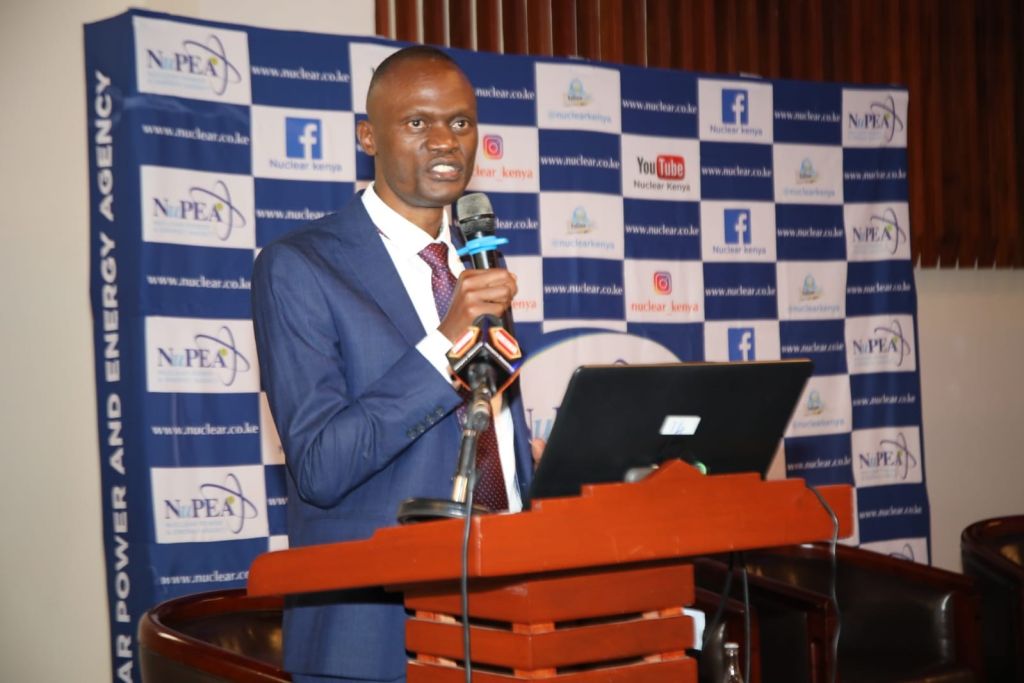
Kenyan engineer Eng. Erick Ohaga has been elected to lead the Federation of African Engineering Organisations (FAEO), taking a senior position at the head of the continental body that brings together engineering organisations from across Africa.
Ohaga has been elected President-Elect for the 2026–2028 term and is scheduled to serve as President from 2029 to 2030. The election gives Kenya a prominent position in an organisation whose stated ambition is to provide a common voice for the engineering profession across the continent.
Ohaga secured 83 per cent of the vote. Following the election, he expressed appreciation to the presidents of African engineering professional institutions for entrusting him with the leadership and said he would serve with humility.
Ohaga previously served as President of the Institution of Engineers of Kenya (IEK) from 2022 to 2024. He is currently Director of Nuclear Energy and Infrastructure Development at the Nuclear Power and Energy Agency (NuPEA), where his work is connected to Kenya’s developing nuclear-energy programme.
His election comes at a time when the engineering profession in Africa is facing questions that increasingly extend beyond individual countries. Infrastructure deficits, energy access, industrialisation, digitalisation, climate resilience, engineering education and the movement of professional skills across borders are continental issues as much as national ones.
The Federation of African Engineering Organisations is an international non-governmental organisation representing the interests of engineering practitioners in Africa. It represents the continent in international engineering forums, including the World Federation of Engineering Organisations (WFEO), and engages with the African Union and other international organisations.
Its organisational structure is built around five geographical regions: Central, Eastern, Northern, Southern and Western Africa. These are represented respectively through the Central Africa Federation of Engineering Organisations (CAFEO), Eastern Africa Federation of Engineering Organisations (EAFEO), North Africa Federation of Engineering Organisations (NAFEO), Southern Africa Federation of Engineering Organisations (SAFEO) and West Africa Federation of Engineering Organisations (WAFEO).
FAEO’s institutional roots go back to the Federation of African Organizations of Engineers, established in Cairo in 1972. The organisation was re-energised and took its present name in Nairobi in 2012. A briefing published by the Institution of Engineers of Kenya notes that its secretariat is based in Abuja, Nigeria, and that FAEO has represented Africa within WFEO since being admitted as an international member in 1989.
FAEO’s national members are representative engineering organisations or regulatory bodies from individual African countries, with one national organisation representing each country. It also has regional members, associates and affiliates.
What is FAEO trying to achieve?
FAEO describes its objective as developing a united continental engineering organisation capable of representing the profession and promoting engineering and technology for Africa’s development. Its stated objectives include promoting high standards of engineering education and professional practice, encouraging the use of appropriate technology, facilitating networking and information exchange among engineers, and representing the profession internationally.
These may sound broad, but some of the federation’s initiatives point to more concrete ambitions.
One of the most consequential is the effort to address the fragmentation of engineering qualifications and professional registration across African countries.
An engineer registered to practise in Kenya, for example, does not automatically acquire the right to practise in another African country simply because both countries are part of the same continent. Different regulatory systems, educational requirements, professional categories and registration procedures can become barriers to the movement of engineering expertise.
FAEO has been working towards greater harmonisation.
A recent IEK publication described the FAEO African Accord initiative as an attempt to harmonise engineering standards and facilitate professional mobility in support of the African Continental Free Trade Area (AfCFTA).
FAEO’s work with the Federation of Engineering Institutions of Asia and the Pacific (FEIAP) provides another example. The two organisations established a framework intended to support substantial equivalence of engineering qualifications and the eventual mobility of engineers, engineering technologists and technicians between participating jurisdictions.
If professional qualifications become more readily comparable, if accreditation systems move towards common principles and if registration information becomes easier to verify, national regulators can potentially make it easier for appropriately qualified professionals to work across borders.
That has implications beyond employment.
Engineering firms increasingly operate across several African markets. Roads, railways, power systems, telecommunications networks, water infrastructure, manufacturing facilities and digital infrastructure do not stop at national borders. Neither does the need for specialist engineering expertise.
The AfCFTA dimension
The push for professional mobility is particularly relevant to AfCFTA.
The continental trade agreement is intended to create a larger integrated African market, but removing tariffs and other barriers to trade is only part of the challenge. Services, including professional services, require systems that allow qualifications and professional competence to be recognised across jurisdictions.
For engineering, that means confronting a relatively technical problem: how does one country establish that an engineer trained and registered somewhere else meets the professional requirements needed to work on a project within its borders?
FAEO’s proposed frameworks are aimed in part at this problem.
The federation has also identified the creation of an African engineering professionals’ database and the development of an Africa Engineering Education Accord among its priorities. Resolutions from the Africa Engineering Week and Conference have linked these initiatives to professional mobility, digital trade, engineering education and continuing professional development.
The potential significance is considerable, but the distinction between framework and implementation remains important.
A continental framework does not automatically override national legislation. Individual countries retain their own regulators, laws and professional-registration systems. For harmonisation to translate into actual mobility, national institutions would still need to adopt, recognise or operationalise the relevant arrangements.
That is one of the areas in which FAEO’s influence will ultimately be tested.
Its influence reaches beyond professional registration
Professional mobility is only one part of FAEO’s agenda.
The federation works with UNESCO, WFEO, national engineering institutions and governments through platforms such as the Africa Engineering Week and Africa Engineering Conference.
The latest edition, held in Dar es Salaam from 13 to 17 September 2026, brought together more than 300 participants from 28 countries. Organised by UNESCO in partnership with the Institution of Engineers Tanzania and FAEO, with support from WFEO, the event examined engineering education and skills development, emerging technologies and artificial intelligence, digital transformation, sustainable infrastructure, climate resilience, gender equality and youth participation.
That gathering illustrates another source of FAEO’s influence: convening power.
An organisation does not need statutory authority to bring together governments, regulators, professional institutions, universities, development partners, contractors and engineers around a common issue.
FAEO’s role gives it a platform from which continental engineering priorities can be articulated and carried into discussions with institutions such as the African Union, WFEO and other international organisations.
Its position within WFEO is particularly significant. WFEO lists FAEO among its international members, giving the African federation a formal channel into the global engineering community.
FAEO has also participated in the Engineering Capacity Building for Africa Programme, a broader initiative involving WFEO, UNESCO and African engineering organisations. The programme has focused on strengthening engineering capacity through education, continuing professional development, technology transfer and cooperation.
The engineering profession and Africa’s infrastructure challenge
Africa’s development agenda creates a particularly large space for such coordination.
The continent needs engineers to design and deliver transport networks, power systems, water and sanitation infrastructure, telecommunications networks, industrial facilities, housing, digital infrastructure and increasingly sophisticated energy systems.
At the same time, the engineering profession itself is changing.
Artificial intelligence, digital twins, advanced manufacturing, autonomous systems, renewable energy, nuclear technology, smart infrastructure and data-driven asset management are changing the skills required of engineers.
The question is no longer simply whether Africa has enough engineers. It is also whether its engineering institutions can develop, recognise and deploy the skills required for the next generation of infrastructure.
This is reflected in the agenda of the 2026 Africa Engineering Week, where AI and digital transformation were considered alongside engineering education, sustainable infrastructure and climate resilience.
FAEO’s challenge is therefore partly institutional: how does a federation of national engineering organisations help create common direction without replacing the authority of those national organisations?
What Ohaga inherits
Ohaga’s incoming presidency places him at the centre of these questions.
His immediate challenge will not simply be to represent African engineers at conferences. FAEO’s existing agenda contains several initiatives whose ultimate value will depend on moving from broad continental aspirations towards mechanisms that national institutions can implement.
Professional mobility is one.
Harmonised accreditation and recognition of qualifications is another.
Engineering capacity building is another.
There is also the question of how engineering organisations can become more influential participants in national and continental development policy rather than being consulted only after major infrastructure decisions have already been made.
For Kenya, Ohaga’s election also creates a link between the country’s engineering profession and a wider continental agenda.
Kenyan engineering institutions have already been involved in FAEO-related work on professional mobility and capacity building. The country’s participation in continental engineering programmes means that the new FAEO leadership will not be operating from a blank slate.
What changes is that a Kenyan engineer will now occupy the federation’s presidency in the coming leadership cycle.
A continental platform, but national implementation
There is a temptation to view the election of a Kenyan as the end of the story. It may be more useful to see it as the beginning of one.
FAEO has spent years building a continental platform around the idea that Africa’s engineering profession needs to speak with a stronger collective voice. Its agenda now extends into some highly practical questions: how engineers are trained, how qualifications are recognised, how professionals move between countries, how engineering capacity is developed and how the profession contributes to continental economic integration.
But most of the authority required to turn those ideas into reality remains at national level.
That is both FAEO’s limitation and its opportunity.
Its influence will ultimately depend on whether its frameworks are adopted, whether its member organisations cooperate and whether governments and continental institutions give engineering organisations a meaningful role in policy and development.
For Ohaga, the 2026–2030 leadership cycle therefore arrives at an interesting point in the federation’s evolution.
The platform already exists.
The harder question is how much of that platform can be converted into common standards, greater professional mobility, stronger engineering capacity and a more coordinated African engineering voice.
That may prove to be the more consequential measure of what this Kenyan engineer’s election means for the continent.
-
Product on sale
 AWEBook Volume 2Original price was: KShs 3,500.00.KShs 3,000.00Current price is: KShs 3,000.00.


















)