
Last Updated 2 hours ago by Kenya Engineer
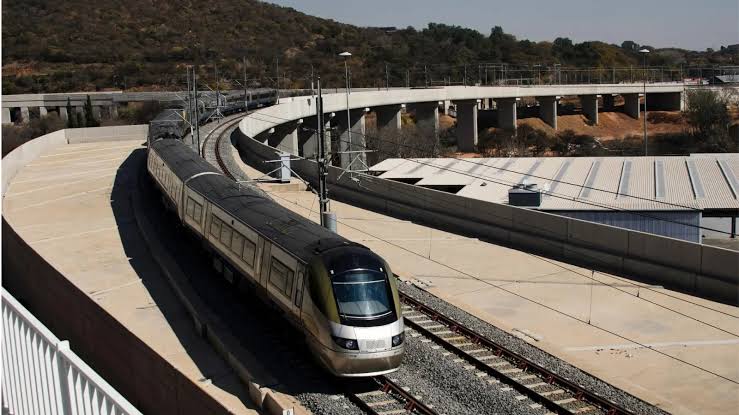
When Gautrain opened in 2010, its 80-kilometre network was conceived primarily as a high-speed connection between Johannesburg, Pretoria and OR Tambo International Airport. Sixteen years later, the engineering challenge facing Gauteng is different. The province needs to determine how an existing system can be expanded into a much larger metropolitan rail network while integrating with the buses, commuter rail, taxis and roads that already carry millions of daily trips.
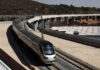
The original Gautrain infrastructure, now valued by the Gauteng government at about R52 billion, consists of 10 stations and an 80-kilometre route. More than 216 million passenger trips had been recorded by June 2026. The system was delivered through a public-private partnership in which the Bombela consortium designed, constructed, partially financed, operated and maintained the railway under a long-term concession. That concession ended in March 2026, after which Gauteng moved to a new 15-year operating arrangement.
The next stage is considerably more ambitious.
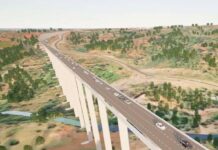
The Gauteng Rapid Rail Integrated Network, or GRRIN, is intended to extend rapid rail beyond the original Johannesburg-Pretoria-OR Tambo corridor to areas including Soweto, Mamelodi, Fourways, Boksburg, Lanseria and parts of the West Rand and Sedibeng. The provincial government has said it intends to resume the expansion programme, while a route-determination process for the Soweto Extension and Cosmo City Junction has already progressed through environmental assessment and public participation.
One of the most significant proposed corridors would extend the existing system from the Marlboro area towards Soweto, with stations planned around Randburg, Cosmo City, Little Falls, Roodepoort and Jabulani. Another proposed connection would link Jabulani through Cosmo City and Fourways towards the eastern side of Tshwane and Mamelodi. Other planned links include Rhodesfield-Boksburg and a connection from Cosmo City towards Lanseria Airport.
That creates a much more complicated engineering system than the original radial railway.
New lines must cross existing highways, railways, rivers, developed neighbourhoods and utility corridors. Stations must be positioned not simply according to engineering convenience but according to population density, interchange opportunities and the potential for transit-oriented development. The railway must also maintain the performance characteristics that made the original Gautrain attractive while connecting with conventional commuter transport that operates at different speeds and service frequencies.
The Soweto extension provides an example of the planning process involved. Rather than moving directly from concept to construction, Gauteng has undertaken route alignment studies, environmental investigations and public participation before determining the final route. The final route determination is a regulatory step that fixes the railway corridor and provides the basis for subsequent design and implementation.
There is also an important difference between the original Gautrain project and the expansion programme in terms of financing.
The first system was developed through a large PPP with private financing tied to a concession. Gauteng is now entering a new 15-year concession arrangement while simultaneously attempting to unlock investment for additional infrastructure. The new operator, Sihamba Sonke Mobility, was selected in September 2026. Alstom, one of the consortium’s strategic industrial partners, says its role in the new concession includes rail-system modernisation and refurbishment under an engineering, procurement and construction scope worth about €800 million over the 15-year period.
This modernisation work is significant because expansion is not occurring on a blank sheet.
The existing fleet, stations, depots, signalling, communications and power systems must continue operating while they are upgraded. Gautrain’s new operating programme includes expansion of the fleet from 24 to 32 four-car electric multiple units, upgraded trains, station and depot improvements, stronger feeder-bus integration, improved passenger information systems, backup power and a gradual move towards account-based ticketing and integrated Mobility-as-a-Service systems.
The railway thus has two engineering programmes running in parallel: extending the physical network and increasing the capability of the network already in operation.
Capacity is another driver. The Development Bank of Southern Africa has identified the need for 48 additional coaches and associated infrastructure, with an estimated requirement of about R4 billion for that phase. The financing structure being developed separates the rolling-stock investment from the outgoing concession, allowing the additional assets to be funded over a longer period.
The wider objective is to make Gautrain less of an isolated premium express railway and more of the backbone of Gauteng’s metropolitan transport system.
That means the most important engineering work may eventually occur outside the railway itself. Feeder buses, pedestrian access, interchange stations, park-and-ride facilities, digital ticketing, traffic management and integration with conventional rail all determine whether passengers can actually use the system as a daily transport network.
Gautrain’s next chapter is thus not just an extension of a successful railway. It is an attempt to convert an 80-kilometre demonstration of rapid rail into a metropolitan-scale transport architecture. The engineering challenge is no longer proving that trains can move quickly between major centres. It is making the railway useful to the much larger population living between those centres.
-
Product on sale
 AWEBook Volume 2Original price was: KShs 3,500.00.KShs 3,000.00Current price is: KShs 3,000.00.