Last Updated 56 mins ago by Kenya Engineer
Steel is one of the easiest industrial products to take for granted. A reinforcing bar arrives at a construction site, a roofing sheet is delivered to a hardware shop, or a steel section is fabricated into a warehouse frame. What is less visible is the industrial system required to produce those products at scale.
Kenya has developed a sizeable steel manufacturing industry, with plants spread across the Nairobi metropolitan area, Athi River, Ruiru, Mombasa and other industrial centres. The sector has evolved from basic rolling and fabrication into a much broader manufacturing chain covering steelmaking, rolling, galvanising, wire products, pipes, structural sections and coated products.
Yet the industry remains caught between two realities. Kenya has substantial installed steel-making and processing capacity, but manufacturers continue to face expensive raw materials, energy costs, logistics constraints, competition from imports and limited development of domestic iron ore resources. In July 2026, the Kenya Association of Manufacturers reported that the steel industry was operating at only about 36 per cent of its installed capacity of 4.2 million tonnes a year. Kenya imported about 1.66 million tonnes of iron and steel products in 2025 while exporting roughly 197,000 tonnes.
From scrap and imported coils to finished steel
Kenya’s steel industry does not operate as a single production system. It consists of several interconnected manufacturing models.
One part of the industry melts and converts ferrous scrap into new steel. Scrap is collected, sorted, cut, baled or shredded before being charged into furnaces. In a modern electric steelmaking operation, the scrap is melted, its chemical composition adjusted and impurities removed before the molten steel is continuously cast into billets or other semi-finished products. The billets can then be reheated and passed through rolling mills to produce reinforcement bars, wire rod, sections and other products.
Environmental documentation for a Kenyan rolling-mill project illustrates this sequence: scrap is sorted and processed before melting, the molten metal undergoes chemical treatment, and the refined steel is then transferred to a continuous casting machine.
This route gives Kenya an important advantage. Scrap is a locally available secondary raw material, and recycling it reduces the need to produce iron from virgin ore for every tonne of steel. But it also creates a dependence on a reliable scrap-collection and transportation network.
The Scrap Metal Act, 2015 established the Scrap Metal Council and a regulatory framework governing the collection and trade of scrap. The legislation also addresses traceability, licensing and the protection of infrastructure from illegal metal theft.
The other major part of the industry is based on imported steel coils. This is particularly important in flat-steel products. Mabati Rolling Mills, for example, operates an integrated coated-steel facility at Mariakani, with processes that include cold rolling and coating. The company traces its manufacturing development back to a Hitachi four-high cold rolling mill commissioned in Mariakani in 1982 and later investments in aluminium-zinc coating and colour coating.
This distinction is important because “steel manufacturing” in Kenya covers very different levels of industrial activity. Melting scrap into billets is fundamentally different from importing hot-rolled coils and transforming them through cold rolling, galvanising, painting and profiling.
Both, however, depend on infrastructure.
The location
The geography of Kenya’s steel industry reflects the country’s wider industrial geography.
Athi River and the Nairobi metropolitan area provide access to a large construction market, major highways, electricity infrastructure, labour and industrial consumers. Ruiru has become another important manufacturing centre, while Mombasa and Mariakani provide proximity to the port and the import-export logistics system.
Devki Steel Mills, for instance, operates steel production facilities in Ruiru, Athi River and Mombasa, producing reinforcement bars, sections, wire and related products.
The location of plants close to major transport corridors is not accidental. Steel is heavy and relatively expensive to move over long distances. A manufacturer receiving thousands of tonnes of scrap or imported coils and dispatching thousands of tonnes of finished products every month can quickly see transport become a major component of production cost.
For coastal manufacturers, the Port of Mombasa is part of the production system even though it may be kilometres away from the factory gate. Imported steel coils, machinery, industrial chemicals and other inputs enter through the port, while finished products can move in the opposite direction to regional markets.
For inland plants, the Nairobi-Mombasa transport corridor performs the same function. The continuing improvement of the Athi River-Machakos Turnoff section of the Nairobi-Mombasa highway is consequently relevant not only to motorists but also to industrial supply chains. The planned 20-kilometre second carriageway includes new bridges, interchanges, drainage works and a full pavement structure.
Industrial infrastructure does not end at the national highway. Factory access roads, weighbridges, truck parking, drainage and internal circulation are all part of the equation. In February 2026, the government acknowledged that poor feeder roads, water shortages and unreliable electricity were affecting industrial activity in Athi River.
For a steel plant handling heavy raw materials and finished products, a poor final kilometre can be as disruptive as a problem hundreds of kilometres away.
Electricity is part of the steel plant
The relationship between steel and electricity is particularly direct.
Electric furnaces require substantial electrical power, while rolling mills, reheating furnaces, cranes, pumps, compressors, cooling systems and finishing equipment add to the plant’s continuous load. Electricity quality matters almost as much as electricity price because voltage disturbances or interruptions can disrupt production cycles and damage equipment.
This makes the expansion of Kenya’s electricity generation, transmission and distribution infrastructure an industrial policy issue as much as an energy issue.
Kenya has introduced time-of-use electricity tariffs partly to encourage industrial and commercial customers to shift consumption towards periods when the system has greater available capacity. EPRA says the tariff is intended to flatten demand, improve utilisation of generation capacity and support system efficiency.
But steel manufacturers need more than favourable tariffs. They need predictable supply, adequate connection capacity and a grid capable of supporting large industrial loads.
That challenge is becoming more significant as Kenya adds more variable renewable generation. The country’s 2025-2034 National Energy Policy recognises the need for modernised infrastructure, storage, smart grids and a more resilient electricity system. For steel, those investments will directly affect the cost and reliability of manufacturing.
Water, cooling and environmental infrastructure
Steel plants also have a substantial relationship with water.
Water is used in cooling systems, dust suppression, equipment cleaning and other industrial processes. Depending on the production technology, water may circulate through treatment and cooling systems rather than being consumed once and discharged.
That makes industrial water infrastructure an important engineering consideration. A factory located in an area with unreliable municipal supply may require storage tanks, boreholes, treatment systems, recycling systems and carefully engineered distribution networks.
Environmental infrastructure is equally important. Steelmaking and downstream processing can generate dust, slag, wastewater, oils, spent chemicals and other industrial residues. Modern plants therefore require pollution-control equipment, wastewater treatment, waste segregation, material recovery and monitoring systems.
For coated-steel production, the chemical stages are particularly significant. Galvanising and related processes require carefully controlled chemical handling and waste-management systems. The IFC’s environmental review of MRM’s Mariakani investment, for example, identified cold rolling, galvanising and aluminium-zinc coating as major components of the facility and noted investments in process technology and environmental controls.
The engineering challenge is to make these systems work together without turning environmental compliance into a separate activity disconnected from production.
Standards are part of the manufacturing infrastructure
A steel industry cannot function on production capacity alone. It also needs a system capable of verifying what comes out of the factory.
For reinforcement steel, this is particularly important because the material becomes part of buildings, bridges, water tanks, roads and other structures whose failure can have serious consequences.
KEBS maintains technical committees covering steel for concrete reinforcement and prestressing applications. Kenya’s standards include KS EAS 412-1 for plain reinforcement bars and KS EAS 412-2 for ribbed bars.
The certification process involves factory inspection, sampling, laboratory analysis and verification against applicable standards before a manufacturer receives the relevant permit to use the Standardization Mark.
For engineers, this is an important reminder that quality assurance is part of infrastructure. Laboratories, testing equipment, calibration systems, certification bodies and traceability systems are just as important to a functioning steel economy as furnaces and rolling mills.
The missing link is domestic iron and steel production
Kenya’s biggest structural weakness is further upstream.
The country has identified iron ore deposits, particularly in Taita Taveta, Kitui and Tharaka, but commercial development of domestic raw materials has remained limited. Government industrial documents have consequently continued to identify an integrated iron and steel mill as a strategic project.
The difference between an industry based mainly on scrap recycling and one with an integrated iron-and-steel chain is significant.
An integrated plant would involve the extraction and beneficiation of iron ore, production of iron, steelmaking, casting and rolling. It would also require large supporting systems for power, water, transport, raw-material handling and environmental management.
Such a project would be considerably more than a factory. It would effectively create a new industrial infrastructure cluster.
Government planning documents have previously included an integrated iron and steel mill among national manufacturing priorities, with the National Machining Complex identified as an implementing institution. The intended objective is to use domestic iron ore, coal and limestone, reduce dependence on imported steel and create additional industrial value chains.
The development of iron ore processing in Taita Taveta has also been identified as a strategic opportunity. In 2024, the government designated the county as a centre for iron ore processing and value addition, while proposals for major private investment in the area were announced.
The engineering difficulty, however, should not be underestimated. A mine-to-steel operation needs a dependable combination of ore quality, beneficiation technology, energy, transport, water, capital and markets. Building a furnace without solving the logistics around it would simply move the bottleneck elsewhere.
What the next phase requires
The immediate opportunity for Kenya may not necessarily be to build one giant steel plant. It is to strengthen the infrastructure connecting the plants that already exist.
That means reliable industrial power, better factory access roads, efficient port logistics, stronger scrap-collection systems, industrial water infrastructure, modern testing laboratories and predictable standards enforcement.
It also means moving further up the value chain.
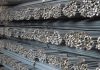
Kenya already produces reinforcement bars, wire, pipes, hollow sections, roofing products and other steel products. Devki’s current product range, for example, includes reinforcement bars, universal beams, channels, purlins, plates, mesh and tubes.
The next step is to increase the amount of engineering and manufacturing value embodied in those products. That means more structural steel fabrication, specialised sections, industrial components, machinery parts and engineered building systems rather than simply selling basic commodity steel.
This is where steel connects to the wider industrialisation agenda. A stronger domestic steel industry can support construction, manufacturing, energy, transport, agriculture and infrastructure projects. More importantly, local steel production can shorten supply chains for projects that currently depend on imported products.
But competitiveness will ultimately determine whether that potential is realised.
Kenya’s steel sector has installed capacity of millions of tonnes, yet utilisation remains low. The problem is therefore not simply a shortage of factories. It is the cost and reliability of the ecosystem surrounding those factories.
The infrastructure behind steel is consequently as important as the furnaces themselves. Roads determine how scrap reaches the plant. Ports determine how raw materials and machinery enter the country. Electricity determines whether furnaces and rolling mills can operate economically. Water and environmental systems determine whether production can expand sustainably. Standards and laboratories determine whether the finished product can be trusted.
For Kenya, the next stage of steel manufacturing will depend on how well these pieces are connected.
If the country can bring together domestic raw materials, reliable energy, efficient logistics, modern industrial infrastructure and a larger market for locally engineered products, steel could become much more than a construction-material industry. It could become one of the foundations on which Kenya’s next phase of industrialisation is built.
-
Product on sale
 AWEBook Volume 2Original price was: KShs 3,500.00.KShs 3,000.00Current price is: KShs 3,000.00.