
Last Updated 1 hour ago by Kenya Engineer
Kenya’s water problem is often described in terms of scarcity. In many parts of the country, that description is justified. Rivers and aquifers are under pressure, rainfall is increasingly unpredictable and rapidly growing towns are demanding more water than existing systems can reliably supply.
But there is another problem that receives considerably less attention. A large proportion of the water Kenya already produces and treats never reaches a paying customer.
The latest performance assessment by the Water Services Regulatory Board (WASREB) puts national non-revenue water at 48 per cent for the 2024/25 financial year. In other words, nearly one out of every two cubic metres entering the distribution systems of the country’s regulated water service providers was not billed because of physical losses, illegal connections, inaccurate metering, billing problems or other forms of commercial loss. The sector average has risen from 44 per cent in 2023/24, while the acceptable benchmark used by WASREB is 20 per cent.
The figure changes the way Kenya’s water challenge should be understood. Building another treatment plant or dam increases supply, but reducing losses can create additional effective supply from infrastructure that already exists.
This is why the next phase of Kenya’s water industry is increasingly becoming an engineering story about networks, pressure, sensors, telemetry, metering, asset management and data.
The water that disappears between the plant and the customer
The journey of urban water is relatively straightforward on paper. Raw water is abstracted from a river, reservoir, lake or groundwater source and taken to a treatment plant. There, processes such as coagulation, flocculation, sedimentation, filtration and disinfection remove contaminants before treated water enters a transmission system.
From there, large pipelines carry water to reservoirs and distribution networks. Pumps maintain pressure where gravity cannot do the job. Valves divide the system into zones. Smaller mains and service connections eventually deliver water to individual properties.
The engineering difficulty begins after treatment.
A distribution network may contain hundreds or thousands of kilometres of buried pipe, much of it installed decades ago. Some sections have been extended repeatedly as settlements expanded, sometimes without a complete digital record of the resulting network. Pipes operate under different pressures, ground conditions change and connections are continually added, modified or abandoned.
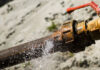
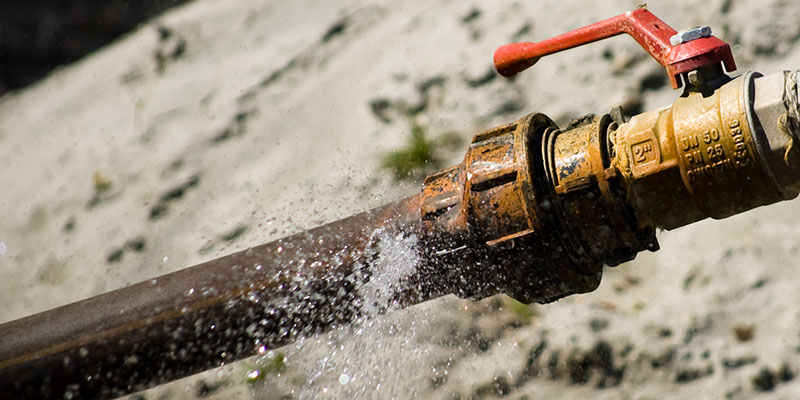
A small leak may initially release only a few litres per minute. Over months, however, that becomes a substantial volume. A larger failure can release thousands of cubic metres before it is detected.
Pressure is particularly important. A distribution system cannot simply be operated at maximum pressure because higher pressure increases leakage through existing defects and can accelerate failures in ageing pipes and joints. At the same time, insufficient pressure results in poor service and intermittent supply.
The result is an engineering balancing act.
WASREB’s own NRW guidelines identify pressure management, active leakage control, commercial-loss reduction and systematic network management among the tools utilities need. The regulator’s field handbook specifically points to equipment such as ultrasonic flow meters and pressure data loggers, alongside proper pipe installation, testing and repair practices.
Not every lost litre is leaking from a pipe
The term “non-revenue water” can sometimes create the impression that all the missing water is physically disappearing into the ground. That is not the case.
WASREB defines NRW as water produced but not billed because of leaks, theft, meter errors or poor billing. This creates two broad engineering problems.
The first is physical loss, sometimes called real loss. Water actually escapes from pipes, reservoirs, valves, tanks and connections.
The second is apparent or commercial loss. The water may reach the customer but the utility does not receive the appropriate revenue. Illegal connections, bypassed meters, inaccurate meters, unmetered consumption and billing errors can all contribute.
A leak detector cannot fix an illegal connection. Replacing a leaking pipe will not correct an inaccurate customer meter. Installing smart meters will not solve excessive pressure in a distribution zone.
A serious NRW programme needs a combination of hydraulic engineering, field operations, customer metering, GIS, data analysis and financial controls.
Kenya’s network needs to become measurable
One of the biggest changes now taking place in the water sector is the move from managing networks through periodic physical inspections towards managing them through continuous information.
This is where Supervisory Control and Data Acquisition, or SCADA, becomes important.
In a conventional water system, an operator may know that a reservoir is empty because somebody visits the site or receives a telephone call. A pump failure may only become apparent when consumers complain that water has disappeared. A pressure problem may be discovered after a pipeline bursts.
SCADA changes the sequence.
Sensors installed at strategic points can continuously measure reservoir levels, flow rates, pressures, pump status and other operating parameters. Remote terminal units or programmable logic controllers collect the information and transmit it to a central control system. Operators can then see what is happening across the network, receive alarms when values move outside predetermined limits and, where the system has been designed for it, remotely operate pumps and valves.
The value isn’t just convenience. It is time.
A leak that would previously have gone unnoticed for several hours can potentially trigger an alarm as soon as the system detects an abnormal flow or pressure pattern. A pump that trips can be identified immediately. A reservoir falling faster than expected can trigger investigation before it becomes empty.
Kenya is already moving in this direction.
The Nairobi Water and Sanitation Project includes the design of a SCADA system, installation of an initial phase of sensors and related equipment, procurement of NRW equipment and development of software for documenting and analysing real water losses. The project also includes work on pressure-zone boundaries and hydraulic modelling.
Nairobi Water’s own 2024/25–2028/29 strategic plan identifies SCADA, GIS, smart metering and upgrades to digital systems as part of the technology and innovation agenda for improving operations and decision-making.
SCADA is also appearing in new water infrastructure outside Nairobi. A Coast Water Works Development Agency procurement for pipelines and reservoirs on the Coast includes installation of a SCADA monitoring system integrated with monitoring systems for other components of the wider water-supply project. The works are scheduled for implementation from 2026 to 2029.
The direction is significant. Water networks are gradually becoming industrial control systems rather than simply buried pipes and concrete reservoirs.
SCADA alone will not stop the losses
There is a danger, however, of treating SCADA as a technological cure for NRW. A sophisticated control room cannot compensate for an unknown network.
Before sensors can provide useful information, utilities need accurate maps of pipelines, valves, reservoirs and customer connections. They need flow meters at appropriate locations, functioning pressure sensors, reliable communication links and properly maintained instrumentation.
The network also needs to be divided into manageable hydraulic areas.
District Metered Areas, or DMAs, are particularly useful because they allow utilities to compare the quantity of water entering a defined area with the amount recorded at customer meters. If 10,000 cubic metres enter a zone during a given period but only 6,000 cubic metres are legitimately billed, the utility has a starting point for investigating the remaining 4,000 cubic metres.
SCADA, GIS and hydraulic modelling become much more powerful when used together. GIS tells engineers where the assets are. Hydraulic models help predict how water should move through the network. SCADA provides real-time operating data. Customer metering provides consumption information. Together, these systems can help identify where actual losses are occurring.
Kenya’s challenge is that this level of digital integration is still uneven across utilities.
Smart meters change the customer side of the equation
Traditional water meters are designed primarily to measure consumption. A modern smart meter can do much more.
Depending on the technology deployed, smart meters can transmit readings remotely, identify unusual consumption patterns, detect possible leaks on the customer side and reduce the dependence on manual meter reading.
WASREB’s Impact 17 report identified smart metering as an important opportunity for reducing NRW. The regulator noted that digital systems can provide real-time data, detect leaks earlier, monitor consumption patterns and improve operational efficiency and customer transparency.
But smart metering introduces its own infrastructure requirements.
Meters need power, communications, data management platforms and maintenance. Utilities need systems capable of receiving and processing millions of readings. Meter data has to connect to billing systems. Customer records must be accurate. Cybersecurity and data protection become increasingly important as water utilities become digitally connected.
This means Kenya’s water technology transition is not simply a matter of purchasing smart meters. It requires an integrated digital architecture.
The regulatory system has also changed
The technology push is taking place alongside significant changes in Kenya’s water regulatory framework.
The Water (Services) Regulations, 2025, Legal Notice No. 54, came into effect as part of a broader effort to establish a clearer framework for managing, regulating, operating and financing water services. The regulations apply to national and county governments, government entities and other persons providing water services.
One important change is the stronger emphasis on county-level planning.
Each county is required to formulate a five-year County Water and Sewerage Services Strategy through public consultation. Among other matters, the strategy is required to address inadequate access, infrastructure investment and plans for reducing and managing non-revenue water. County authorities are also required to monitor and evaluate water service providers against their strategies and performance targets.
The regulations also address the establishment and governance of water service providers, financing, ring-fencing of water revenues, licensing, service standards, reporting, information management and enforcement.
This is significant for engineers because infrastructure decisions can no longer be separated entirely from the regulatory framework governing the utility that will operate them.
A pipeline that is poorly designed, a pump system without adequate instrumentation or a network expansion without provision for metering and asset records can create operating problems that remain for decades.
The reforms go beyond water services
The regulatory changes are broader than the Water Services Regulations alone.
In 2025, Kenya also published the Water (Harvesting and Storage) Regulations and Water Resources Regulations. The Ministry described the three regulatory instruments as part of efforts to improve access, standardise governance and strengthen management of water and sewerage services and water resources.
The Water (Amendment) Act 2024 also forms part of this evolving legal framework. Government reporting for the 2024/25 period lists the Act and the three 2025 regulations among the sector’s major policy, legal and institutional reforms.
The practical implication is that Kenya is gradually moving towards a water industry in which resource management, infrastructure development, utility operations and regulation are more explicitly connected.
The uncomfortable economics of losing treated water
The engineering argument for NRW reduction is ultimately an economic one.
Every cubic metre that a utility produces, treats and pumps has already consumed electricity, chemicals, labour and infrastructure capacity. If that water then disappears through a leaking pipe, it represents a cost with no corresponding revenue.
The latest WASREB assessment shows how large that problem has become. Overall NRW rose to 48 per cent in 2024/25, and the regulator found that the problem affected utilities of different sizes. Medium utilities recorded particularly high losses, while the sector average was almost twice the acceptable benchmark.
The Ministry had already begun developing a National Water Loss Reduction Programme in May 2026, when it reported NRW at approximately 44 per cent and estimated annual losses of more than KSh10 billion. The proposed programme includes advanced leak detection, network verification and mapping, smart meters and improved billing systems.
The difference between the Ministry’s 44 per cent figure and WASREB’s later 48 per cent figure should not obscure the larger trend. The sector is losing an exceptionally large share of its treated water, and the latest regulator’s assessment indicates that the problem has worsened rather than improved.
The next water infrastructure may be digital
Kenya will still need dams, boreholes, treatment plants, reservoirs and kilometres of new pipeline. Population growth and urbanisation will ensure that. But the next generation of water infrastructure will also need sensors, telemetry, automated controls, hydraulic models, smart meters, GIS databases and data analysts.
The Kenya Water Institute has established a Non-Revenue Water Management Centre of Excellence in Nairobi in partnership with Gatsby Africa, aimed at building technical capacity for water-loss management. In September 2026, KEWI and JICA were also hosting regional training on NRW management involving water-sector representatives from several African countries.
That investment in people is just as important as the equipment.
A sensor is useful only when somebody understands what its readings mean. An alarm is useful only when an operator responds to it. A hydraulic model is useful only when the underlying network data is accurate. A smart meter is useful only when the utility can act on the information it generates.
This is why reducing Kenya’s water losses is ultimately not one project. It is a process of changing how water infrastructure is designed, measured, operated and maintained.
From producing more water to losing less
For years, the instinct in water infrastructure has understandably been to build more capacity. Where consumers experience shortages, the obvious engineering response is another source, another treatment plant, another reservoir or another pipeline.
Those investments remain necessary.
But Kenya’s 48 per cent NRW figure presents another proposition. Before asking how much additional water the country needs to produce, utilities must also ask how much of the water they already produce is actually reaching consumers.
That requires fixing leaking mains and service connections, controlling pressure, eliminating illegal connections, improving metering, maintaining pumps and valves, creating reliable asset registers and giving operators real-time visibility of the network.
SCADA will be part of that transition, but so will GIS, hydraulic modelling, district metering, smart meters and better field engineering. The real transformation will occur when these technologies become part of normal utility operations rather than isolated donor-funded projects.
Kenya’s water industry is approaching a different kind of infrastructure challenge. The next gains will not come only from finding new water. They will come from making the existing system behave more like the engineered network it was intended to be.

-
Product on sale
 AWEBook Volume 2Original price was: KShs 3,500.00.KShs 3,000.00Current price is: KShs 3,000.00.