Last Updated 2 hours ago by Kenya Engineer
Kenya’s water sector faces a challenge that cannot be solved by building more dams alone. Expanding access to reliable water, improving sanitation and increasing agricultural production will require investment across the entire system, from water sources and treatment plants to distribution networks, sewerage facilities and irrigation infrastructure.
The cost is considerable. The government is pursuing large-scale water and irrigation programmes at a time when public resources are stretched across competing priorities. Private investment could help finance some of the required infrastructure, but investors need well-prepared projects, clear contractual arrangements and credible revenue streams. Water utilities, meanwhile, must be able to maintain the assets they inherit and meet the cost of providing services.
These questions featured in the Water, Sanitation and Irrigation Conference held in Nairobi on 22–23 October 2026, ahead of Kenya’s engagement with international water-sector discussions in Abu Dhabi. Reports from the meeting highlighted financing shortfalls affecting water supply, sewerage treatment and bulk irrigation infrastructure.
The central issue is how to turn investment plans into functioning systems. Raising capital is important, but the value of that investment ultimately depends on whether projects are completed, connected to users and operated sustainably.
Ambitious plans, difficult delivery
The scale of Kenya’s investment ambitions is evident in its irrigation programme. In October, the government outlined a National Irrigation Sector Investment Plan for 2025–2035 valued at approximately KSh598 billion. The plan targets expansion of irrigated land to more than 1.5 million acres, with private-sector participation expected to finance a substantial share of the programme.
Separately, the government has announced a KSh600 billion initiative to revive 34 stalled irrigation and water projects. The two figures relate to different programmes and should not be treated as a single investment requirement without establishing their respective scope and any overlap.
Both initiatives point to the scale of the task facing project owners, engineers and financiers. Announcing a programme does not guarantee that individual schemes are ready for construction or that funding will be available when needed.
Projects can remain stalled because of incomplete designs, land acquisition disputes, procurement problems, delayed payments or gaps in counterpart funding. Others may require revised feasibility studies or updated cost estimates before they can proceed.
A credible investment pipeline must address these obstacles early. Feasibility studies, hydrological assessments, demand forecasts, environmental and social assessments, detailed engineering designs and realistic budgets are necessary to establish whether a project can be delivered within its proposed cost and timeframe.
This preparation also gives financiers a clearer picture of the risks involved. Without it, even substantial funding commitments can take years to translate into completed infrastructure.
The missing links in water infrastructure
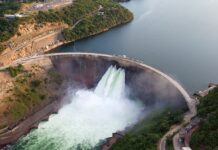
Large water projects tend to attract attention because of their dams, reservoirs, treatment capacity and transmission pipelines. Yet these are only parts of a much larger engineering system.
A bulk-water scheme needs a dependable source, treatment facilities suited to the quality of the raw water, adequate transmission capacity and distribution networks capable of delivering the supply to consumers. Storage, pumping requirements, power costs and the condition of existing networks all influence the final cost of service delivery.
The same principle applies to sanitation. Constructing a wastewater treatment plant will achieve little if sewer networks do not connect enough households and businesses to it. Treatment capacity must match actual wastewater flows, while sludge disposal, energy consumption, effluent quality and the possibility of safely reusing treated water must be incorporated into the operating model.
Irrigation schemes face similar demands. Water must be conveyed and distributed to farms, drainage must be provided where necessary, and maintenance arrangements must be established for canals, pipelines and associated structures. Water allocation also needs to reflect seasonal availability and the requirements of different users.
These connections are often where the gap between construction and service delivery becomes apparent. A completed reservoir cannot supply households without the necessary treatment and distribution infrastructure. An irrigation scheme cannot achieve its intended agricultural output if water does not reach farms reliably.
Investment planning must therefore cover the complete service chain rather than concentrate on the most visible structures.
What private finance can—and cannot—do
Private-sector participation offers one way to mobilise additional capital and bring specialised expertise into water infrastructure development. Options include public-private partnerships, commercial borrowing, blended finance and other funding arrangements outside conventional government budgets.
However, private finance does not remove the cost of infrastructure. It determines how that cost is raised, how risks are allocated and how the money is eventually repaid.
Investors will want to understand who will pay for the service, how much revenue the project can generate and whether that income will be sufficient to cover operating costs, debt repayments and the required return on investment.
Depending on the project, revenue may come from water tariffs, bulk-water purchase agreements, government payments or a combination of these arrangements. Each model requires clear contractual obligations and a realistic assessment of demand, affordability and the ability of customers or public institutions to meet their payments.
This presents a particular difficulty for projects serving low-income communities or sparsely populated areas. The social benefits may be substantial, but the revenue generated may not support fully commercial financing.
Public investment and targeted subsidies will therefore remain necessary in some cases. Blended finance can help make projects viable by combining public resources or concessional funding with commercial capital. The arrangement must still be transparent about the risks involved and the costs ultimately borne by taxpayers and water users.
The priority should be to select financing models that suit the project, rather than assume that private investment is automatically cheaper or more efficient than public funding.
Keeping utilities financially sustainable
The financial health of water utilities is another part of the investment equation. Once infrastructure is commissioned, utilities must pay for electricity, treatment chemicals, staff, repairs, spare parts and the eventual replacement of ageing equipment and pipelines.
If these recurring costs are not adequately funded, infrastructure can deteriorate even when its initial construction was successful.
Non-revenue water is one of the sector’s persistent challenges. It includes water lost through leakage and other physical losses, as well as water supplied but not billed or paid for because of metering, illegal connections and administrative weaknesses. High levels of non-revenue water reduce the income available to maintain networks and expand services.
Addressing the problem requires more than setting reduction targets. Utilities need reliable measurements of water entering their systems, functioning meters, pressure management, active leak detection and planned replacement of deteriorated pipes. Better billing and collection systems are also necessary to recover revenue for water that is supplied.
Reducing losses can improve both financial performance and the efficient use of available water resources. It may also defer the need for additional production capacity by making better use of water already being treated and distributed.
For this reason, the financial and technical capacity of the receiving utility should be assessed before a major project is approved. The cost of operating the new infrastructure must be considered alongside the cost of building it.
From conference discussions to completed projects
Following the Nairobi conference, the sector’s progress will depend on the commitments and implementation measures that emerge from the discussions. Financing proposals, announced commitments, signed agreements, actual disbursements and completed projects represent different stages of delivery and should be reported separately.
A transparent national water investment pipeline would help clarify where public resources and private capital are being directed. For each major project, it should identify the estimated cost, location, implementation status, financing arrangements, outstanding constraints and expected service outcomes.
For stalled projects, the priority should be to establish why work stopped, what remains unfinished and how much additional funding is needed to complete the scheme. Reviving an existing project may offer value, but only after its technical condition, revised costs and continuing relevance have been assessed.
Engineers have a central role in this process. Sound feasibility studies, appropriate design standards, accurate cost estimates and effective construction supervision help reduce the risk of delays and expensive variations. Equally important are environmental and social safeguards, procurement oversight and clear arrangements for operation and maintenance.
Kenya’s water investment challenge is not just about finding money for new infrastructure. It is about preparing projects properly, financing the complete system and ensuring that utilities can keep it running.
The ultimate measure of success will be the number of households receiving dependable water, the effectiveness of sanitation services and the extent to which irrigation schemes support productive agriculture. Those outcomes, rather than the size of announced investment programmes, will show whether the money committed to the sector is delivering lasting value.

-
Product on sale
 AWEBook Volume 2Original price was: KShs 3,500.00.KShs 3,000.00Current price is: KShs 3,000.00.