






Last Updated 55 mins ago by Kenya Engineer
Africa’s critical-mineral resources are attracting growing investment, but extracting minerals is only one part of the industrial value chain. Mines need reliable transport, electricity, water and logistics systems to move products to market. Processing them locally requires an even broader infrastructure base, including power-intensive industrial facilities, specialised equipment and dependable connections to suppliers and customers.
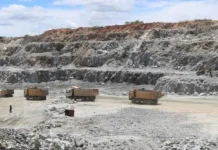
The Lobito Corridor in Southern and Central Africa offers a useful case study in how these systems can be developed together. The corridor links the Port of Lobito in Angola with the mineral-producing regions of the Democratic Republic of Congo (DRC) and Zambia through an established railway network and associated transport infrastructure.
Its strategic importance lies in providing an Atlantic export route for minerals, including copper and cobalt, while creating the possibility of more efficient freight movement and wider economic activity along the corridor.
Yet a railway connection alone cannot guarantee industrial development. The outcome will depend on how effectively the railway, port, border processes, road links and supporting infrastructure operate as a coordinated system.
Upgrading an existing railway
The Lobito Atlantic Railway is an operating brownfield railway whose rehabilitation, upgrading and long-term operation are central to the corridor’s development.
In July 2026, the Development Bank of Southern Africa announced financial close on US$786 million for the Lobito Corridor Railway Project, with financing support from the US International Development Finance Corporation. The investment is intended to support railway rehabilitation, upgrades and operation, improving the movement of freight between the mineral-producing interior and Angola’s Atlantic port.
Separately, in August 2026, the African Development Bank approved a US$255 million loan and a US$10 million grant to support Zambia’s participation in the wider Lobito Economic Corridor initiative.
These are related but distinct financing packages. The railway investment concerns the existing railway concession and its infrastructure, while the African Development Bank’s support for Zambia covers a wider corridor-development programme, including transport, trade facilitation, agriculture, energy and institutional capacity.
The distinction matters when assessing the overall cost of the corridor. Railway rehabilitation, additional transport links and the broader economic infrastructure cannot be treated as one undifferentiated construction project.
The engineering behind freight capacity
For a railway serving large mineral producers, capacity depends on the condition of the track and the performance of the entire operating system.
Track geometry, rail condition, bridges, culverts, drainage, signalling, telecommunications and maintenance facilities all affect reliability. The permissible axle loads, train lengths, gradients and locomotive performance influence how much freight can be moved in each train and how frequently services can operate.
Rehabilitation must therefore be based on the condition of existing assets and the traffic the railway is expected to carry. Some interventions may involve restoring deteriorated infrastructure, while others may require capacity upgrades, new passing facilities, improved terminals or changes to operating practices.
The railway also depends on efficient interfaces with the port and with connecting transport networks. Delays in loading, unloading, customs clearance or border processing can erode the advantage of a faster rail journey.
A meaningful assessment of the project should therefore examine the expected increase in freight capacity, transit times, reliability, maintenance requirements and the division of responsibility among infrastructure owners, operators and logistics providers.
Beyond the railway: a wider corridor
The African Development Bank’s support for Zambia reflects a broader approach to economic corridors. In addition to physical infrastructure, the programme includes trade facilitation, institutional support, capacity building and measures intended to encourage investment and local value addition.
These elements are essential because transport infrastructure generates wider economic benefits only when firms can use it efficiently. Border procedures, logistics services, reliable utilities and access to industrial sites influence whether new businesses locate along a corridor.
Mineral processing illustrates the challenge. Copper and cobalt operations require substantial energy and water, as well as suitable processing facilities, waste-management systems and dependable transport for inputs and finished products.
If the corridor primarily makes it cheaper to export unprocessed minerals, it may improve logistics without delivering the full industrial transformation often associated with such projects. Developing processing capacity requires separate investment decisions, technically suitable sites, competitive energy supply and a credible commercial market.
That does not diminish the value of the railway. More reliable freight transport can reduce bottlenecks and improve access to markets. It does, however, underline the need to distinguish transport benefits from the additional investment required to expand manufacturing and mineral processing.
What the corridor can teach other African economies
The Lobito project demonstrates the complexity of delivering infrastructure across national borders. It requires coordination among governments, lenders, railway operators, port authorities, mining companies and logistics providers.
It also highlights the importance of treating infrastructure as a connected system rather than a collection of isolated projects. A rehabilitated railway will not achieve its full potential if border processes remain slow, port capacity is insufficient or the industrial users it is meant to serve cannot secure dependable power and water.
For countries such as Kenya seeking to strengthen transport corridors and industrial value chains, the relevant lesson is not that one corridor model can be copied everywhere. It is that infrastructure planning should begin with the freight and economic activity the system must support, then identify the technical, institutional and financial requirements across the entire route.
The Lobito Corridor’s success should ultimately be measured through operating performance: freight volumes, transit reliability, transport costs, maintenance performance and the extent to which businesses can use the improved connection. Its wider development impact will depend on whether better transport is accompanied by investment in productive activity along the corridor.

-
Product on sale
 AWEBook Volume 2Original price was: KShs 3,500.00.KShs 3,000.00Current price is: KShs 3,000.00.















 and Zambia)