
Last Updated 1 hour ago by Kenya Engineer
Electricity interconnections are gradually opening up new opportunities for power trade across East Africa. But connecting national grids is only part of the task. Countries must also coordinate investment in generation and transmission, understand each other’s future electricity needs and establish operating and commercial arrangements that allow power to move reliably across borders.
These issues were discussed at a regional workshop in Kigali, Rwanda, on 29–30 September 2026, where utilities and regional institutions reviewed the Eastern Africa Power Pool’s Regional Power System Master Plan. The African Development Bank reported on the discussions on 9 October.
The review is intended to improve the information used to plan future generation capacity and transmission infrastructure across the region. For Kenya, the work has implications for electricity imports, domestic grid investment and the options available for meeting future demand.
A regional master plan can help identify where new transmission links are needed, which investments should take priority and how national power systems could operate more efficiently together. Its usefulness, however, will depend on the quality of the underlying data and whether governments and utilities follow through on the proposed investments.
Planning beyond national borders
Established in 2005, the Eastern Africa Power Pool (EAPP) promotes regional electricity cooperation through grid interconnection, coordinated power-system planning and electricity trading.
Its regional master plan provides a framework for assessing electricity demand, existing and proposed generation capacity, and the transmission infrastructure needed to connect national networks. Rather than treating each country’s power system in isolation, the exercise considers how generation and demand across the region could be served through a more coordinated network.
At the Kigali workshop, participants reviewed demand forecasts, generation plans and transmission networks. They also examined gaps in the quality and completeness of the data used for regional planning.
Reliable data is essential to making sound investment decisions. If demand is overestimated, a country or regional planning body could commit resources to capacity that is not needed when expected. Underestimating demand could leave the system short of generation or transmission capacity. Similarly, a plan that fails to account for delays to proposed power stations or constraints on existing networks may overstate the electricity available for trade.
The planning process must reconcile national forecasts and project schedules with the technical limits of the interconnected system. That includes identifying where electricity will be generated, where demand is expected to grow and whether the transmission network can deliver power when it is needed.
Building the links is not enough
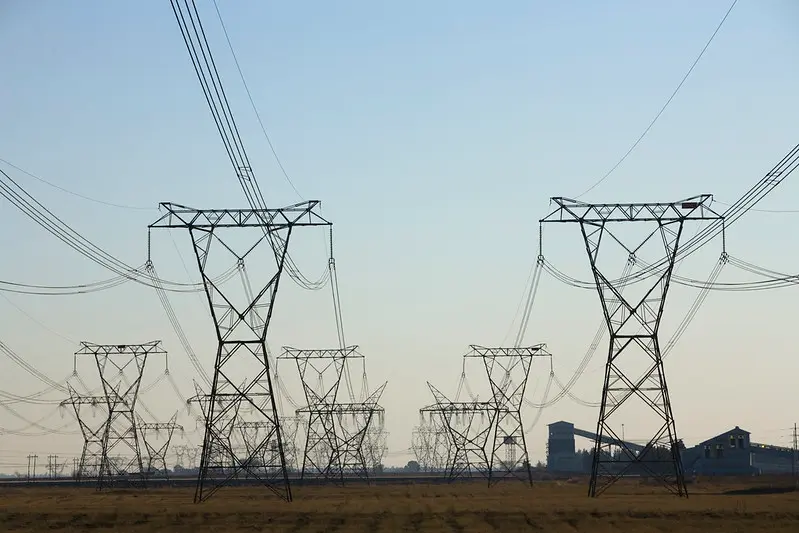
Cross-border transmission lines make electricity exchange possible, but the amount of power they can carry depends on the condition and capacity of the wider network.
A new interconnector may be limited by congestion on transmission lines within either country, transformer capacity, voltage stability or other operating constraints. Protection systems, control centres and communications infrastructure must also support coordinated operation across national boundaries.
Commercial arrangements are equally important. Utilities need agreed procedures for scheduling electricity exchanges, managing congestion, measuring delivered power and settling payments. They must also know how supply interruptions, transmission outages and disputes will be handled.
The Zambia–Tanzania–Kenya interconnector illustrates the wider ambitions for regional power trade. The European Commission describes the planned 400 kV double-circuit link involving Tanzania and Zambia, together with associated substation infrastructure, as part of efforts to strengthen electricity connections between the Eastern and Southern African power systems.
Such infrastructure could broaden the range of potential trading partners and improve access to generation resources beyond individual national grids. But the benefits will depend on the readiness of the connected networks, the availability of surplus electricity and the commercial terms governing its sale.
Regional planning must consequently look beyond the construction of individual lines. It needs to identify the network reinforcements required at either end, the capacity that can realistically be transferred and the sequence in which projects should be implemented.
For Kenya
Regional electricity trade offers an additional way to balance supply and demand. Electricity consumption and generation patterns vary across countries, creating opportunities for one system to supply another when it has power available.
Imports can complement domestic generation and help meet demand during periods when local supply is constrained. Interconnections may also improve the flexibility of the wider system as countries expand their use of different generation technologies.
However, imported electricity should not automatically be treated as guaranteed supply. A neighbouring country may experience its own shortfall, while drought can reduce hydropower output and transmission outages can limit deliveries even when generation is available.
Kenya’s planning decisions must therefore consider regional trade alongside domestic generation, transmission expansion and system reserves. The relevant questions include how much electricity can be imported under different operating conditions, what it will cost and how dependable the supply will be during periods of regional stress.
This also affects investment priorities. Stronger interconnections can reduce the need for some forms of additional capacity, depending on the circumstances, but they do not remove the need for a reliable domestic grid. Power must still be transported from border substations to demand centres, and the network must remain capable of operating securely when imports are unavailable.
A regional master plan can help clarify these trade-offs by comparing alternative generation and transmission investments against projected demand and operating constraints.
Turning the plan into projects
The African Development Bank reported that recommendations from the Kigali workshop would guide the next stage of the master-plan study. Member countries are expected to continue improving data collection, completing technical work and identifying investments needed to meet future electricity demand.
The next challenge is to translate the analysis into projects that can be financed and built. Each proposed interconnector or grid reinforcement needs a technical and economic assessment, a realistic implementation schedule, an agreed financing structure and coordination among the countries and utilities involved.
Governments and utilities must also agree on how the regional market will operate. Clear rules for electricity trading, network access, scheduling, settlement and dispute resolution are necessary to give participants confidence that transactions can be completed as agreed. Regulators and system operators will need to coordinate their responsibilities as cross-border exchanges increase.
These arrangements are as important as the physical infrastructure. A transmission line may be technically ready, but its commercial value will be limited if power cannot be scheduled reliably, network constraints are poorly managed or payments are uncertain.
The updated master plan offers East Africa an opportunity to make generation and transmission investment more coherent across national boundaries. Its success will depend on whether the proposed projects address real system constraints and whether participating countries can agree on the financing, construction and operation needed to bring them into service.
For Kenya and its neighbours, the objective is not interconnection for its own sake. It is a power system that can exchange electricity reliably, use available generation more efficiently and meet growing demand without compromising security of supply.

-
Product on sale
 AWEBook Volume 2Original price was: KShs 3,500.00.KShs 3,000.00Current price is: KShs 3,000.00.