Last Updated 6 hours ago by Kenya Engineer
KenGen’s proposed 5,540 MW generation expansion by 2034 signals a major shift in Kenya’s electricity ambitions. Turning the development pipeline into operational power stations, however, will require substantial investment, complex engineering, coordinated infrastructure development and careful management of project risks.
Kenya’s electricity sector is approaching a defining period in its development. Rising electricity consumption, growing industrial ambitions and the need for a more resilient power supply are increasing pressure on the country to develop additional generation capacity. Against this background, the Kenya Electricity Generating Company (KenGen) is seeking local and international investors to support an ambitious programme targeting an additional 5,540 megawatts (MW) of generation capacity by 2034.
The proposed expansion represents a substantial revision of the company’s earlier development ambitions. Under its G2G 2034 corporate strategy, KenGen had initially targeted an additional 1,500 MW over a ten-year period. In June 2026, the company announced that it had expanded this development pipeline to approximately 5,500 MW, reflecting new opportunities in geothermal energy, hydropower and nuclear generation, alongside growing interest in Kenya’s electricity market.
The investment mobilisation effort has gained prominence ahead of the Sustainable Energy Conference 2026, scheduled for 24–27 November at Olkaria, Naivasha. KenGen is using the conference to bring together potential investors, financiers, technology providers, government institutions and other energy sector stakeholders to discuss the proposed projects and possible financing arrangements.
The company’s Managing Director and Chief Executive Officer, Eng. Peter Njenga, has acknowledged the ambitious nature of the target, linking it to the national aspiration of increasing Kenya’s installed electricity generation capacity to 10 gigawatts (GW).
The announcement is significant because it moves the conversation beyond individual power projects towards the question of how Kenya will finance, construct and integrate a much larger electricity generation system. The proposed 5,540 MW is a development pipeline, however, rather than capacity already financed or under construction. Its delivery will depend on the readiness of individual projects, investor commitments, regulatory approvals and the availability of supporting infrastructure.
A changing electricity demand profile
Kenya’s generation expansion ambitions are being shaped by a steady increase in electricity consumption. More households are connecting to the national grid, while manufacturing, commercial developments, transport electrification and other energy-intensive activities are creating additional demand.
Kenya’s peak electricity demand reached 2,549 MW in July 2026, according to figures reported during the period. This represents an increase from 2,316 MW recorded in the financial year ending June 2025. Kenya Power’s medium-term projections have also indicated continued growth in peak demand as electricity consumption expands.
KenGen dispatched 8,975 gigawatt-hours (GWh) of electricity to the national grid during the financial year ending June 2026, accounting for approximately 57.2 per cent of the country’s total electricity supply. More than 90 per cent of the company’s dispatched electricity came from renewable sources.
The company reported that its infrastructure investment increased by 14.3 per cent to KSh15.5 billion during the same financial year, demonstrating the continuing capital requirements of maintaining existing generation assets while preparing new projects.
KenGen’s installed generation capacity has also increased following the rehabilitation of the 63 MW Olkaria I geothermal power station. The upgrade raised its installed capacity to approximately 1,848 MW, according to information released by the company in November 2026.
The national generation challenge is not simply about adding more power stations. Electricity systems require sufficient capacity to meet demand during peak periods, accommodate maintenance and unexpected equipment failures, and maintain a reasonable reserve margin. A narrow reserve margin leaves the system more exposed to interruptions when generating units become unavailable.
This makes the timing and reliability of new generation investments particularly important. It also explains why Kenya’s future energy mix will need to consider how different technologies complement one another rather than focusing exclusively on their installed capacity.
The projects behind the 5,540 MW ambition
KenGen’s expanded development pipeline includes several major projects with different technologies, capacities and development requirements. Some involve established technologies that Kenya already operates, while others would introduce entirely new engineering and operational capabilities.
High Grand Falls hydropower project
One of the largest proposed developments is the High Grand Falls hydropower project on the Tana River, with a planned generating capacity of approximately 700 MW.
The project is envisaged as a multipurpose water infrastructure development, combining electricity generation with water storage, irrigation and flood management. Its location within the wider Tana River basin makes it particularly significant because it would add another major component to the existing hydropower cascade.
The Kenya Investment Authority has presented the project as an investment opportunity estimated at approximately US$1.2 billion. Its published project information describes a proposed dam approximately 115 metres high and 2.5 kilometres long, with a reservoir capacity of around five billion cubic metres. The development is expected to support irrigation across a substantial agricultural area in addition to generating electricity.
From an engineering perspective, the project would involve extensive civil works, including dam construction, foundation preparation, water conveyance infrastructure, powerhouse development, hydraulic equipment installation and high-voltage electrical connections.
The scale of the proposed reservoir also makes geological investigations, hydrological modelling and dam safety assessments critical. Engineers would need to establish the characteristics of the underlying rock formations, evaluate sedimentation patterns, assess extreme flood conditions and determine how water releases would interact with downstream communities and existing hydropower facilities.
Its multipurpose nature introduces additional coordination requirements. Electricity generation, irrigation demand, water supply and flood management must be considered together when determining reservoir operating rules.
The project is still at the development and feasibility stage. Its estimated investment value should therefore be treated as indicative rather than a final construction budget.
The proposed 2,000 MW nuclear power plant
The proposed nuclear power programme is another major component of Kenya’s long-term generation ambitions. A nuclear facility with a planned capacity of approximately 2,000 MW would represent a fundamental change in the country’s electricity generation infrastructure.
The programme has advanced towards identifying a preferred site in Siaya County, with Lenya Village identified as the preferred location following preliminary site assessments. KenGen is expected to serve as the plant’s owner and operator, while the Nuclear Power and Energy Agency (NuPEA) coordinates the national nuclear power programme and the Kenya Nuclear Regulatory Authority provides independent regulatory oversight.
However, identifying a preferred site does not amount to approval for construction. Detailed site characterisation, environmental and social impact assessments, land acquisition, financing arrangements, technology selection, licensing and institutional preparedness remain important requirements.
Nuclear power stations require considerably different engineering and management capabilities from conventional thermal, geothermal or hydropower plants. Their development involves specialised reactor technology, nuclear fuel management, radiation protection systems, cooling infrastructure, emergency preparedness and long-term radioactive waste management.
The proposed 2,000 MW capacity also raises questions about the ability of the national grid to accommodate a large generating unit or plant complex. Grid stability, transmission reinforcement and contingency planning would need to be incorporated into the project’s design.
The nuclear programme is therefore a long-term undertaking requiring sustained government commitment, international technical cooperation, regulatory independence and a carefully structured financing model.
The proposed commissioning timetable will need to be assessed against these development requirements rather than treated as a guaranteed delivery date.
Seven Forks solar development
KenGen is also pursuing a 42.5 MW solar photovoltaic power plant within the Seven Forks hydropower corridor.
Solar photovoltaic systems convert sunlight directly into electricity using semiconductor cells. They can be deployed relatively quickly compared with large hydropower and nuclear developments, although their output varies with solar radiation and weather conditions.
Locating the proposed solar project within an established generation corridor offers opportunities to utilise existing infrastructure and operational experience. It also provides an opportunity to explore how solar generation can complement hydropower operations.
The development is expected to break ground in early 2027, subject to the required implementation arrangements.
Gogo hydropower redevelopment
In Migori County, KenGen is pursuing the redevelopment of the Gogo hydropower station, with an additional capacity of approximately 8.6 MW included in the development pipeline.
Hydropower redevelopment can offer opportunities to improve generation from existing water resources and infrastructure. Depending on the condition of the existing facility, engineering interventions may include turbine replacement, generator upgrades, improvements to water conveyance systems and modernisation of control equipment.
The project also demonstrates the value of examining existing power stations for additional generation potential rather than relying exclusively on entirely new developments.
Alongside these named projects, KenGen is exploring geothermal resource development and upgrades to existing generating facilities. The company has not yet published a complete project-by-project breakdown accounting for the entire 5,540 MW target. The individual project capacities and their development stages will therefore remain important areas for investors to examine.
The investment challenge
The proposed expansion will require capital on a scale that cannot be assessed by looking at individual generating units alone. Large power projects involve expenditure on land, feasibility studies, engineering design, civil works, generating equipment, electrical installations, grid connections, environmental mitigation and project management.
The financing requirements also differ considerably between technologies.
A solar power plant may have a relatively shorter development and construction period, while a major hydropower dam requires extensive investigations and civil engineering works before electricity generation can begin. Geothermal development involves resource exploration and drilling, with the possibility of unsuccessful wells increasing the financial risk. Nuclear power projects require substantial upfront investment and long development periods.
KenGen’s current investor mobilisation effort is intended to connect these opportunities with local and international sources of capital.
The company has signed partnership agreements with 11 organisations ahead of the Sustainable Energy Conference, including the Energy and Petroleum Regulatory Authority (EPRA) and the Geothermal Development Company (GDC). The partnerships are intended to strengthen cooperation and investment mobilisation across the energy sector.
Potential financing arrangements could involve development finance institutions, commercial lenders, private investors, infrastructure funds and strategic technology partners. Depending on the project, public-private partnerships, project-specific financing vehicles, equity participation and concessional funding could also play a role.
Each arrangement has different implications for ownership, repayment obligations, project control and the allocation of construction and operational risks.
For example, concessional development financing can provide longer repayment periods and more favourable lending terms for projects with significant public benefits. Private investment can introduce additional capital and technical expertise, but investors will require predictable revenues and confidence that the regulatory and commercial environment supports long-term returns.
Project-specific financing may also allow individual developments to attract investors according to their technical and commercial characteristics without placing the entire financial burden on KenGen’s balance sheet.
The challenge will be to secure funding at a cost that does not undermine the affordability of the electricity eventually supplied to consumers.
KenGen’s financial position provides an important starting point. During the financial year ending June 2026, the company recorded revenue of KSh59.7 billion and profit after tax of approximately KSh10.35 billion. Its total borrowings declined by KSh12.2 billion to KSh97.1 billion.
These figures demonstrate an established revenue-generating business, but the financing requirements of a 5,540 MW expansion are far beyond what can reasonably be funded from routine annual operating cash flows alone.
A carefully balanced investment strategy will consequently be necessary, particularly where projects have long construction periods before they begin generating revenue.
The national grid must grow alongside generation
One of the most important considerations in Kenya’s proposed generation expansion is the capacity of the transmission and distribution network to accommodate additional electricity.
Generation capacity has limited practical value if the electricity cannot be transported reliably to the centres where it is needed.
Kenya’s electricity transmission system includes high-voltage lines operating at 132 kV and above, supported by substations that facilitate the movement of electricity across the country. The network connects major generating stations with urban centres, industrial consumers and regional electricity interconnections.
However, the National Energy Policy 2025 draft identifies insufficient transmission and transformation capacity as a continuing challenge. It also highlights voltage and frequency regulation difficulties, transmission losses, inadequate infrastructure funding and generation curtailment arising from network constraints.
These challenges have direct implications for KenGen’s expansion programme.
New generation facilities will require appropriate transmission connections, substations and system reinforcement. Projects located far from major demand centres may require extensive new transmission infrastructure, increasing overall development costs.
The proposed High Grand Falls project, for example, would need to be integrated into the national grid through transmission infrastructure capable of carrying its output reliably. The same applies to the proposed nuclear development and additional geothermal capacity.
Kenya Electricity Transmission Company (KETRACO) will have an important role in developing the transmission infrastructure required to support these investments, while Kenya Power will remain central to distribution and electricity supply.
The Government’s Transmission Master Plan 2024–2043 provides for approximately 2,500 kilometres of transmission projects by 2027 and a longer-term programme extending to 2041.
Coordination between generation and transmission planning will be essential. Developing generating capacity ahead of the network can result in underutilised assets, while building transmission infrastructure without corresponding generation investments can also lead to inefficient use of capital.
The two sides of the electricity system must advance together.
Energy storage and the changing role of the grid
The growing contribution of variable renewable energy sources is also increasing the importance of electricity storage.
Solar and wind generation depend on weather conditions and the availability of natural resources. Their output may not always coincide with periods of highest electricity consumption. This creates a need for storage and other forms of system flexibility.
KenGen has secured approximately KSh10.5 billion in funding for a proposed 100 MW battery energy storage system. The funding comprises US$45 million from the Green Climate Fund and €32.08 million from the World Bank’s International Development Association, according to the company’s reported annual disclosures.
The proposed installations are intended for Olkaria, Kipevu, Embakasi and Muhoroni.
Battery storage systems charge when electricity is available and release it when required. They can help balance fluctuations in supply and demand, support grid stability and improve the utilisation of renewable generation.
The distinction between power and energy capacity is important in understanding this investment. The proposed system is reported at 100 MW and 100 MWh. The first figure represents its maximum power output, while the second represents the amount of energy it can store. At full rated output, a 100 MWh battery system could theoretically supply 100 MW for one hour, subject to operating conditions and system losses.
The battery investment is separate from the 5,540 MW generation expansion, because storage does not create new primary electricity. It improves the timing and flexibility with which electricity already generated can be supplied to the grid.
KenGen has also indicated a longer-term ambition to develop 500 MWh of battery energy storage capacity.
This investment is particularly relevant as Kenya expands its solar, wind and geothermal resources. It also demonstrates why the country’s future electricity infrastructure will require more than generating stations and transmission lines.
Olkaria and the opportunity for industrial development
The investment drive is not limited to supplying additional electricity to the national grid. KenGen is also seeking to use its geothermal resources as a foundation for industrial development.
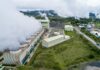
The Olkaria Green Energy Park is intended to attract industries that can benefit from reliable geothermal electricity, geothermal steam and associated infrastructure.
The development provides an opportunity to connect energy generation with manufacturing and other productive activities. Potential investments include fertiliser production, steel processing, food production and other industries that require substantial and dependable energy supplies.
One of the proposed developments is a green fertiliser facility by Kaishan Group, with an announced investment value of approximately US$800 million and an expected electricity requirement of around 165 MW.
The concept illustrates a broader economic opportunity for Kenya. Instead of treating electricity generation as an isolated activity, the country can use its energy resources to attract industrial investment, create employment and support domestic production.
Geothermal power is particularly attractive in this context because it can provide relatively consistent electricity throughout the day, unlike solar and wind generation, whose output varies with weather conditions.
For KenGen, securing industrial consumers could also strengthen the commercial case for additional geothermal development. However, industrial projects will require their own financing, infrastructure, environmental approvals and commercially sustainable power arrangements.
Engineering, environmental and social considerations
The scale of the proposed programme will create significant opportunities for Kenya’s engineering and construction industries.
Hydropower developments will require civil, structural, geotechnical, hydraulic and electrical engineering expertise. Geothermal expansion will involve drilling, reservoir engineering, mechanical systems and specialised plant installations. Solar projects will create demand for electrical engineering, structural support systems, inverters, power conversion equipment and grid integration.
Nuclear development will require a much broader specialised skills base, including nuclear engineering, radiation protection, safety analysis and regulatory expertise.
Local engineering firms, contractors, manufacturers and technical service providers could participate in various stages of the programme, provided that they have the necessary technical capabilities, financial capacity and quality assurance systems.
The development programme will also require careful environmental and social management.
Large hydropower projects can affect river ecosystems, land use, downstream water availability and communities living within project areas. Reservoir development may require land acquisition and resettlement, while changes in river flows can affect agriculture, fisheries and other economic activities.
Geothermal projects require management of drilling waste, emissions, water resources and land rehabilitation. Nuclear development introduces additional requirements relating to radiation safety, emergency preparedness, radioactive waste and long-term environmental monitoring.
These issues must be incorporated into project planning from the earliest stages rather than treated as requirements to be addressed after construction has begun.
Public participation, transparent environmental assessments and meaningful engagement with affected communities will be important in maintaining public confidence and reducing implementation delays.
Turning ambition into dependable electricity
KenGen’s 5,540 MW expansion ambition represents a major opportunity for Kenya’s energy sector, but the distance between identifying a project and delivering an operational power station remains considerable.
The company must move from investment discussions towards bankable project proposals supported by detailed feasibility studies, engineering designs, reliable cost estimates, financing commitments and clear implementation schedules.
The proposed projects will also need to demonstrate that their electricity can be absorbed by the national grid and purchased under commercially sustainable arrangements.
This is particularly important because additional generation capacity does not automatically translate into lower electricity tariffs. The final cost of power is influenced by construction financing, operating expenses, fuel and resource costs, transmission charges, contractual arrangements and the efficiency of the entire electricity system.
A successful expansion must therefore balance three objectives: increasing the availability of electricity, maintaining reliability and keeping the cost of supply manageable for households and businesses.
The Sustainable Energy Conference 2026 offers KenGen an opportunity to present its project pipeline to potential financiers and technology partners. Its significance will ultimately depend on whether those discussions produce concrete investment commitments and move individual projects towards implementation.
For Kenya’s engineering sector, the programme could mark the beginning of a substantial period of infrastructure development. For the wider economy, its success will be measured by the additional dependable electricity delivered to homes, businesses and industries.
The real test of the 5,540 MW ambition will not be the size of the announced pipeline, but the number of projects that secure financing, pass the necessary technical and environmental assessments, are completed on schedule and deliver electricity that Kenya can afford to use.

-
Product on sale
 AWEBook Volume 2Original price was: KShs 3,500.00.KShs 3,000.00Current price is: KShs 3,000.00.