Last Updated 7 hours ago by Kenya Engineer
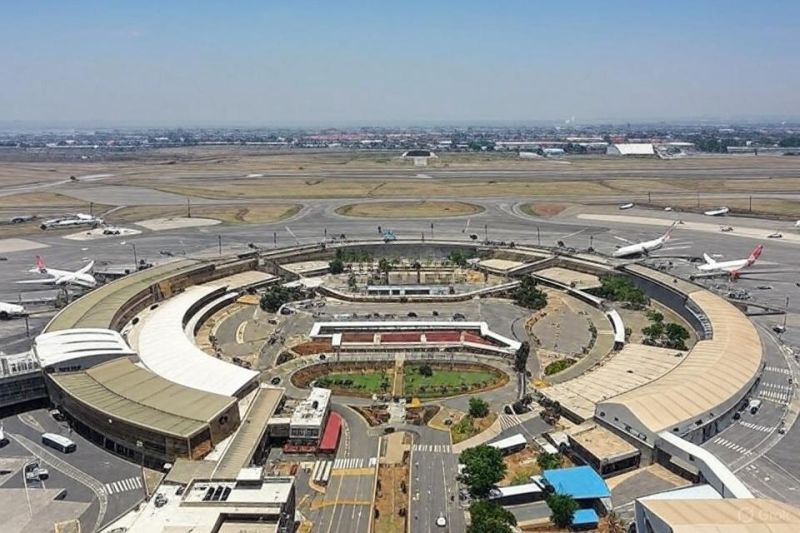
Jomo Kenyatta International Airport (JKIA) has long occupied a central position in Kenya’s transport and economic infrastructure. As the country’s principal international gateway, it connects Kenya to major markets across Africa, Europe, Asia and the Middle East. It is also an important regional hub for passenger travel, air cargo, tourism, trade and business.
But the demands placed on the airport have grown considerably since much of its existing infrastructure was developed. Passenger numbers have increased, aircraft movements have become more intensive, and the airport’s role in regional and international logistics has expanded.
The pressure is increasingly visible in congested passenger facilities, constrained aircraft parking areas and limitations in the movement of aircraft between the runway and terminal facilities.
Kenya is now embarking on one of its most significant aviation infrastructure investments, with a KSh154.2 billion modernisation and development programme intended to address these constraints and prepare JKIA for future demand.
In June 2026, the government signed a design-and-build contract with China Road and Bridge Corporation (CRBC). The project includes construction of a new passenger terminal, improvements to existing airport infrastructure and upgrades to airside and landside operations.
The scale of the investment is significant. However, its real engineering challenge lies in coordinating several interconnected systems that must operate together if the airport is to accommodate substantially more passengers and aircraft without creating new bottlenecks elsewhere.
An airport operating beyond its original capacity
The case for modernising JKIA is supported by the passenger traffic figures contained in the Kenya Airports Authority’s February 2026 Integrated Master Plan.
The airport was originally designed to handle approximately 7.5 million passengers annually. By 2024, it was processing approximately 8.6 million passengers, rising to about 8.93 million in 2025.
The master plan projects that annual passenger traffic could reach 22.3 million by 2045, representing average annual growth of approximately 4.6%.
Air cargo is also expected to increase substantially, from approximately 407,214 tonnes in 2025 to 860,400 tonnes by 2045.
These projections have implications beyond the size of passenger terminals. More passengers mean increased demand for check-in counters, security screening, immigration processing, baggage systems, parking and access roads. More flights mean greater pressure on runways, taxiways, aircraft stands and ground-handling facilities. Increased cargo volumes require additional handling, storage and transport capacity.
The airport must consequently be developed as an integrated transport facility rather than a collection of separate construction projects.
The runway: where airport capacity begins
One of the most important findings in the JKIA master plan is that the airport’s single-runway configuration presents a long-term operational constraint.
The existing runway, designated 06/24, is approximately 4,117 metres long and serves arriving and departing aircraft. Its ability to handle aircraft movements depends on several factors, including aircraft type, weather conditions, separation requirements and the time taken by an aircraft to clear the runway after landing.
When an aircraft lands, it must slow down sufficiently before leaving the runway through an exit taxiway. Until it has cleared the runway, another aircraft cannot use that same runway for landing.
This interval is known as runway occupancy time. Reducing it can improve the number of aircraft movements that an airport can accommodate within an hour.
The JKIA master plan proposes two rapid-exit taxiways, a runway-end exit and a partial parallel taxiway to improve aircraft circulation.
Rapid-exit taxiways are designed to allow landing aircraft to leave the runway at higher speeds than would be possible using conventional exits. Their positioning is determined by factors such as aircraft landing speeds, braking performance, runway configuration and the characteristics of the aircraft fleet using the airport.
The proposed improvements are expected to reduce average runway occupancy time from approximately 66 seconds to 60.1 seconds. The master plan estimates that arrival capacity could consequently increase from 25 to 31 aircraft movements per hour.
Although the reduction appears modest, its effect can accumulate across busy operating periods, helping reduce delays and improve the utilisation of existing infrastructure.
The partial parallel taxiway is equally important. A taxiway provides the route along which aircraft move between the runway, terminal and parking areas. Without adequate taxiway capacity, aircraft may spend unnecessary time waiting or moving through congested sections of the airfield.
The objective is to allow aircraft to move more efficiently without interfering unnecessarily with runway operations.
Why JKIA will eventually need a second runway
The improvements to the existing runway are intended to address near-term operational constraints. They are not, however, a permanent solution to the airport’s projected growth.
The February 2026 master plan identifies the construction of a second runway as a major component of the airport’s longer-term development strategy.
The proposed approach is phased. The first phase focuses on improving the existing runway and associated taxiway infrastructure through 2029. The second phase, covering 2030–2045, envisages a second runway capable of supporting independent arrival and departure operations.
The need becomes clearer when aircraft movement forecasts are considered.
According to the master plan, peak-hour arrival demand could increase from approximately 32 aircraft movements in 2029 to 52 by 2045. Departure demand is projected to rise from 34 to 57 movements per hour.
These figures would exceed the capacity of the improved single-runway system during peak periods.
A second runway would provide greater operational flexibility, allowing arrivals and departures to be managed more independently. It would also improve resilience when one runway is unavailable for maintenance, inspections or other operational reasons, subject to the eventual configuration and operating procedures.
However, the distinction between long-term planning and the current construction contract is important. The second runway appears in the airport’s wider master plan; its inclusion in the signed KSh154.2 billion contract should not be assumed.
The terminal: more than additional passenger space
For most travellers, the most visible element of airport modernisation is the passenger terminal.
The proposed new terminal is intended to provide additional processing capacity while improvements to existing facilities address congestion and operational inefficiencies.
But a terminal’s capacity is not determined by its floor area alone.
Passengers move through a sequence of processes, including check-in, baggage acceptance, security screening, immigration, boarding and baggage collection on arrival. Each stage must be designed to handle the expected passenger volumes without creating queues that obstruct other parts of the facility.
For example, increasing the number of check-in counters will have limited benefit if security screening cannot process passengers at a similar rate. Likewise, a larger departure lounge will not resolve congestion if immigration facilities or boarding gates remain inadequate.
Modern baggage-handling systems are another important component. These systems transport, sort and direct checked baggage between check-in points, security screening facilities, aircraft and baggage reclaim areas.
Their performance affects both passenger experience and airline operations. Delayed baggage handling can hold up aircraft turnaround, while poorly coordinated systems increase the risk of misplaced luggage and operational disruption.
The modernisation programme also proposes improvements to check-in, security screening, immigration and other passenger-processing systems, including greater use of digital technology.
Automation can reduce manual processing and improve the flow of passengers through the terminal. However, it must be supported by reliable power, communications infrastructure, cybersecurity and effective integration between airport operators, airlines and government agencies.
There is an important capacity distinction in the published project information. The government’s March 2026 project brief describes an existing terminal optimisation target of approximately 12 million passengers annually and a new terminal designed to add 10 million. The master plan’s wider terminal development proposals also discuss a phased 10-million-plus-5-million-passenger complex. The 22.3 million figure is the airport-wide 2045 traffic forecast, not a straightforward description of the capacity of one new terminal.
The final commissioned capacity will depend on the detailed design and implementation of the different development phases.
Aprons and aircraft turnaround operations
Another important element of airport infrastructure is the apron, the paved area where aircraft park for passenger boarding, disembarkation, baggage loading, refuelling, catering and other ground services.
The number and arrangement of aircraft stands directly affect how many aircraft can be accommodated at the terminal and how efficiently they can be serviced.
An airport may have sufficient runway capacity to handle incoming aircraft but still experience delays if there are not enough available parking stands.
Aircraft turnaround involves several activities taking place within a limited period. Passengers must disembark, baggage must be unloaded, the aircraft must be cleaned and serviced, new passengers must board and outbound baggage must be loaded.
These activities require coordination among airline personnel, ground-handling companies, fuelling services, catering providers and airport operations teams.
Poor apron layout can increase the distances travelled by ground vehicles, create conflicts between service equipment and aircraft and lengthen turnaround times.
The JKIA master plan consequently identifies apron reconfiguration, additional aircraft stands and improvements to taxiway connections as important elements of the airport’s future development.
The design must also accommodate different aircraft sizes, including larger wide-body aircraft used on long-haul international routes.
Supporting infrastructure that passengers rarely see
An airport depends on a substantial network of supporting infrastructure that receives less public attention than terminals and runways but is essential to its operation.
Electrical power is particularly important. Lighting systems, baggage conveyors, security equipment, communications networks, air-conditioning systems and other terminal facilities depend on a reliable electricity supply.
Backup power arrangements are necessary to maintain essential services when the main supply is interrupted.
Water infrastructure must support passenger facilities, cleaning, firefighting and other operational requirements. Wastewater collection and treatment must also be considered as passenger numbers increase.
Stormwater drainage is another critical engineering consideration. Airports contain extensive paved surfaces, including runways, taxiways, aprons, roads and parking areas. These surfaces generate substantial runoff during rainfall.
Poor drainage can result in water accumulation on aircraft operating surfaces, creating safety risks and potentially disrupting airport operations. Drainage infrastructure must therefore be designed to collect and discharge stormwater effectively while accounting for the surrounding terrain and receiving watercourses.
The master plan includes a dedicated assessment of stormwater drainage and supporting utility infrastructure.
Fire and rescue facilities, air traffic control systems, meteorological installations, aircraft maintenance areas and fuel infrastructure also form part of the wider airport operating environment.
The effectiveness of the modernisation programme will depend partly on how well these facilities are integrated into the new development rather than treated as secondary additions.
Connecting the airport to the wider transport network
The airport’s operational capacity is only one part of the passenger journey.
Travellers must also be able to reach and leave the airport efficiently. Increasing terminal capacity without addressing access roads, parking and public transport could transfer congestion from the terminal to the surrounding road network.
JKIA is already connected to major road infrastructure, including Mombasa Road and the Nairobi Expressway. However, the master plan recognises the need for improved access, traffic circulation and separation of different vehicle movements.
Passenger vehicles, taxis, buses, airport service vehicles and cargo trucks have different operating requirements. Their movements must be organised to minimise conflicts and reduce delays around terminal entrances.
The master plan also considers stronger integration with public transport.
Proposals include connections with the commuter rail network and Bus Rapid Transit routes, potentially linking the airport to Syokimau, the Nairobi SGR terminal, the central business district and other parts of the metropolitan region.
Such connections could reduce dependence on private vehicles and improve accessibility for airport employees, passengers and businesses operating around the facility.
The development of an Airport City and Special Economic Zone is another part of the longer-term vision. The proposed Airport City covers approximately 480 hectares and is envisaged as a mixed-use economic development incorporating commercial, institutional and business facilities.
The Special Economic Zone is intended to support activities such as logistics, agro-processing, pharmaceuticals, light manufacturing and e-commerce fulfilment.
These developments could extend the economic benefits of the airport beyond passenger travel by attracting businesses that depend on reliable access to international air transport.
However, their success will depend on supporting roads, utilities, public transport, land-use planning and effective coordination with existing communities and developments around the airport.
Financing a major aviation infrastructure investment
The KSh154.2 billion programme also represents a significant financing undertaking.
The government has appointed the Trade and Development Bank and Africa Finance Corporation as lead arrangers for the project financing.
The proposed structure involves approximately 30 per cent equity and 70 per cent debt, with airport-generated revenues expected to play an important role. The National Infrastructure Fund has also been identified as a potential contributor to the equity component.
This approach reflects a wider effort to explore infrastructure financing models that make use of the revenue-generating potential of major public assets.
For JKIA, the underlying proposition is that improved passenger handling, increased cargo activity, expanded commercial facilities and stronger operational performance could strengthen the airport’s revenue base.
Nevertheless, financing arrangements must be assessed against the project’s long-term costs and revenue assumptions. Airport revenues are influenced by passenger volumes, airline activity, cargo demand, operating expenditure and wider economic conditions.
The ability of the project to generate sufficient returns will therefore depend on more than completing the physical works.
Local engineering capacity and project delivery
The scale of the JKIA programme presents an opportunity for Kenya’s construction and engineering sector.
The project requires expertise in civil and structural engineering, pavement construction, electrical and mechanical systems, telecommunications, building services, drainage, transport planning and specialised airport systems.
It also creates opportunities for local contractors, engineering consultants, manufacturers, equipment suppliers and skilled technical personnel.
During a November 2026 inspection by the National Assembly’s Departmental Committee on Transport and Infrastructure, concerns were raised about the participation of Kenyan companies and professionals in the project.
Lawmakers called for greater involvement of local firms and questioned the practice of importing equipment and services that could potentially be sourced or provided locally.
This is an important consideration for a project of this magnitude.
International contractors can bring experience in delivering complex aviation infrastructure, but local participation should extend beyond general labour and subcontracted construction activities.
Kenyan engineering firms should have opportunities to participate in design coordination, specialist installations, project supervision, testing, commissioning and ongoing maintenance.
Such participation would help build technical capacity that can be applied to future aviation and infrastructure projects within the country and across the region.
The November inspection also reported that excavation works were under way, with more than 100 machines deployed at the site. Project officials indicated that completion was expected around mid-2029.
Delivering the works while maintaining normal airport operations will be a considerable construction management challenge. Runway, terminal and apron activities must be carefully phased to minimise disruption to airlines, passengers and cargo operations.
Airport construction also requires strict control of work zones, equipment movement, access restrictions and safety procedures because construction activities take place alongside active aviation operations.
What will determine the success of the investment?
The modernisation of JKIA is an opportunity to address infrastructure constraints that have accumulated over several decades. But the final measure of success will not be the size of the new terminal or the amount of money spent.
It will be the airport’s ability to handle more passengers and aircraft efficiently, maintain reliable operations, improve safety and support the growth of Kenya’s aviation and logistics industries.
Runway improvements must translate into more efficient aircraft movements. Taxiways and aprons must support faster and safer aircraft circulation. Passenger terminals must process increased traffic without transferring congestion to baggage handling, immigration or security screening.
Roads and public transport must allow passengers and employees to reach the airport without excessive delays, while supporting utilities and drainage systems must remain reliable under increased demand.
The longer-term master plan also makes clear that JKIA’s development will extend beyond the current construction programme, particularly with the proposed second runway and the wider Airport City and Special Economic Zone.
For Kenya, the investment is about preserving and strengthening the country’s position in international aviation at a time when other countries in the region are also investing heavily in airport infrastructure.
Whether the KSh154.2 billion programme achieves that ambition will depend on the quality of its engineering, the effectiveness of its implementation and the ability to manage the airport as one integrated system.
A modern airport is ultimately measured by how well everything works together.

-
Product on sale
 AWEBook Volume 2Original price was: KShs 3,500.00.KShs 3,000.00Current price is: KShs 3,000.00.