
Last Updated 2 months ago by Kenya Engineer
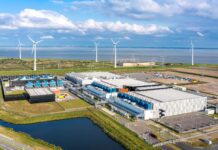
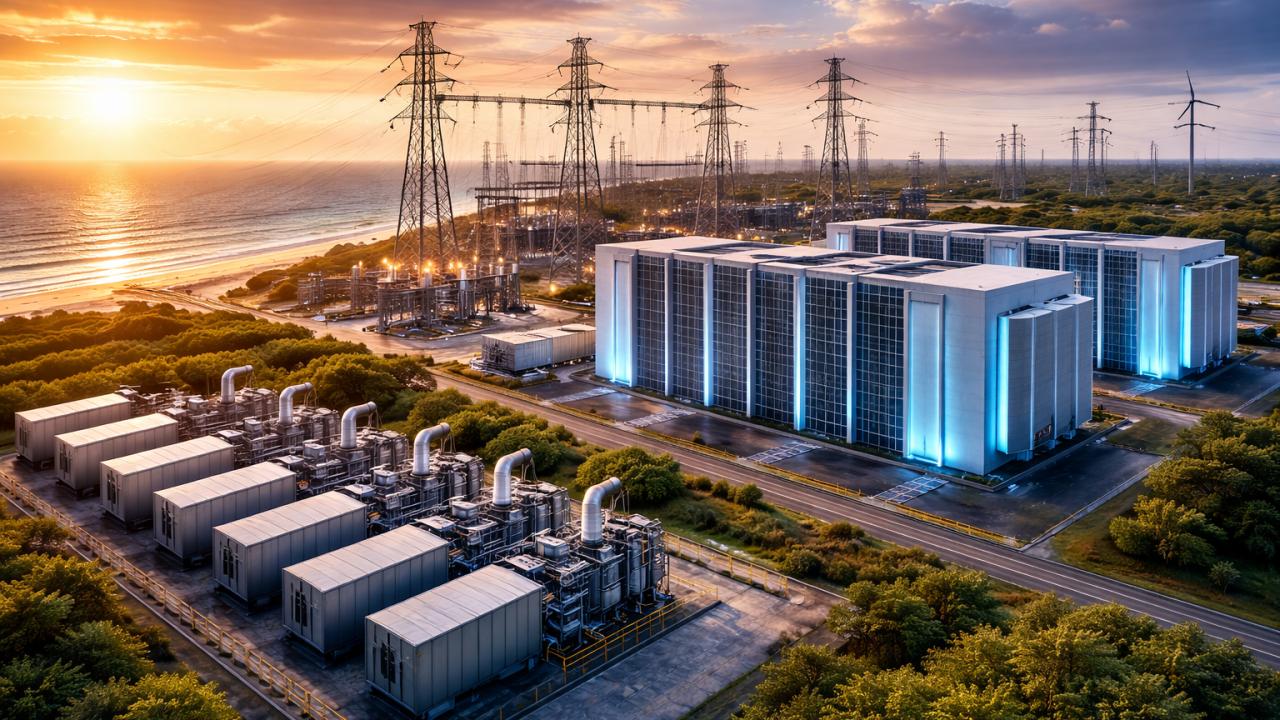
Amaco Energy Group’s proposal for a US$1.5 billion—about KSh194 billion—AI data centre in Mombasa is immediately striking because of the proposed financing scale and its power concept. The Greek company says the facility would operate independently of the national grid and use an offshore liquefied natural gas system known as Hercules to combine fuel processing, electricity generation and cooling.
At this stage, however, the public record describes a proposal, not an approved or financed project. The developer has not publicly disclosed the site, data-centre IT capacity, electrical load, phasing, customer commitments, construction schedule, environmental approvals or financing structure. No public technical fact sheet yet allows an independent engineer to test the claimed relationship between the offshore power plant and the onshore digital load.
That status must lead the coverage. Kenya has an interest in attracting high-value digital infrastructure, but the national benefit cannot be inferred from a headline investment figure. The first decision gate is evidence.
“Grid-free” does not mean infrastructure-free
The appeal of an independently powered data centre is understandable. AI workloads are raising rack densities, electricity demand and cooling requirements. The International Energy Agency projects global data-centre electricity use to roughly double to around 950 TWh by 2030, while electricity consumption by AI-focused centres grows much faster. A hyperscale facility cannot tolerate a weak or uncertain power supply.
But “grid-free” is an incomplete description. An offshore LNG-to-power system still requires a fuel supply chain, marine access, mooring and transfer systems, generation modules, high-voltage export cables, switchgear, onshore substations, black-start capability, spinning or stored reserve, protection systems, cybersecure controls and emergency response arrangements. It also needs planned maintenance without interrupting the data-centre load.
Amaco’s own corporate material describes Hercules as an offshore “molecules-to-electrons” platform and states a targeted aggregate net capacity of 4 GW by 2030. That is a company target, not the disclosed capacity of the Mombasa proposal, and it should not be reported as such. The relevant Kenyan question is the proposed site’s dependable capacity under normal operation, maintenance outages and credible failures.
For an AI campus, nameplate generation is less useful than firm capacity at the server busbar. Losses occur across generation, export, conversion and distribution. The project should state the intended IT load, power-usage effectiveness, redundancy class and amount of capacity reserved for cooling and other non-IT systems.
The offshore concept moves risk rather than removing it
Locating the power plant offshore may reduce land pressure and allow an integrated LNG receiving and generation arrangement. It may also move some noise, air-quality and safety risks away from densely occupied areas. Yet it creates a different engineering and regulatory burden.
Marine geotechnical conditions, corrosion, wave climate, ship collision, anchoring, cable routes and coastal ecology become design inputs. The system must withstand severe weather and allow safe evacuation and firefighting. LNG storage and transfer require hazardous-area classification, leak detection, exclusion zones and a clear emergency command structure between the offshore operator, port and county and national agencies.
Environmental performance also needs to be expressed quantitatively. LNG may produce lower local air pollutants and carbon dioxide per unit of electricity than some liquid-fuel alternatives, but it remains a fossil fuel. Full assessment should include combustion emissions, methane leakage across the supply chain, flaring, marine discharge, construction disturbance and the project’s route to lower-carbon operation.
The National Environment Management Authority’s environmental-impact assessment process provides a formal route for examining alternatives and impacts. For a project of this type, the public should expect a marine baseline, power-system study, water balance, air-emissions model, disaster-risk plan and decommissioning provision—not a generic environmental promise.
Cooling and water may determine the viable site
Power is only one constraint. High-density AI servers release enormous amounts of concentrated heat. The data centre could use air cooling, chilled water, direct-to-chip liquid cooling, immersion systems or a combination. Each choice changes electricity consumption, water demand, maintainability and the skill profile required on site.
An integrated offshore platform may offer opportunities to recover heat or provide chilled-water services, as Amaco suggests. But performance must be demonstrated at the proposed scale and in Mombasa’s warm, humid and saline environment. Seawater-assisted cooling can reduce freshwater demand, yet intake and discharge design may affect marine organisms, and saline systems increase corrosion and material-selection challenges.
The developer should publish expected annual and peak water use, water-usage effectiveness, source reliability, discharge quality and the share of cooling demand served without potable water. “Closed loop” should not be accepted as a substitute for a measured make-up-water requirement.
Fibre diversity is as important as fuel security
Mombasa is attractive because it is Kenya’s principal subsea-cable landing zone and an East African connectivity gateway. Even so, physical proximity to cables does not guarantee resilient service. A major AI centre needs diverse routes, landing stations and upstream networks, with protection against a single trench, power failure, construction incident or coastal hazard disabling multiple links.
The proposal should identify latency-sensitive and training workloads, planned network capacity, route diversity and the boundary between privately financed links and public network upgrades. Data governance, cybersecurity, customer jurisdiction and the availability of local operational skills also affect bankability.
Kenya Engineer’s archive already set the right test
This proposal arrives after several years of ambitious data-centre announcements. In 2024, Kenya Engineer reported the proposed Microsoft–G42 green data centre at Olkaria, then described with an intended groundbreaking in the third quarter of 2024 and a 24-month delivery period.
In August 2026, Kenya Engineer revisited the Olkaria narrative in an analysis of Microsoft’s Maia chip strategy. Its essential caution applies equally in Mombasa: a proposal, letter of intent or announced schedule is not evidence of current construction, commissioning or operational capacity.
The archive has also developed the technical context. Kenya Engineer’s feature on powering the next era of data centres argued that AI infrastructure increasingly has to “bring its own” power and cooling. Its analysis of Africa’s data-centre evolution placed energy, fibre and water alongside computing capacity.
Amaco’s concept fits that wider technological direction. What it lacks, in the public domain, is the project-specific evidence needed to show that the concept fits this site, this market and Kenya’s public interest.
The disclosure gate Kenya should set
Before incentives, land commitments or public-infrastructure obligations are considered, the proposal should pass a transparent pre-development gate covering:
- The project company, sponsor equity, lenders, customer or offtake commitments and conditions precedent;
- Site coordinates, land and marine rights, development phases, intended IT load and dependable generation capacity;
- LNG source, storage and transfer arrangement, expected fuel price exposure and minimum inventory;
- Electrical single-line concept, redundancy, black-start, reserve and grid interconnection, if any;
- Cooling technology, energy efficiency, annual water balance and heat-rejection method;
- Fibre routes, landing-station diversity, latency and cybersecurity architecture;
- Environmental and social impact assessment, marine studies, emissions and emergency response;
- Construction and operating jobs, local engineering content, training and technology transfer; and
- Decommissioning security and liabilities if fuel, computing technology or customer demand changes.
Mombasa could become a credible regional AI infrastructure location. But the project should earn that description through disclosed engineering and finance. Until then, the most accurate headline is not that a data centre will be built. It is that Kenya has received a very large, technically unusual proposal that now needs to be tested.

-
Product on sale
 AWEBook Volume 2Original price was: KShs 3,500.00.KShs 3,000.00Current price is: KShs 3,000.00.