Last Updated 2 months ago by Kenya Engineer
The formal launch of Phase One of Konza Technopolis is an important national infrastructure milestone, but it should not be mistaken for the beginning—or even the first public declaration of completion—of the project’s operating phase.
The first phase covers roughly 400 acres and brings together about 40 kilometres of roads, 170 kilometres of utility networks, a 120 MW substation, water treatment and reclamation systems, a utility tunnel, vacuum-based solid-waste collection, a smart operations centre and the National Data Centre. Those are not ceremonial assets. They form a complex, interconnected urban platform designed to support research, technology enterprises, public institutions, housing and commercial activity.
Completion of this infrastructure had already been publicised in 2025. The significance of the 18 August 2026 event is therefore better understood as a formal transition and renewed investment push: Konza is moving from a construction-led narrative to an occupancy, service-delivery and utilisation test.
That distinction matters. Civil works can be inspected against quantities, specifications and completion certificates. A functioning innovation district must also be assessed through connections, tenants, service uptime, digital workloads, research output, jobs, land absorption and cash flow.
Konza’s current moment is easier to evaluate against the project’s own history. In Kenya Engineer’s 2016 account of investment opportunities at Konza, the first phase was presented as a set of investable parcels for technology offices, mixed-use development, housing, community facilities, life sciences and engineering enterprises.
A year later, Kenya Engineer reported the State’s plan to partner with private investors. At the time, Phase One was projected to accommodate about 30,000 residents and support thousands of skilled and other workers. The report also recorded early enabling works, including a 132 kV substation and an initial water project.
Those earlier articles captured the central bargain behind Konza: public investment would establish a serviced platform; private and institutional investment would then fill it with productive activity. The launch of Phase One means that the second half of that bargain can no longer remain a future promise.
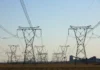
Recent archive coverage adds another part of the operating platform. In June 2026, Kenya Engineer reported the energisation of the 400 kV Isinya–Konza line, including a new 400/132/66 kV substation. The power system is therefore not a peripheral story. Reliable, redundant electricity is a precondition for the data centre, laboratories, universities, advanced manufacturing and digital services that are supposed to distinguish Konza from an ordinary real-estate development.
The utilisation numbers now deserve equal billing
Construction milestones remain important, but the most revealing current figures concern usage. Data reported from the Kenya National Bureau of Statistics’ 2026 Economic Survey indicated that Konza’s revenue fell 19.6 per cent, from KSh252.4 million in 2024 to KSh202.9 million in 2025, even as cumulative investment rose by about 19 per cent to KSh99.38 billion and the number of investors increased from 70 to 78.
The composition is instructive. Land-lease revenue declined from KSh76.1 million to KSh49.8 million, while leased parcels fell from 33 to 21. Cloud-services revenue dropped from KSh151.6 million to KSh126.7 million, reportedly in part because of outstanding bills. Yet the number of hosted cloud clients increased to 171 and storage utilisation reached 50 per cent.
These numbers do not establish that Konza is failing. Large infrastructure platforms often incur high costs and uneven revenue while the user base develops. Nor is annual operating revenue a sufficient return measure for a project with national research, industrial and digital-policy objectives. But the data does identify the management problem that now matters most: converting installed capacity and signed investor interest into active demand and collected revenue.
It also suggests that “investor count” should not be used as a substitute for occupancy. An investor may be allocated land without completing design, finance, construction or operation. The relevant pipeline should show how many investors have moved from expression of interest to lease, approved design, financial close, construction, connection and productive occupancy.
A smart city is an integration problem
Konza’s engineering achievement lies not only in the quantity of infrastructure but in the way the systems are meant to work together. Utility tunnels can reduce repeated road excavation and improve maintainability. Water reclamation can lower pressure on scarce freshwater sources. Vacuum waste collection can improve urban hygiene and reduce truck movements. A central operations centre can help coordinate traffic, safety, energy, water and maintenance.
But integration also creates correlated risk. A sensor-rich operations platform is only useful if field devices are calibrated, communications are resilient, data governance is clear and maintenance teams can act on alerts. A utility tunnel concentrates access and may concentrate failure if fire separation, drainage, security and emergency procedures are weak. Reclaimed-water networks require strict separation, quality assurance and public-health monitoring. Vacuum-waste systems depend on disciplined operations, reliable power and spare parts.
The transition to occupancy therefore requires system commissioning at city scale. That means testing under real demand, rehearsing failure modes and publishing service standards—not merely demonstrating components during a launch.
The next Konza scorecard
Konza’s public reporting should now move towards a small set of operational indicators that engineers, investors and citizens can track consistently:
- Plots leased, designs approved, projects financed, projects under construction and buildings occupied;
- Connected electrical load, peak demand, outage frequency and backup performance;
- Potable-water demand, reclaimed-water output, reuse rate and non-revenue water;
- Data-centre contracted capacity, live workloads, uptime, collections and customer concentration;
- Road, utility-tunnel and municipal-system maintenance performance;
- Research institutions and laboratories operating on site, with measurable output;
- Direct employment, apprenticeships, local procurement and resident population; and
- Recurring revenue, operating cost, debtor days and the funding needed to maintain assets.
The indicators should be separated into “announced”, “contracted”, “under construction”, “connected” and “operational” capacity. Kenya Engineer’s recent analysis of AI infrastructure capacity made the same point for data centres: nominal or announced capacity is not the same as energised, commissioned and revenue-producing capacity.
From flagship project to functioning district
The Phase One launch is worth recognising because it represents years of engineering design, procurement, construction and coordination. The harder work now begins in a less photogenic form: tenant fit-outs, service-level agreements, preventive maintenance, collections, skills development, business development and daily operational discipline.
Konza will have succeeded not when the last ribbon is cut, but when roads carry regular traffic, serviced plots host completed buildings, the data centre carries paid workloads, reclaimed water is reused safely, laboratories produce research and the city can maintain its sophisticated systems without recurring emergency intervention.
The story after Phase One should therefore be reported as an operating dashboard. Kenya has built much of the platform. The next national question is whether it can make the platform busy, dependable and economically useful.

-
Product on sale
 AWEBook Volume 2Original price was: KShs 3,500.00.KShs 3,000.00Current price is: KShs 3,000.00.