





Last Updated 1 hour ago by Kenya Engineer
Nigeria has moved its US$300 million Distributed Renewable Energy (DRE) Fund into commercial operations, establishing a dedicated investment platform for decentralised electricity projects serving communities and businesses that remain underserved by conventional power infrastructure.
Announced in September 2026 by the Nigeria Sovereign Investment Authority (NSIA), Africa50 and Sustainable Energy for All (SEforALL), the fund is designed to mobilise investment into distributed renewable energy systems. These include mini-grids and standalone solar installations capable of supplying electricity without waiting for the extension or reinforcement of the national grid.
The World Bank is a founding partner, with an initial US$25 million contribution from its International Development Association (IDA). The fund is co-managed by NSIA and Africa50, combining domestic investment expertise with pan-African infrastructure financing capabilities. SEforALL provides energy-access leadership.
The commercial launch marks a transition from fund structuring towards capital deployment. It does not, on its own, mean that US$300 million has already been invested in operating projects. The scale of its eventual impact will depend on how quickly the fund attracts additional capital and converts financing commitments into electricity infrastructure on the ground. Source: NSIA.
Engineering electricity access beyond the national grid
Distributed renewable energy systems offer an alternative where extending conventional electricity networks is difficult, costly or unlikely to meet demand quickly enough.
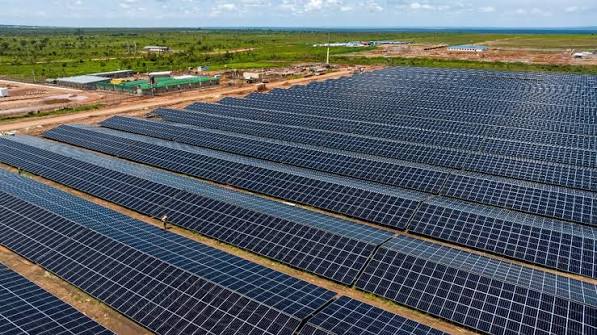
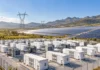
A solar mini-grid typically combines a photovoltaic generation plant, battery storage where required, power-conversion equipment, protection systems and a local distribution network. The system supplies multiple customers within a defined service area. Standalone solar systems, by contrast, can serve individual households, shops, farms and other facilities without requiring a shared distribution network.
The appropriate design depends on the demand profile and operating conditions. A rural trading centre with shops, refrigeration, workshops and water pumping will have different requirements from a cluster of homes with limited evening consumption. Engineers must estimate current and future loads, size generation and storage, assess seasonal solar availability and establish how the system will maintain supply when demand rises or weather conditions reduce output.
For mini-grids, distribution design is equally important. Network voltage, conductor sizing, transformer capacity where applicable, protection coordination, metering and the physical layout of customer connections influence both reliability and the cost of delivering electricity.
Battery systems can improve the match between daytime solar production and evening demand. Their sizing, however, must account for the duration of supply required, battery degradation, replacement costs and the consequences of prolonged periods of low generation. In some locations, a hybrid system may be necessary to meet critical loads reliably.
The fund’s significance lies in its intention to finance the businesses and projects that deliver these systems at scale. It is not a single power plant or transmission project, but a financing platform intended to support multiple distributed-energy investments.
Turning electricity demand into investable projects
The challenge for distributed energy developers is not limited to designing a technically sound power system. They must also finance construction, recover operating costs and maintain affordable electricity for customers whose ability to pay may be limited.
A mini-grid developer typically faces expenditure on land and site preparation, solar panels, inverters, batteries, distribution infrastructure, customer connections and metering. Further costs arise from maintenance, equipment replacement, billing, customer support and losses within the network.
Revenue depends on how many customers connect, how much electricity they consume, the tariffs they can afford and the reliability of collection. A technically successful installation may still struggle financially if electricity demand remains low or customers cannot support the required tariff.
This creates a case for financing structures that can share risk across public institutions, development partners and private investors. Development finance can help establish an investment platform, while additional capital can support a larger pipeline of projects. The commercial test is whether individual investments can generate sufficient revenue to sustain operations and attract further funding.
The US$25 million initial World Bank contribution is therefore an important component of the financing structure, but it should not be confused with the entire fund. The stated US$300 million represents the fund’s overall scale, with the wider ambition depending on the mobilisation and deployment of capital beyond the initial contribution.
The partners have presented the platform as a potential model for other African markets. Its practical value will become clearer as projects are selected, financed, constructed and brought into service.
A wider financing effort for Nigeria’s power sector
The fund is part of Nigeria’s broader effort to improve electricity access through decentralised infrastructure. It also aligns with Mission 300, the African-led initiative supported by development partners that aims to connect 300 million people across Africa to electricity by 2030.
Nigeria has other financing programmes addressing the same broad challenge. Its separate US$750 million Distributed Access through Renewable Energy Scale-up (DARES) programme supports the expansion of distributed renewable energy and electricity access. DARES and the new DRE Fund should not be treated as the same initiative: they have distinct financing arrangements, even though both support decentralised power solutions.
The wider objective is to reach households, enterprises and communities that cannot rely on adequate grid service. Distributed generation can also support productive uses of electricity, including agricultural processing, refrigeration, small-scale manufacturing, digital services and water pumping.
Those applications influence how projects should be engineered. Electricity access alone does not guarantee productive demand. Developers need to understand local economic activity, identify anchor customers where possible and design systems that can accommodate future growth without requiring expensive reconstruction.
For example, a mini-grid serving a rural market may experience modest household demand but significant daytime consumption from milling equipment, cold storage or workshops. Identifying such loads early can improve system sizing and the prospects of recovering investment costs. It can also create a stronger basis for planning future capacity additions.
What the model could mean for other African markets
The financing approach is relevant beyond Nigeria. Across Africa, electricity expansion involves a combination of national transmission networks, distribution upgrades, off-grid solar, mini-grids and other decentralised systems. The appropriate mix depends on settlement patterns, demand density, resource availability and the cost of connecting customers.
For Kenya, the question is how financing platforms can support distributed energy where grid connections are delayed, supply is unreliable or customers need electricity for productive activities. Mini-grids and standalone solar systems can complement national infrastructure, particularly when projects are selected around clearly established demand and supported by viable maintenance arrangements.
However, distributed generation is not a substitute for investment in transmission and distribution networks. Larger industries, growing urban centres and interconnected power systems require infrastructure capable of moving electricity over longer distances and accommodating changing loads. Off-grid solutions address a different set of needs.
The Nigerian fund also highlights the importance of local financing conditions. Currency movements, equipment import costs, interest rates, tariff regulation and the availability of long-term domestic capital can all affect project viability. These risks need to be addressed alongside technical design if distributed energy is to progress from individual installations to a commercially sustainable sector.
The real measure of the US$300 million platform will not be its headline size, but the infrastructure it helps deliver: the projects that reach financial close, the systems that are commissioned, the customers who receive reliable electricity and the operators able to maintain that service over time.
Nigeria has established the financing platform. The next test is converting it into functioning electricity systems at a scale that can change how underserved communities and businesses access power.
-
Product on sale
 AWEBook Volume 2Original price was: KShs 3,500.00.KShs 3,000.00Current price is: KShs 3,000.00.








 Fund into commercial operations)