
Last Updated 1 hour ago by Kenya Engineer
The rapid expansion of artificial intelligence is changing how governments assess data centres. Once treated primarily as telecommunications and digital infrastructure investments, these facilities are increasingly being scrutinised for their demands on electricity networks, water supplies and surrounding communities.
The shift is becoming visible across several markets. California enacted seven data-centre-related laws on 21 September 2026, introducing stronger requirements around resource-use disclosures, electricity infrastructure costs, water planning and land-use decisions. Singapore is tightening resource-efficiency expectations for data centres, while Kenya is considering a dedicated licensing framework for the sector.
For countries seeking to attract investment in cloud computing and artificial intelligence, the emerging question is how to accommodate this infrastructure without transferring its costs to households, other businesses or already constrained public utilities.
California puts power and water on the regulatory agenda
California’s new laws address a growing concern: a large data centre can generate substantial economic activity while placing additional demands on local electricity and water infrastructure.
The measures strengthen disclosure requirements around electricity and water use and address who pays for electricity-system upgrades required to serve data centres. They also give local authorities and water suppliers more information to assess proposed developments.
Water planning is another central element. Proposed projects must provide information about expected consumption, supply availability, efficiency and drought planning. Where new infrastructure is needed to supply a facility, the legislation addresses responsibility for those costs.
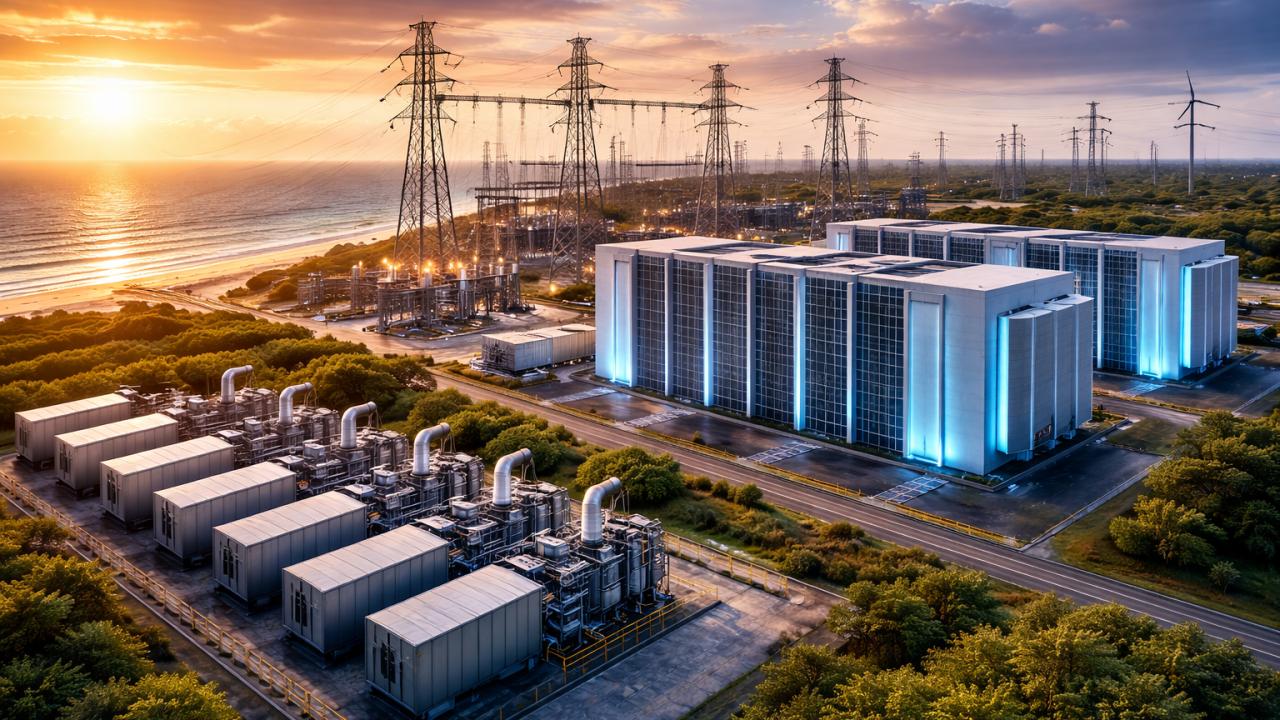
The engineering implications are significant. A data centre is not an isolated building with a conventional utility connection. Its operation depends on a coordinated system of electrical supply, backup power, cooling equipment, water infrastructure and communications networks.
High-density AI computing adds to the challenge because server racks generate substantial heat. The facility must remove that heat while maintaining the temperatures required for reliable equipment operation. Depending on the cooling design, this can involve air cooling, liquid cooling, evaporative systems or combinations of these technologies.
Each approach has different implications for electricity consumption, water demand, equipment costs and operating conditions. The appropriate choice depends on factors including server density, local climate, available water and the reliability of the electricity supply.
California’s measures bring these considerations into the planning and approval process rather than leaving them entirely to the facility operator after construction.
Source: California Governor’s Office, 21 September 2026.
Singapore links digital expansion to resource efficiency
Singapore offers a different regulatory approach. Rather than treating data-centre expansion as an unrestricted race to add capacity, the government has calibrated new development against energy security, water security and decarbonisation objectives.
In a parliamentary response published on 7 October 2026, Singapore’s Ministry of Energy, Trade and Industry said projected electricity and water demand from data centres, including AI computing, is incorporated into national infrastructure planning.
New capacity is primarily allocated through a formal application process. In the second Data Centre Call for Application exercise, applicants were required to source at least 50 per cent of their data-centre capacity from green energy.
Singapore is also introducing facility-level Power Usage Effectiveness requirements through its Digital Infrastructure Bill, with provision for water-efficiency requirements where necessary.
Power Usage Effectiveness, or PUE, measures the total energy consumed by a data centre relative to the energy used by its computing equipment. A lower figure generally indicates that less additional energy is being consumed by cooling, power conversion and other supporting systems.
PUE is useful, but it does not measure every aspect of sustainability. A facility can have an efficient electrical and cooling design while still consuming large amounts of electricity because its computing load is enormous. PUE also does not independently capture water consumption, the carbon intensity of electricity or the wider impact of new generation and transmission infrastructure.
Effective oversight requires several indicators rather than a single efficiency score.
Source: Singapore Ministry of Energy, Trade and Industry, 7 October 2026.
Kenya’s opportunity and regulatory challenge
Kenya has identified digital infrastructure, cloud services and artificial intelligence as areas for investment. The country’s renewable electricity resources, connectivity and position in East Africa offer opportunities for data-centre development and regional digital services.
However, investment announcements and installed computing capacity do not tell the whole story. Large facilities need dependable electricity, suitable land, cooling systems, water arrangements and resilient communications infrastructure. Their requirements must be considered alongside those of households, manufacturing, transport, agriculture and other electricity users.
Kenya’s Communications Authority proposed a standalone data-centre licence in September 2026. The proposal would move commercial colocation facilities out of the existing Network Facilities Provider Tier 2 licensing category and establish a dedicated regulatory framework.
That proposal is a significant development in the oversight of the sector, but a standalone licence should not automatically be understood as a comprehensive framework for electricity and water use. Those issues involve other institutions and regulatory processes.
The Communications Authority proposal, reported by Business Daily, creates an opportunity to consider how licensing and infrastructure planning can work together as the market grows.
A data-centre approval process could require applicants to provide credible estimates of peak electrical demand, annual energy consumption, backup-generation arrangements and expected water use. These estimates could then inform decisions by electricity utilities, water authorities, environmental regulators and local planning agencies.
The purpose would not be to discourage investment. It would be to ensure that projects are designed around the capacity of the infrastructure that must support them.
What should a resource-aware approval process examine?
Electricity demand is an important starting point. Data-centre developers should distinguish between the facility’s maximum connected load, its expected average consumption and the additional capacity required for future expansion.
Utilities need this information to assess connection requirements, transformer and substation capacity, transmission constraints and the potential effect on system peaks. Where substantial reinforcement is required, the allocation of costs between the developer, utility and other customers needs to be transparent.
Backup power also deserves scrutiny. Diesel generators can provide resilience during grid outages, but their use introduces fuel logistics, emissions, noise and maintenance requirements. Battery storage, alternative backup technologies and carefully engineered power-management systems may offer different combinations of cost, resilience and environmental performance.
Water planning requires a similarly detailed approach. Cooling-water demand varies with the facility’s design and operating conditions. An application should distinguish between water withdrawn from a source and water actually consumed, while identifying whether the supply will come from potable water, recycled wastewater or another permitted source.
In water-stressed locations, the availability of supply during dry periods may be more important than annual averages. Authorities would need to assess the cumulative demands of multiple facilities, not just the impact of an individual project.
Kenya already has mechanisms for regulating water abstraction. The Water Resources Authority administers water-use permitting, with allocation processes that account for competing uses and the priority given to basic human needs and the environment. Data-centre development should be assessed within this existing framework rather than treated as a separate claim on water resources.
Source: Water Resources Authority.
Efficiency must be measured beyond the building
Data-centre operators have several options for reducing resource consumption. More efficient servers and power-conversion equipment can reduce losses. Improved airflow management, liquid cooling and carefully designed cooling controls can help manage heat loads. Where technically and economically appropriate, recycled water can reduce reliance on potable supplies.
Some facilities can also adjust non-urgent computing workloads in response to grid conditions. AI training jobs and other flexible tasks may be shifted to periods when electricity is more available or less expensive, provided that service requirements and computing deadlines are maintained.
This creates a possible link between data-centre regulation and the wider electricity transition. A facility that can manage its demand, incorporate storage or procure additional clean generation may be easier to integrate into a constrained grid than one whose consumption is inflexible.
Nevertheless, efficiency measures do not remove the need for adequate generation and network capacity. Regulators must consider the full system cost of connecting and serving large new loads, including the timing of demand, the reliability required and the infrastructure needed to meet it.
Disclosure is essential to this process. Consistent reporting of electricity use, water consumption, efficiency and backup-generation performance would allow authorities and communities to compare projects on a more meaningful basis. It would also help distinguish credible engineering improvements from sustainability claims that are difficult to verify.
Attracting investment without exporting the costs
Regulation introduces its own trade-offs. Complex approval processes can delay projects, increase development costs and create uncertainty for investors. Requirements that differ substantially between jurisdictions may also encourage developers to choose locations with fewer restrictions.
On the other hand, weak planning can leave utilities and communities facing unexpected infrastructure costs after projects have been approved. Water shortages, inadequate grid capacity or poorly planned connections can undermine both the facility and the surrounding economy.
The challenge is to establish clear, predictable requirements early enough for developers to incorporate them into site selection, design and financial planning. Common reporting standards, coordinated reviews by relevant agencies and transparent rules for infrastructure costs could reduce uncertainty while protecting public resources.
For Kenya, the opportunity is to connect its ambitions for digital infrastructure with practical planning for electricity, water and land. That would help ensure that new data centres contribute to the digital economy while remaining compatible with the needs of the communities and businesses around them.
The next phase of AI infrastructure development will be judged not only by how much computing capacity a country attracts, but also by how reliably and efficiently that capacity can operate. The countries that plan for power, water and network requirements before construction are better placed to avoid costly constraints later.

-
Product on sale
 AWEBook Volume 2Original price was: KShs 3,500.00.KShs 3,000.00Current price is: KShs 3,000.00.