Last Updated 1 hour ago by Kenya Engineer
More than four decades after its first generating unit entered service, Kenya’s oldest geothermal power station is being rebuilt rather than retired.
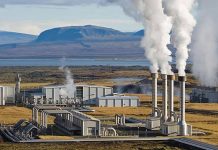
The 45MW Olkaria I power plant at Naivasha was the first geothermal power station in Africa. Its three original units were commissioned between 1981 and 1985, and after decades of operation much of the plant’s major equipment had reached the end of its economic life.
KenGen is now undertaking a major rehabilitation of Units 1, 2 and 3, replacing the ageing generating equipment and upgrading the plant to increase its installed capacity from 45MW to 63.3MW.
The project is currently 83% complete, according to KenGen, and has entered the commissioning phase. Unit 2 achieved successful first-attempt grid connection in July 2026, following the earlier synchronisation of another upgraded unit.
The project represents something more interesting than a conventional power-station upgrade. It is an example of how an ageing geothermal asset can be substantially modernised while continuing to exploit an existing steam resource.
Rehabilitating instead of abandoning the plant
Olkaria I began operation when Kenya’s electricity system looked very different from today’s.
Unit 1 was commissioned in 1981, followed by Unit 2 in 1982 and Unit 3 in 1985. Each was originally designed around a 15MW generating capacity, giving the station its initial 45MW installed capacity.
After decades of operation, however, the plant’s turbines, generators and associated systems had suffered normal wear and technological obsolescence.
KenGen’s project documents describe the original plant as having reached the end of its economic life, with obsolete equipment making the procurement of spare parts increasingly difficult. The rehabilitation was consequently conceived to give the three units a further operating life of more than 25 years.
That makes the project a form of industrial asset renewal.
Rather than abandoning the existing plant and developing an entirely new generation facility, KenGen is retaining the valuable parts of the existing system — including access to the geothermal resource and much of the established site infrastructure — while replacing the components that have become the limiting factor.
The key change is inside the turbine hall
The central engineering intervention is the replacement and upgrading of the generating equipment in the three existing units.
KenGen awarded the Engineering, Procurement and Construction contract to SEPCOIII Electric Power Construction Co. Ltd, while Toshiba Energy Systems and Solutions Corporation was selected to supply the new steam turbines and generators.
The equipment is being designed to extract more electrical output from the available geothermal steam.
The rehabilitation is not based on drilling an entirely new group of production wells to provide additional steam. KenGen’s project documentation says the upgraded plant is intended to increase output using the existing steam resource, with the modernised equipment able to operate at higher turbine inlet pressure.
In other words, the project is primarily about improving the conversion of an existing geothermal resource into electricity.
That is why the additional generating capacity can be achieved without treating the project as an entirely new geothermal field development.
More electricity from the same steam
KenGen’s 2024 integrated report describes the rehabilitation as rebuilding Olkaria I from 45MW to 63.3MW while extending its operating life by another 25 years. It also says the modernised equipment is designed to accommodate higher turbine inlet pressure and increase output using the existing steam supply.
The gain is substantial in percentage terms.
The plant’s nominal capacity rises by about 18.3MW, equivalent to roughly 41% above the original 45MW.
But the significance goes beyond the additional megawatts. The project demonstrates the potential of uprating ageing geothermal plants where the underlying reservoir continues to provide an adequate steam supply.
For a country with decades of investment in geothermal fields, that creates another route to expanding generation capacity: extracting more value from existing reservoirs and power stations rather than relying exclusively on new greenfield developments.
The geothermal resource is already there
One of Olkaria I’s greatest advantages is the resource infrastructure that has been developed around it over several decades.
KenGen describes the Olkaria geothermal system as a two-phase reservoir hosted in fractured trachyte and rhyolite formations. Production wells extend to depths of roughly 600m to 3,000m, with the upper sections cased to prevent the entry of colder fluids. The wells produce a mixture of water and steam, which is separated before dry steam is transported to the powerhouses.
The separated water can then be reinjected into the reservoir. That established steam system is fundamental to the rehabilitation strategy.
A new geothermal plant normally requires substantial exploration, drilling, well testing, steam-field development and associated infrastructure before the generating equipment can operate.
Olkaria I already has the resource, wells, steam-gathering infrastructure, grid connection and power-station site. The rehabilitation therefore concentrates investment on the parts of the system that have aged most significantly.
The steam-gathering system is also part of the rehabilitation
Although the turbines and generators attract most of the attention, the project extends beyond the turbine hall.
KenGen’s project description identifies rehabilitation of the steam-gathering system as part of the works, together with construction of a new gas-insulated substation.
The steam-gathering system is effectively the interface between the geothermal reservoir and the power plant.
Steam emerging from production wells has to be collected, separated, controlled and transported under conditions that preserve the required pressure and quality at the turbine inlet.
As a geothermal field ages, the behaviour of individual wells and the condition of the steam infrastructure can change. Pipework, valves, separators and other equipment are exposed to high-temperature fluids and chemically aggressive environments.
Rehabilitating this part of the system is therefore important to ensuring that the new generating equipment receives the steam conditions for which it was designed.
A new gas-insulated substation
The electrical side of the rehabilitation includes construction of a gas-insulated substation (GIS). A GIS uses enclosed switchgear rather than the open-air arrangement traditionally associated with conventional substations.
For a power station such as Olkaria I, the substation forms an important interface between the generators and the transmission network. It provides switching, isolation and protection functions and allows the station to connect safely to the grid.
The inclusion of a new GIS reflects the fact that upgrading generation equipment without modernising the electrical interface would leave an ageing part of the plant connected to a substantially modernised generating system.
The turbines are the technological centrepiece
The new Toshiba steam turbines are particularly important because the turbine is where the energy contained in the geothermal steam is converted into mechanical rotation. The turbine drives the generator, which converts that mechanical energy into electricity.
The efficiency of that process depends on the pressure and temperature of the steam entering the turbine, the turbine’s design, the condition of the blades and seals, exhaust conditions and the performance of the condenser and cooling system.
Modern turbine technology can extract more useful electrical output from a given steam flow than equipment designed several decades earlier. That is the underlying engineering logic of Olkaria I’s uprating.
The plant is not discovering a new source of steam. It is improving the machinery that converts the steam into electricity.
The project has moved from construction to commissioning
The rehabilitation is now approaching its most critical phase. KenGen currently reports the project at 83% completion.
SEPCOIII reported in July 2026 that Unit 2 had successfully connected to the national grid on its first attempt. The contractor said the upgraded project is designed to increase unit output and energy efficiency while maintaining the original total steam supply.
Earlier commissioning activity had already seen an upgraded unit synchronised with the grid, marking the transition from major construction works to testing and commissioning.
This staged approach is important.
The three generating units cannot just be taken offline simultaneously and rebuilt without affecting the plant’s ability to operate. Rehabilitation therefore requires careful sequencing of equipment replacement, testing, energisation, steam admission and grid synchronisation.
Each upgraded unit has to demonstrate stable operation before becoming part of the generating fleet.
Why commissioning a geothermal unit is different
A geothermal power plant cannot be commissioned in exactly the same way as a simple conventional electrical installation.
The electrical equipment has to be tested, but so does the entire steam-to-electricity chain.
Steam pressure and temperature must be controlled. Turbine vibration and mechanical performance have to be monitored. Generator protection systems must be verified. The unit’s control systems must communicate correctly with the plant’s balance-of-plant equipment.
The unit must also demonstrate that it can operate reliably while connected to the national grid.
This is why successful synchronisation is an important milestone, but not the same thing as full commercial completion.
The remaining commissioning and reliability tests are needed before the rehabilitated plant can be regarded as fully returned to service.
The project has taken years to reach this stage
The rehabilitation has been under development for considerably longer than the current construction programme.
KenGen’s project history shows that the EPC contract was signed in December 2022 after the procurement and due-diligence process, with contract effectiveness achieved in May 2023 and construction commencing in June 2023.
The project is therefore the result of several stages: feasibility and engineering studies, financing, procurement, contract award, detailed design, equipment manufacturing, site construction and now commissioning.
Financing came from Japan
Japan has played a significant role in financing the rehabilitation.
JICA’s ODA loan database records the Olkaria I Units 1, 2 and 3 Geothermal Power Plant Rehabilitation Project as a Kenya project approved in March 2018, with a loan amount of approximately ¥10.077 billion. The borrower/implementing entity is KenGen.
JICA’s environmental documentation describes the project objective as improving the volume and security of Kenya’s electricity supply through rehabilitation of the existing plant.
Earlier JICA documentation described the target as increasing gross generating capacity from 45MW to approximately 51MW. The project has subsequently been developed to the higher 63–63.3MW target reflected in KenGen’s current project documentation and Kenya’s government project reporting.
What makes the project economically interesting
There is a straightforward economic argument for rehabilitating an established geothermal plant. Much of the expensive enabling infrastructure already exists.
The resource has already been explored. Production wells are already connected to the steam system. The plant has an established site. The transmission connection exists. Kenya Railways, roads and other logistics infrastructure already serve the wider Olkaria area.
The rehabilitation can therefore concentrate capital on modernising the generation equipment and associated systems. The approach also avoids the long development period associated with a completely new geothermal field.
That does not make rehabilitation inexpensive, but it changes the risk profile. The project is primarily an exercise in restoring and improving an established generation asset rather than proving a new underground resource.
It also preserves geothermal expertise
Olkaria I has another significance that is less easily measured in megawatts.
Kenya’s geothermal industry has developed around the Olkaria complex for more than four decades. Engineers, technicians, drilling specialists, plant operators and maintenance teams have accumulated experience across successive generations of geothermal technology.
Rehabilitating the oldest station provides an opportunity to retain that asset while introducing modern equipment and operating practices.
The project also brings together international equipment and engineering companies with Kenya’s established geothermal workforce.
KenGen has increasingly positioned Olkaria as a regional centre of geothermal expertise, including through its Geothermal Training Centre and international consultancy activities.
Why the additional 18.3MW matters
An increase from 45MW to 63.3MW may appear modest beside Kenya’s much larger generation projects but the engineering significance is different.
The project is adding roughly 18.3MW without developing an entirely new geothermal field. It is effectively increasing the productivity of an existing generation asset while extending the operating life of its three oldest units.
That makes Olkaria I an important case study in the economics of ageing renewable infrastructure.
As Kenya’s electricity system expands, the country will increasingly have to decide not only where to build new generating capacity but also when existing plants should be rehabilitated, uprated or replaced.
Olkaria I provides a practical example of the rehabilitation option.
The environmental advantage is also in the existing footprint
There is another benefit to working with an existing plant.
A greenfield power station generally requires a new site, new access infrastructure, new grid connection and, in the case of geothermal generation, a new drilling and steam-field development programme.
Olkaria I already occupies an established industrial footprint within the wider Olkaria geothermal complex.
The rehabilitation therefore allows Kenya to extract additional value from existing infrastructure without creating an entirely new power-generation site.
That does not eliminate environmental considerations. The plant is located within the broader Hell’s Gate National Park environment, and construction, steam handling, waste management and geothermal-fluid management still require environmental controls.
But the project is fundamentally a redevelopment of an existing generation facility.
From Africa’s first geothermal plant to its next generation
When Olkaria I Unit 1 entered service in 1981, Kenya was establishing what would become one of the country’s defining energy technologies. The station’s original 45MW capacity helped establish geothermal power as a viable component of the national grid.
The rehabilitation is now extending that legacy.
By replacing the ageing turbines and generators, upgrading the steam-gathering and electrical systems, and increasing output to about 63.3MW, KenGen is effectively giving the original station a new generation of equipment while retaining the geothermal resource and much of the infrastructure built around it.
The project is now in its final stretch.
With the rehabilitation at 83% and upgraded units already reaching the grid, the immediate engineering challenge is to complete commissioning of all three units and demonstrate reliable operation at the new configuration.
If completed as planned, Olkaria I will return as a substantially different power station — one combining a 40-year-old geothermal resource and site with modern turbines, generators, controls and electrical infrastructure.
That may ultimately be the most important lesson from the project: some of Kenya’s next megawatts do not necessarily have to come from entirely new power stations. They can also come from rebuilding the infrastructure the country already has.
-
Product on sale
 AWEBook Volume 2Original price was: KShs 3,500.00.KShs 3,000.00Current price is: KShs 3,000.00.