Why Kenya’s Next Economic Leap Depends on Engineers
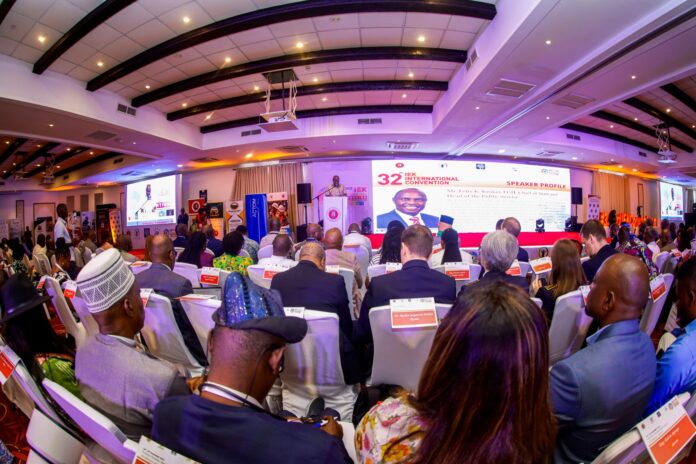
Engineering is no longer just a profession, it is a national imperative. As Kenya convenes for the 32nd IEK International Convention under the theme “Engineering the Future: The Roadmap for Kenya,” we gather at a defining moment in our nation’s development. Engineering the future means building energy systems that stimulate growth today and secure prosperity for generations to come....
Engineering the Future
When engineers gather, nations shift. That is the quiet truth behind the Institution of Engineers of Kenya (IEK), an organization whose annual conventions have become crucibles for ideas, collaborations, and decisions that often outlive the event itself. This November, IEK will host its 32nd International Engineering Convention at the PrideInn Paradise Beach Resort in Mombasa, and the anticipation within...
Kenya Lifts the IPP Moratorium

On 12 November 2025, the National Assembly made a decision that is set to redefine Kenya’s electricity landscape: the lifting of the moratorium on new agreements with Independent Power Producers (IPPs).
For nearly three years, Kenya had halted the signing of new Power Purchase Agreements (PPAs) as concerns mounted over rising electricity costs, opaque contracts, and the financial strain on...
Analysis of Motor Vehicle Driveshaft Geometry: Effects of U-Joint Alignment on Vibration and Component Life

Abstract
A driveshaft is a mechanical component for transmitting mechanical power, torque and rotation, from the transmission, usually used to connect other components of a drivetrain that cannot be connected directly because of distance or the need to allow for relative movement between them. To allow for variations in the alignment and distance between the driving and driven components, drive...
Turning point: Becoming a leader in alarm annunciators

In the 1970s and 80s, the hardwired alarm annunciator was essential to industrial control rooms, particularly in high-risk sectors such as nuclear, petrochemical and oil and gas. These wall-mounted panels, with flashing lights and hardwired inputs, served as the front line of safety monitoring giving operators clear visibility of the alarm through pattern recognition. However, the 1990s brought a...
Lean Carbon, Just Power

Africa holds 17% of the world’s people yet produces roughly 4% of global CO₂. On a per-capita basis it emits about one tonne a year, the lowest of any continent. Africa also contains the world’s largest pocket of energy poverty. The question that matters is not whether to cut carbon, but how much temporary pollution is tolerable on the...
Will Africa Choose Clean Energy Over Fossil Fuels at COP30

Tensions at COP30 are intensifying as African governments argue that they require “flexibility” to keep fossil fuels in their transition plans, citing the chronic shortfall of climate finance. The world’s wealthiest nations, who built their economies through centuries of colonial extraction and carbon-intensive industrialization, continue to delay the finance they promised. This position stands in stark contrast to the...
Vertiv Selected to Supply Advanced AI-ready Infrastructure for Digital Realty’s New Data Centre Campus

Vertiv (NYSE: VRT), a global provider of critical digital infrastructure, has announced it will supply next-generation infrastructure for ROM1, Digital Realty's first data centre in Italy with a planned capacity above 3 MW. The agreement extends the comprehensive suite of Vertiv solutions and existing technology implementations with Digital Realty across European locations, including Paris, Madrid, and Amsterdam.
The ROM1 facility will feature...
Powering Africa’s Electric Mobility Revolution

Kenya is rapidly emerging as a continental leader in electric mobility, and at the centre of this transformation is Warren Ondanje, the Co-founder and Managing Director of the Africa E-Mobility Alliance (AfEMA). From shaping policy conversations to championing data-driven innovation, Warren has become one of the most influential voices in Africa’s shift toward cleaner, smarter, and more sustainable transport.
With...
SKF Microlog Analyzer dBX extends applications to hazardous areas

Growing customer demands for condition monitoring in hazardous areas led SKF to develop a version of its popular Microlog Analyzer dBX that is certified to IECEx, ATEX, Class I Division 2 and Class I Zone 2 standards.
SKF is further strengthening its condition monitoring offer portfolio by a newly developed hazardous area version of its Microlog Analyzer dBX portable vibration...