Last Updated 13 years ago by Kenya Engineer
Source:Smart Company
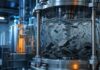
The government is contemplating closing down Kenya Petroleum Refineries Ltd if its partner, Essar, does not put in money for its upgrade as it had promised when buying a 50 per cent stake in the plant in 2009.Energy permanent secretary Patrick Nyoike said Kenya is frustrated by the slow pace at which Essar plans to upgrade the refinery and would put two options on the table when they meet next week.
“We are having a stakeholders’ meeting on May 20 and I expect them to give us the road map because we cannot continue to tell the public to continue tightening its belt. It’s very expensive to maintain that refinery. That refinery is a monster and nobody wants to continue subsidizing its inefficiency. We are very frustrated,” said Mr. Nyoike.
He told Smart Company: “When we meet, I will tell them we have two options — they put money on the table and we put ours, then they can assist us in funding the balance. Short of this, the next option is to have a programme for refinery closure.”
Mr. Nyoike said Essar had not honored its promise to embark on upgrading the refinery that is often cited by oil marketers as the cause of their financial ruin due to the high cost of refining heavy crude that by law should be imported and processed at the plant before being sold.
“When the earlier partners left, they (Essar) decided to come on board and got the refinery for a song because they paid $5 million for their portion. The understanding was that they would quickly put up a plan for its upgrade, which was to be completed by next year. By now there is no such plan but studies have been done. The studies require state funding but they come with the understanding of helping in fund raising,” said Mr. Nyoike.
Matters have changed with the discovery of oil in Turkana and the government now insists that the upgrade must include investment in a coker unit (used to decarbonise oil) of high quality like that found in the Ngamia and Twiga blocks. Mr. Nyoike said the oil had between 35 and 37 (API) American Petroleum Institute Gravity, which is higher quality than imported heavy crude.
“If the refinery will be at $1.13 billion as figures show, without investment in its upgrade we will not be able to process the oil in Turkana. We require $500 million more to make $1.63 billion. This money has to be found. If they want to be in partnership with us, fine. They came here on understanding that they were to help us and if they are not going to participate, we are better off without the refinery,” said Mr. Nyoike.
“The cost of installation of the refinery to near-perfect condition is more than the value of the assets. All such refineries globally have been shut down, even the one in Tanzania was closed down,” he added.
Mr. Nyoike said the refinery’s capacity is four million tonnes of crude a year, but currently does 1.6 million tonnes.
Essar is yet to make a final investment decision on upgrading the Mombasa-based crude oil refinery due to the huge capital outlay required. The failure to upgrade the refinery has delayed plans to boost capacity to meet rising demand for refined oil products in the East African region.
The dilapidated plant cannot meet the growing demand in Kenya, Uganda, Rwanda, and Burundi that rely on it for supplies.
The board of directors last year told the management to re-examine the viability of the Sh100 billion ($1.2 billion) upgrade, before approving it.
The general manager, Mr. John Mruttu, at the time said the board wanted a critical review of the upgrade considering the size and corresponding high capital expenditure required.

-
Product on sale AWEBook Volume 2Original price was: KShs 3,500.00.KShs 3,000.00Current price is: KShs 3,000.00.