
Last Updated 1 month ago by Kenya Engineer
From the first design drawing to the moment infrastructure begins serving the public, successful projects depend on a chain of decisions, responsibilities and professional disciplines working together.
A Cabinet Secretary walking onto a project site can make for compelling television.
The hard hat, the inspection, the questions to contractors and engineers, and the demand for explanations over delays or poor workmanship have a way of bringing the often invisible world of infrastructure delivery into the public eye.
Recent site inspections by Cabinet Secretary for Water, Sanitation and Irrigation Eric Muriithi Mugaa have done exactly that. His visits to water projects, including the Shitoli Water Project, have highlighted familiar concerns in infrastructure delivery: slow progress, workmanship, construction practices and the need for greater accountability.
But beyond the individual projects and the personalities involved is a much bigger question for the engineering profession: What happens between the award of a contract and the day a completed project is handed over to the public?
That is where most of the work happens.
A successful road, water supply system, building, power installation, railway, drainage network or other piece of infrastructure is not the product of a single contractor, engineer, government official or site visit. It is the result of a chain of activities involving planning, feasibility, design, procurement, contracting, supervision, quality assurance, financial management, risk management and, ultimately, operation and maintenance.
When that chain works, the public sees a completed project. When it does not, the problems eventually become visible on the site.
A project does not begin when the contractor arrives
It is tempting to think of an engineering project as beginning when construction starts. In reality, construction is only one stage in a much longer process.
Before machinery reaches a site, somebody has identified a need. Engineers and other professionals may then be required to undertake investigations, surveys, feasibility studies, environmental and social assessments, designs, cost estimates and preparation of tender documents.
The project must then go through procurement, contract evaluation and award before construction can begin.
Every one of these stages can influence what happens later.
A poorly investigated site can create construction problems. An incomplete design can result in variations and delays. An unrealistic programme can make the original completion date difficult to achieve. Poorly prepared tender documents can create uncertainty over what exactly the contractor is expected to deliver.
The quality of construction therefore begins, in many respects, long before the first trench is excavated.
This is why engineering project delivery should be viewed as a system, rather than simply as construction activity.
The contract is more than a piece of paper
Once a contractor is appointed, the contract becomes the framework within which the project must operate.
It defines what is to be delivered, how it is to be measured, the time available, the standards to be achieved, how payments are to be made, how changes are handled and what happens when either party fails to meet its obligations.
For complex projects, this framework also needs to be translated into an implementation programme.
Kenya’s public procurement regulations provide for contract implementation teams and require close monitoring of project risks, implementation activities, deadlines and financial requirements. Contract reviews are expected to consider issues including timeliness, cost, quality, risk and operational effectiveness.
This is important because a project should not suddenly become a problem at the end of the contract period.
If a project is scheduled to take 24 months, for example, its performance should be visible at month three, six, nine, twelve and beyond. The project team should know whether it is ahead of schedule, on schedule or falling behind.
The earlier a problem is identified, the more options there are for correcting it.
The engineer’s role goes beyond checking the finished work
For the public, the engineer on a construction site may simply appear to be the person checking whether the contractor has done the work correctly.
The professional responsibility is much broader.
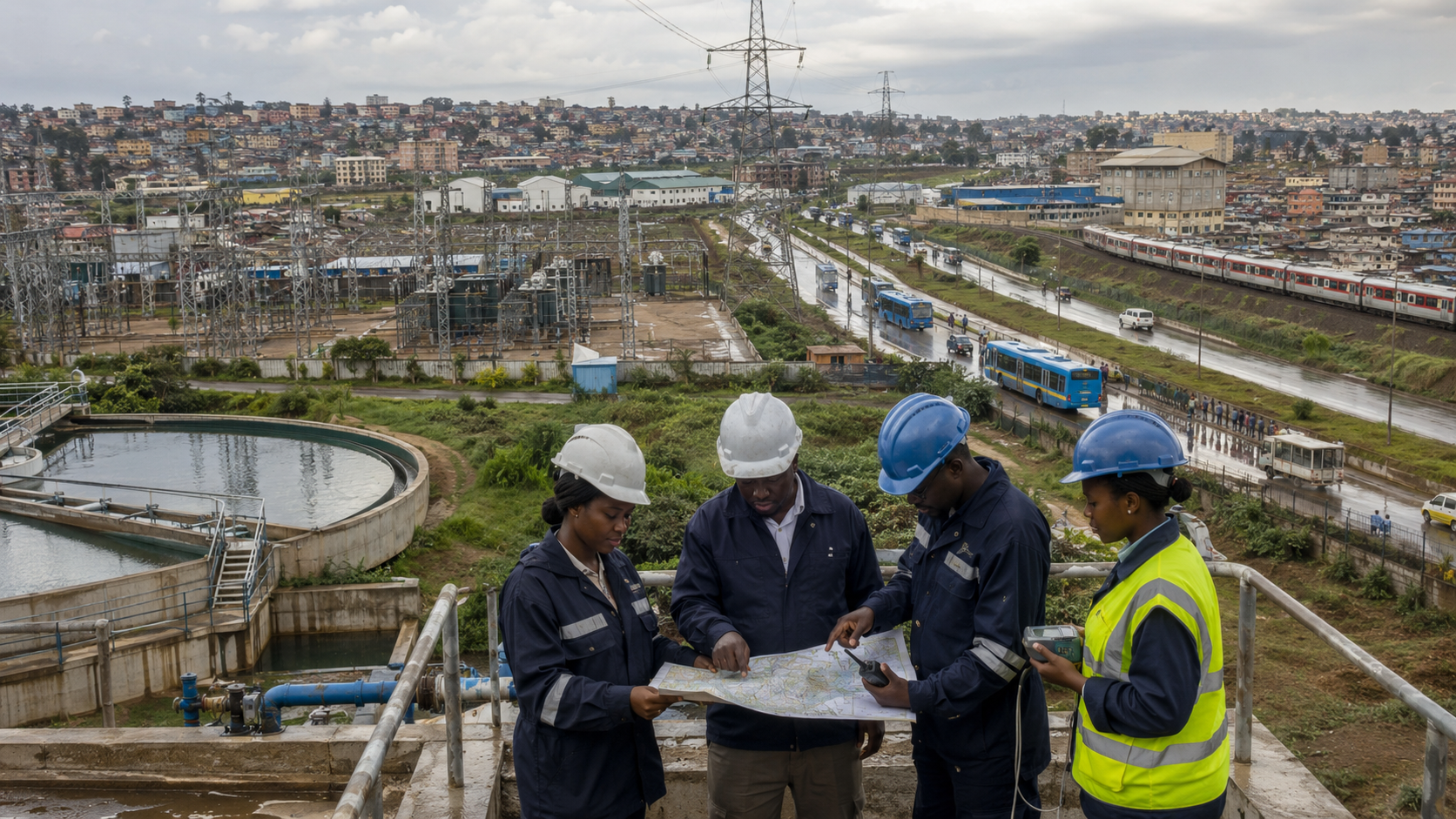
Depending on the contractual arrangement, the consulting or supervising engineer may be involved in interpreting drawings and specifications, inspecting materials, monitoring workmanship, assessing progress, maintaining site records, reviewing technical submissions, measuring completed works, certifying work for payment, monitoring the programme and identifying technical and contractual risks.
International contract frameworks such as those developed by FIDIC similarly place substantial responsibilities around construction supervision, quality assurance, progress reporting, measurement, payment and contract administration.
This makes the engineer one of the critical links between the design on paper and the infrastructure eventually delivered on the ground.
It also means that supervision should be continuous. A defect discovered while concrete is being poured can be corrected. A defect discovered after the concrete has been covered, buried or incorporated into another structure can be considerably more expensive to address.
The same principle applies to pipelines, roads, drainage systems, electrical installations and virtually every other form of infrastructure.
What gets buried cannot easily be inspected later
One of the most important lessons from construction is that some of the most critical work eventually becomes invisible. A pipeline is buried. A foundation disappears beneath the building. Reinforcement is enclosed in concrete. Electrical cables go behind walls or underground. Drainage structures are covered.
This is why inspection and documentation during construction matter so much.
A recent example from the water sector involved concerns over the material being used to backfill a pipeline trench. The issue may appear relatively simple to a member of the public, but technically it illustrates an important principle: construction quality is determined not only by what can be seen when a project is completed, but also by how the work was executed at each stage.
The correct material, method of installation, compaction and protection can determine how a buried asset performs years later. Once the evidence is covered by soil, concrete or finishes, correcting the problem can become disruptive and expensive. Good supervision therefore seeks to prevent defects rather than merely document them after completion.
Progress should be measured long before a project is late
Consider a project with a two-year construction period. At the end of the first year, if only a small fraction of the physical works have been completed, that is not simply a statistic. It is an early warning.
The project team should already be asking why. Is the contractor under-resourced? Are materials unavailable? Are there unresolved land or wayleave issues? Are designs incomplete? Are approvals pending? Has the contractor encountered unforeseen ground conditions? Is there a dispute? Is the programme unrealistic? Or is the contractor simply not performing?
These questions are much more useful when asked early. A project that is monitored monthly should not require a crisis at the end of its contractual period before its difficulties become known.
Kenya’s public procurement framework provides for periodic contract monitoring and reporting, including information on contract status, payments and expected completion dates.
The principle is simple: Project management should turn problems into information before they become failures.
Payments should follow performance — but performance must be properly measured
Another area that frequently attracts public attention is project expenditure. When a project appears physically behind schedule, it is natural for people to ask how much money has already been spent.
That is a legitimate question, but engineering and contract administration require a more careful examination than simply comparing the contract value with the visible percentage of construction.
Depending on the contract, there may be mobilisation or advance payments, payments for properly delivered materials, certified work, retention amounts and other contractual mechanisms.
The important question is not: “How much money has been paid?” It is: “What was the payment for, who certified it, and was it consistent with the contract and the work or obligations satisfactorily performed?”
Kenya’s procurement regulations place obligations around satisfactory performance, accurate invoicing and timely payment of compliant contractors.
This is where good measurement and certification become particularly important. The engineer’s certification, the contractor’s records, site measurements, payment documentation and the client’s financial records should tell a consistent story.
Where they do not, there is a problem that needs to be investigated.
The client has a responsibility too
It is easy to place the entire burden of project delivery on the contractor. But the contractor is only one part of the system. The implementing agency or client has an equally important role.
It must provide the necessary information and access, make decisions within reasonable time, manage approvals, monitor the contract, address emerging risks and ensure that the project remains aligned with its intended objective.
Where decisions are delayed, designs are incomplete, land access is unresolved or instructions are unclear, construction can be affected even when the contractor is ready to work.
Conversely, where a contractor is clearly underperforming, the client must have the systems and contractual mechanisms to respond.
Successful project delivery therefore requires a functioning relationship between client, engineer and contractor.
None can operate effectively in isolation.
The importance of contract administration
This is perhaps one of the least visible aspects of engineering project delivery.
Most people see the physical construction. Far fewer see the meetings, correspondence, drawings, inspection requests, measurements, test results, instructions, certificates, programmes, payment applications, claims, risk registers and progress reports that sit behind it.
Yet these records form the history of the project.
A properly maintained project file can answer important questions years later: When was a particular instruction issued? When was a defect identified? Who was responsible for correcting it? When was the work inspected? What tests were carried out? How much work had actually been completed at a particular point? What caused a delay? Was additional time justified? Was additional payment justified?
Good documentation is therefore not bureaucracy for its own sake. It is part of engineering accountability.
The lessons extend far beyond water
The issues being brought into public view through water-project inspections are not unique to the water sector. They can occur anywhere infrastructure is designed, procured and constructed.
A road can fall behind schedule. A building can experience poor workmanship. A drainage system can be incorrectly constructed. An electrical installation can fail to meet specifications. A power project can experience delays. A railway project can face changes in scope. An ICT infrastructure project can encounter integration problems.
In each case, the fundamental questions are similar: Was the project properly planned? Was the design adequate? Was the scope clear? Was the contract appropriate? Was the contractor capable and adequately resourced? Was the work properly supervised? Were risks identified early? Were payments properly certified? Were delays addressed promptly? Was the finished asset tested, commissioned and handed over properly?
These are not uniquely Kenyan questions. They are fundamental questions of engineering project delivery everywhere.
Site inspections have an important place
None of this diminishes the value of physical site inspections.
Quite the opposite. A site visit provides something that reports and spreadsheets cannot always provide: direct observation.
It allows decision-makers to see the physical condition of a project, speak to people involved in its implementation and ask questions about issues that may not be immediately apparent from paperwork.
The recent visibility of water-sector inspections has therefore helped bring an important subject into public discussion. There is value in senior leaders seeing projects for themselves.
But the greatest value comes when what is observed during an inspection is connected to the systems that are already supposed to monitor the project.
A site inspection should not be the first time a problem is discovered. Ideally, it should be an opportunity to confirm what the project’s monitoring systems already know, investigate emerging concerns and ensure that corrective action is taken.
In this sense, the question is how to ensure that the institutions beneath the Cabinet Secretary are sufficiently strong that problems are identified and addressed before they require high-level intervention.
Accountability should lead to action
There is another important distinction. Accountability is not simply about identifying who made a mistake. It is about understanding what went wrong, correcting it and preventing the same problem from recurring.
If a contractor is behind schedule, what is the recovery plan? If workmanship is defective, what corrective action is required? If a design is inadequate, how will it be addressed? If a supervision gap exists, what changes are necessary? If procurement or contract administration contributed to the problem, what should be done differently on the next project?
These questions turn accountability into institutional learning.
The ultimate measure of an engineering project is whether the infrastructure is eventually completed to the required standard, within a reasonable cost and timeframe, and whether it performs the function for which the public invested in it.
We should measure success by what works
Infrastructure is ultimately about service. A water pipeline is successful when water reaches the people it was designed to serve. A road is successful when it provides reliable movement of people and goods. A drainage system is successful when it protects communities and property from flooding. A public building is successful when it provides the intended service safely and efficiently. An electrical installation is successful when it operates reliably and safely.
The construction process matters because it determines whether that final outcome can be achieved.
This is why the engineering profession must look beyond the visible construction site and recognise the full chain of responsibility behind every asset.
The public may see the finished bridge.
Engineers see the survey, geotechnical investigation, structural calculations, drawings, specifications, bill of quantities, tender, contract, programme, inspections, tests, measurements, certificates and commissioning that made the bridge possible.
That is the work behind the project.
From reacting to problems to preventing them
Perhaps the biggest lesson from the recent attention on infrastructure inspections is that Kenya—and indeed any country investing heavily in infrastructure—needs to become better at detecting problems early.
The objective should not be to eliminate scrutiny. It should be to make scrutiny part of a system that works continuously.
Every project should have clear responsibilities. Every significant activity should have measurable milestones. Every major risk should have an owner. Every delay should have an explanation and a response. Every payment should have supporting evidence. Every significant quality concern should be documented and resolved. Every project should have someone asking whether it is still on course to deliver the intended public benefit.
And when it is not, action should follow quickly.
That requires competent contractors. It requires professional engineers who are empowered to supervise and administer contracts properly. It requires implementing agencies that actively manage their projects. It requires procurement and financial systems that support timely decisions. And it requires leadership that is willing to ask difficult questions when performance falls short.
The real engineering achievement
A successful engineering project rarely happens because one person did something extraordinary at the construction site.
It happens because hundreds of decisions, inspections, calculations, approvals, tests, measurements and actions were made correctly—or because problems were identified early enough for them to be corrected.
That is the part of engineering that the public rarely sees.
The recent water-project inspections have provided a useful reminder of why it matters.
But perhaps the bigger opportunity is to move the conversation from who discovered the problem to why the system did not detect and resolve it earlier, and from there to how the next project can be delivered better.
That is not only a government question. It is an engineering question. And it is a question that applies to every project, in every sector and in every country.
Because long before the public sees a successful engineering project, there is an enormous amount of work taking place behind it.
That work is what makes infrastructure succeed.

-
Product on sale
 AWEBook Volume 2Original price was: KShs 3,500.00.KShs 3,000.00Current price is: KShs 3,000.00.