





Last Updated 2 months ago by Kenya Engineer
The Tatu City plant has achieved EDGE Advanced certification, with reported reductions in energy use, water consumption and embodied energy in materials.
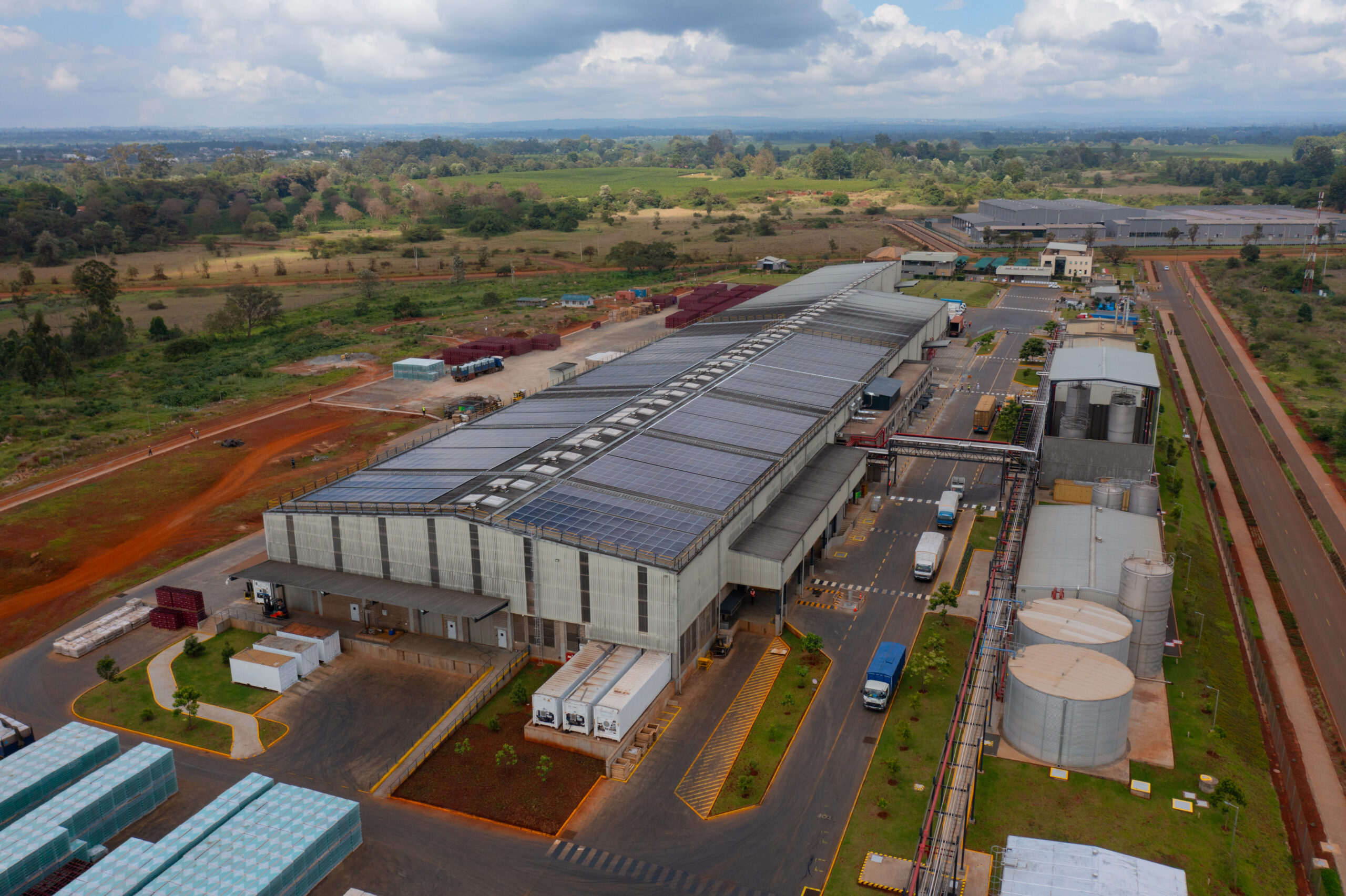
Kenya Wine Agencies Limited (KWAL), a subsidiary of Heineken Beverages International, in August announced that its manufacturing plant at Tatu City had achieved Excellence in Design for Greater Efficiencies (EDGE) Advanced certification, highlighting the growing role of resource efficiency in industrial infrastructure.
The certification recognises the plant’s reported performance in energy, water and materials efficiency, and places the facility among a growing number of buildings in Kenya pursuing internationally recognised green building standards.
According to KWAL, the plant has achieved a 44 per cent reduction in energy use, a 28 per cent reduction in water consumption and a 53 per cent reduction in embodied energy in materials.
The company said the achievement reflects a long-term strategy to embed sustainability into its operations.
What EDGE certification means
EDGE is a green building certification system developed by the International Finance Corporation (IFC), a member of the World Bank Group. It is designed to provide a measurable framework for assessing resource efficiency in buildings.
Unlike sustainability assessments that focus primarily on broad environmental commitments, EDGE evaluates specific improvements in energy, water and materials efficiency.
For industrial facilities, this approach is particularly relevant because manufacturing operations can involve substantial energy consumption, water use and material requirements.
The certification provides a framework for demonstrating that efficiency measures have been incorporated into the design and operation of a building.
From certification to operational performance
A key component of KWAL’s achievement is the commissioning of a 700-kilowatt rooftop solar power plant.
The company said the solar installation, completed in eight months, currently supplies approximately 20 per cent of its annual electricity consumption and has reduced annual energy costs by an estimated 10 per cent.
The project was implemented through a Power Purchase Agreement (PPA) model.
For a manufacturing facility, the significance of such an investment extends beyond the environmental benefits. Reducing dependence on grid electricity can also help manage operating costs and improve resilience against disruptions in power supply.
However, the extent of those benefits depends on factors such as the plant’s electricity demand, the solar system’s output, the PPA structure and the availability of grid power.
Water efficiency and smarter building systems
KWAL said its EDGE certification was supported by a combination of resource-efficiency measures, including a water recycling initiative and motion-sensor lighting in its offices.
These measures illustrate an important principle in green manufacturing: efficiency is often achieved through a combination of technologies and operational improvements rather than a single major investment.
Water recycling can reduce demand for fresh water, while automated lighting controls can reduce unnecessary electricity consumption.
The value of such systems depends on how effectively they are integrated into the facility’s operations and maintained over time.
Planning for further solar expansion
KWAL has also announced plans to more than double its solar capacity to 1,500 kilowatts.
If implemented, the expansion would increase the plant’s renewable energy generation capacity and could further reduce its reliance on grid electricity.
The company said the planned investment forms part of its longer-term commitment to resource efficiency and greater energy independence.
For industrial facilities, however, solar expansion must be considered alongside production schedules, electricity demand, storage requirements and the economics of the power supply arrangement.
Why certification matters for manufacturing
The EDGE achievement is significant because it demonstrates how green building principles can be applied to an operating manufacturing facility.
Industrial sustainability is often discussed in terms of emissions reduction or renewable energy, but resource efficiency also involves the design of buildings, the management of water, the selection of materials and the use of monitoring systems.
Certification provides a way to bring these elements together within a measurable framework.
Gill Rogers, IFC Head of Country Office, Kenya, said KWAL’s achievement demonstrated that economic growth and environmental responsibility can work together.
“Through practical, commercially viable solutions, KWAL has delivered a 44% reduction in energy use, a 28% reduction in water consumption, and a 53% reduction in embodied energy in materials,” she said.
“These results represent real resources conserved every single day.”
A broader shift in industrial infrastructure
KWAL’s achievement comes as businesses increasingly look at sustainability not only as an environmental responsibility, but also as a way of improving operational efficiency and managing long-term costs.
For manufacturers, investments in energy efficiency, renewable power, water management and building performance can contribute to more resilient operations.
The challenge is to ensure that these measures are supported by sound engineering, appropriate monitoring and continued maintenance.
As more industrial facilities pursue green building certification, the focus is likely to shift from individual projects to the wider question of how resource-efficient infrastructure can support Kenya’s manufacturing ambitions.
For KWAL, the EDGE Advanced certification provides a recognised framework for measuring its progress. The company’s planned solar expansion suggests that its sustainability programme is also intended to continue beyond the certification milestone.
Source: KWAL announcement, August 27, 2026.

-
Product on sale
 AWEBook Volume 2Original price was: KShs 3,500.00.KShs 3,000.00Current price is: KShs 3,000.00.















 has achieved Excellence in Design for Greater Efficiencies (EDGE) Advanced certification)