
Last Updated 1 month ago by Kenya Engineer
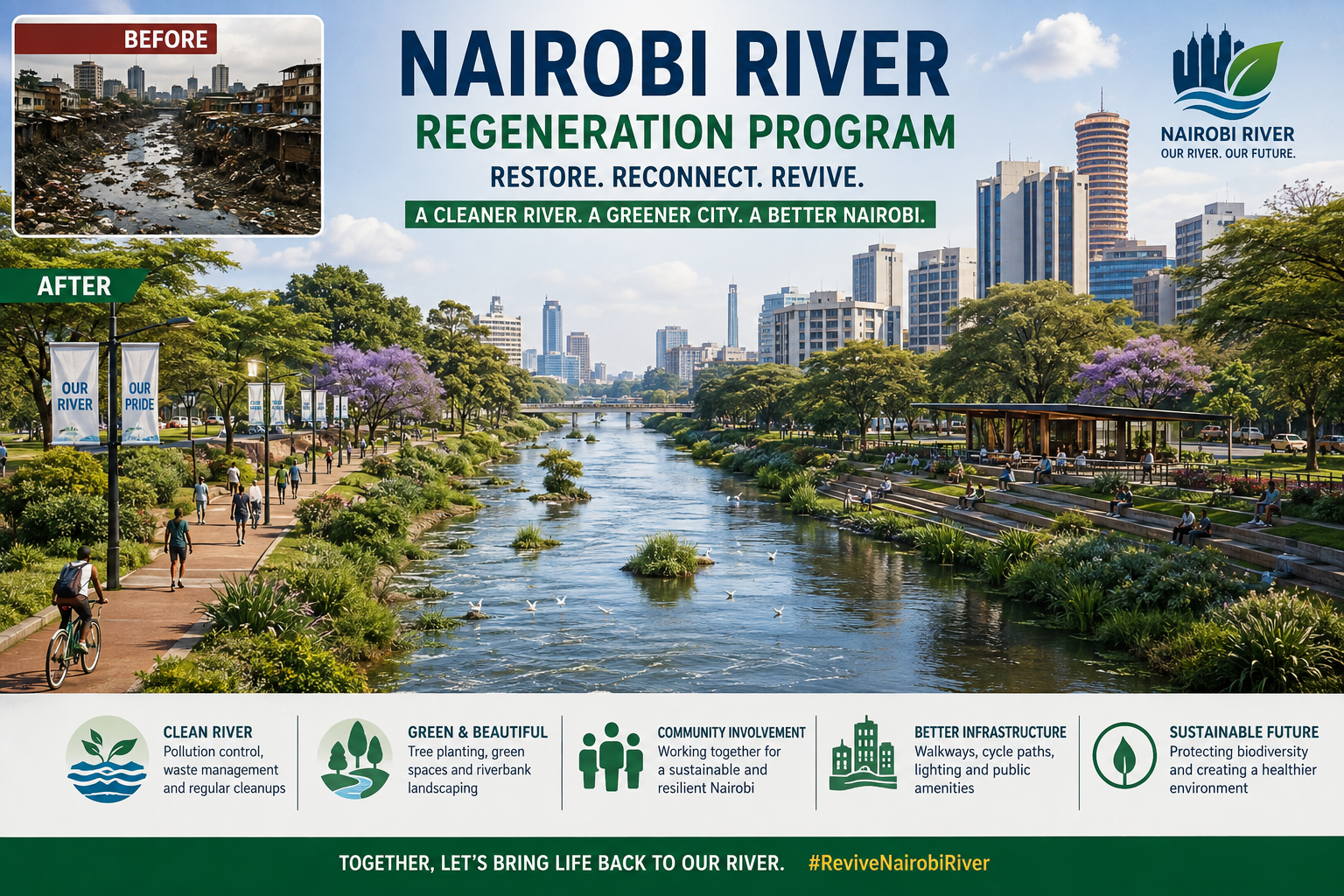
For decades, the Nairobi River has carried the burden of the city’s growth. What was once a natural drainage and ecological system has, over time, become a receiving channel for raw sewage, stormwater runoff, industrial effluent, solid waste, informal settlement discharge and silt from poorly managed urban drainage. The Nairobi River Regeneration Programme is the latest and most ambitious attempt to reverse that decline—not merely through clean-up campaigns, but through a large-scale engineering, environmental and urban renewal intervention.
At its core, the programme seeks to transform the Nairobi River system from a polluted drainage corridor into a functional blue-green infrastructure spine for the city. The Nairobi Rivers Commission describes the wider Nairobi River Basin Regeneration Programme, NaBREP, as a 5–10 year intergovernmental and multi-sectoral initiative covering approximately 175 kilometres of river length. This includes the Nairobi, Ngong and Mathare rivers, as well as sections of the Stony Athi River, extending from upstream sources through Nairobi and downstream toward Thwake Dam and the wider Athi–Galana–Sabaki system.
The Government formally launched the Nairobi River Regeneration and Engineering Works Programme in March 2025, with the Presidency placing the headline cost at KSh50 billion. The launch statement indicated that the programme would include construction of a 60-kilometre sewer line, creation of 40,000 jobs under the Climate Works Mtaani Initiative, and 50,000 affordable houses in reclaimed areas. President William Ruto framed the initiative as a visible urban transformation programme, saying: “in the next 24 months, we are going to see a difference in Nairobi River.”
From clean-up to infrastructure-led regeneration
Earlier efforts to restore the Nairobi River often relied heavily on clean-up exercises, desilting, tree planting and enforcement campaigns. The Nairobi Rivers Commission acknowledges that many previous initiatives stalled because of fragmented leadership, inadequate funding, weak enforcement, housing pressure along riparian corridors, and the reality that seasonal floods often washed waste back into cleaned channels.
The current programme is therefore structured differently. It combines hard engineering works, environmental restoration, sanitation infrastructure, public space creation, affordable housing, markets, drainage, flood control, riparian protection and institutional coordination. The Nairobi Rivers Recovery Strategy identifies ten thematic areas: catchment protection, riparian and wetland reclamation, waste entering rivers, drainage and hydrology, land use, social issues, technical science and research, resource mobilisation, monitoring and evaluation, and public communication.
This engineering-led approach is significant. A river cannot be sustainably restored if untreated wastewater continues entering it. Similarly, desilting alone cannot solve pollution if solid waste systems, sewer reticulation, industrial compliance and riparian enforcement are not addressed. The regeneration programme therefore treats the river as an integrated urban system rather than an isolated watercourse.
Scope of works
The technical scope is broad. According to the Ministry of Defence, the programme integrates social housing, pedestrian walkways, cycle lanes, a new trunk sewer line, wastewater treatment facilities, pedestrian bridges, landscaping and riverbank beautification. The Ministry also states that the intervention targets raw sewage, solid waste disposal, industrial and institutional discharges, poor drainage and encroachment on riparian land.
The Environmental and Social Impact Assessment report for the beautification and rehabilitation works gives a more detailed engineering picture. The current focus area runs from the Nairobi River’s source at Ondiri Swamp through Kangemi, Kileleshwa, the Arboretum, the central business district, Eastleigh and onward to Dandora Falls. The ESIA places this corridor into zones NRBZ1 to NRBZ5, with sequential implementation planned first along the Nairobi River, then Ngong River, and subsequently Mathare River.
The main engineering components include a new reinforced-concrete box culvert trunk sewer, expansion of the Kariobangi Sewage Treatment Plant, Dandora dumpsite rehabilitation, riverbank stabilisation, river widening and dredging, new crossing bridges, garbage interception structures, pedestrian walkways, cycle lanes, public markets, community amenities, street lighting, landscaping, and conservation of Ondiri Swamp.
Sewerage works: the backbone of the programme
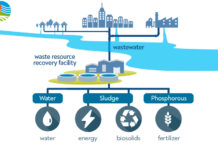
The most important technical intervention is the sewerage component. Nairobi’s rivers have for years received untreated or partially treated wastewater from settlements, commercial areas and broken or overloaded sewer systems. Without intercepting and conveying that wastewater to treatment plants, any river clean-up would remain temporary.
The Nairobi Rivers Commission describes the trunk sewer project as a flagship intervention under the Nairobi River Regeneration Programme. It involves construction of a high-capacity trunk sewer to replace or supplement the old overloaded system, integrated with existing transverse sewers to convey wastewater to treatment facilities.
The new trunk sewer is planned along the Nairobi River riparian reserve over three main sections: Naivasha Road to Museum Hill, about 10.7 km; Kirichwa Kubwa River from Dagoretti to Chiromo, about 9 km; and Museum Hill to Dandora Waterfall, about 16.7 km. The works cross important transport corridors including Outer Ring Road, Murang’a Road, Uhuru Highway and Naivasha Road, requiring reinstatement of affected road sections and traffic management during construction.
The ESIA states that the proposed sewer system is designed to accommodate wastewater flows of up to 310,000 cubic metres per day. It is expected to serve a 119.90 km² area, with a 2025 population of about 495,934 and a projected 2065 population of 1,952,559.
Public reporting on the sewerage scope gives two related figures. State House referred to a 60 km sewer line under the wider programme, while the NRC and ESIA describe a more specific high-capacity trunk sewer corridor of over 27 km across the three main sections. This difference likely reflects the distinction between the broader programme sewer network and the specific interceptor or trunk sections currently described in engineering documentation.
Wastewater treatment: Kariobangi expansion
A trunk sewer is only useful if the receiving treatment infrastructure has sufficient capacity and reliability. The programme therefore includes expansion of the Kariobangi Sewage Treatment Plant. The ESIA states that the expansion is intended to achieve a treatment capacity of 60,000 cubic metres per day and will incorporate biological treatment processes for improved nutrient removal and effluent quality.
The treatment component is critical for two reasons. First, it allows intercepted wastewater to be treated before discharge, reducing biochemical oxygen demand, faecal contamination, nutrient loading and odour problems in the river system. Second, the ESIA indicates that the upgraded plant will include automation and monitoring systems to improve operational safety, compliance with effluent standards and real-time performance tracking.
A July 2026 progress update attributed to Interior Principal Secretary Raymond Omollo said the upgraded sewer network would have a treatment capacity of 60 million litres per day and help curb pollution, improve sanitation and protect the Nairobi River ecosystem.
River training, dredging and flood control
Beyond pollution control, the programme addresses the physical condition of the river channel. In many sections, accumulated waste, siltation, encroachment and narrowed channels have reduced hydraulic capacity. This worsens flooding during heavy rainfall and increases erosion risk along unstable banks.
The ESIA identifies riverbank expansion and dredging between chainages 10+112 and 26+580 km. In the downstream section from chainage 16+550 to 26+580, the river channel excavation is planned around a riverbed control width of 20 to 22 metres. The aim is to widen and deepen the river channel, improve flow capacity and reduce overbank flooding.
The works also include bank stabilisation using structural and ecological measures. Gabion retaining structures are proposed in eroded sections to improve slope integrity, while ecological restoration measures are expected to protect riverbanks and reduce future sediment loading.
Flood control is one of the programme’s most important public safety benefits. Nairobi has experienced repeated flooding in low-lying and informal settlements along drainage corridors. If properly implemented and maintained, channel widening, riparian protection, stormwater improvements and wetland-based flood mitigation could reduce exposure of residents, businesses and infrastructure to flood damage.
Solid waste and Dandora dumpsite rehabilitation
Solid waste is another major source of river pollution. The ESIA identifies Dandora dumpsite as a significant pollution source because waste and leachate have progressively moved toward the Nairobi River. The proposed intervention includes targeted waste removal, slope stabilisation and covering exposed areas to reduce erosion and leachate infiltration into the river.
The programme also proposes five garbage interception dams along the Nairobi River. These are to be positioned at strategic chainages, including upstream, core and downstream locations, to facilitate waste capture, access for removal and transfer operations, while minimising ecological disturbance.
This is an important design choice. In a dense city, river restoration cannot rely only on downstream clean-up. Interception structures, if properly maintained, allow floating solid waste to be trapped before it spreads further downstream. However, their success will depend heavily on collection frequency, access roads, equipment, staffing, final disposal systems and behavioural change in surrounding communities.
Non-motorised transport, bridges and public spaces
The Nairobi River Regeneration Programme is also an urban design project. The river corridor is expected to host pedestrian walkways, cycle lanes, lighting, landscaping, bridges, public parks, markets and other amenities. This aligns with the idea of turning the river into a safe, accessible public asset rather than a hidden drainage channel.
The Ministry of Defence says the programme includes pedestrian walkways, cycle lanes, pedestrian bridges, modern landscaping and flowered riverbanks. The ESIA further states that 27 bridges along the Nairobi River corridor are to be reconstructed to accommodate increased channel width and maintain safe pedestrian and vehicular connectivity.
Nairobi County officials have also indicated that green public spaces, riverfront parks, pedestrian walkways, cycling lanes and modern markets for up to 20,000 informal traders form part of the wider regeneration blueprint. Governor Johnson Sakaja described the programme as being “about people as much as it is about the environment.”
For Nairobi, this could be transformative. Properly designed riverfront public spaces can improve mobility, safety, recreation, local commerce and property values. But they also require careful social planning to avoid displacing vulnerable residents and traders without adequate alternatives.
Cost and financing
The public cost figures need to be understood carefully. The Presidency announced the wider programme at KSh50 billion. The ESIA for the proposed beautification and rehabilitation works estimates the cost at KSh37,599,568,421.99, covering construction, procurement and related activities. Business Daily reported that China Energy Engineering Group would be the project contractor for the Sh37.6 billion master plan, citing the ESIA.
These figures should not be treated as contradictory without context. The KSh50 billion appears to refer to the broader government programme, including associated housing, jobs, markets and wider infrastructure. The KSh37.6 billion appears to relate to the specific ESIA-covered engineering, rehabilitation and associated works package.
Business Daily further reported indicative component costs, including about KSh6.05 billion for the trunk sewer, KSh5.36 billion for non-motorised transport works, bridge rehabilitation, drainage and lighting, and about KSh6.42 billion for flood control and stormwater works. Separately, Open Budget Kenya lists KSh276.96 million for the Nairobi Rivers Commission in 2025 and KSh259.21 million in 2026 under Nairobi Rivers Regeneration, with targets including monitoring reports, tree growing and river unclogging.
A 2026 KBC report also noted a KSh3 billion funding gap for lateral sewer lines needed to intercept raw sewage entering the river, while identifying Athi Water Works Development Agency as a key delivery institution for sewerage upgrades, river rehabilitation, wastewater treatment expansion and flood protection systems. This is technically important because trunk sewers alone cannot capture pollution if lateral and reticulation networks from neighbourhoods are incomplete.
Contractors and implementing agencies
The institutional arrangement is multi-agency. State House said the Nairobi Rivers Commission and the Ministries of Housing, Environment and Defence would jointly implement the project. The Ministry of Defence states that it played a key role in designing the project and would lead execution and management, working with the Nairobi Rivers Commission, State Department for Housing and Urban Development, Nairobi County Government, Nairobi City Water and Sewerage Company and Energy China.
China Energy Engineering Corporation, CEEC, is identified in public sources as a major project implementer. The Chinese Embassy in Kenya reported in January 2026 that Ambassador Guo Haiyan visited the Nairobi Rivers Regeneration Project implemented by CEEC and reviewed works including a newly built sewage trunk sewer line and Kamukunji Recreational Park. Business Daily also reported that CEEC secured the Sh37.6 billion deal for sewer, roads and related river rehabilitation works.
Athi Water Works Development Agency is also central to the sanitation component. It is advancing sewerage upgrades, treatment plant works, faecal sludge management systems, flood protection and related infrastructure under the wider Nairobi River rehabilitation effort. Nairobi City Water and Sewerage Company is expected to operate and maintain parts of the city sewer network, including new equipment such as vehicle-mounted sewer flushing units being procured under the Sewerage Improvement Project Phase II.
Progress so far
The programme has moved from policy and launch phase into visible works along selected corridors. In January 2026, the Chinese Embassy reported that CEEC works under inspection included a newly built sewage trunk sewer line and Kamukunji Recreational Park.
In February 2026, the Nairobi Rivers Commission reported a presidential inspection beginning at Lucky Summer in Ruaraka, where trunk sewer construction was reviewed. The same inspection covered Dandora dumpsite rehabilitation, Korogocho Bridge clean-up and desilting works, bank stabilisation and protected riparian zones.
Nairobi County’s Cabinet approved continued rollout of the programme in February 2026 and said the project remained on track for completion in January 2027. County officials cited progress on trunk sewer works, riverbank stabilisation, stormwater drainage expansion and Dandora dumpsite remediation.
A July 2026 update reported substantial progress in Lucky Summer and Baba Dogo, especially on an interceptor sewer network intended to prevent untreated wastewater from flowing into the Nairobi River. The same update stated that the ClimateWorX Mtaani Initiative had provided employment to more than 45,000 youth and women engaged in river clean-up, drainage maintenance and environmental restoration.
Environmental and public health impact
If fully implemented, the programme could have major environmental benefits. The first would be reduced discharge of raw sewage into the Nairobi River and its tributaries. This should improve dissolved oxygen levels, reduce faecal contamination, lower odour and reduce the public health burden associated with polluted water exposure.
Second, improved wastewater collection and treatment could reduce pollution loading downstream into the Athi River Basin, including agricultural areas that depend on river water. The Nairobi Rivers Commission notes that NaBREP’s environmental and socio-economic impacts are expected to extend along the Athi River Basin toward the Sabaki River outlet in Kilifi County.
Third, solid waste interception and Dandora dumpsite remediation could reduce plastic, organic waste, leachate and hazardous material entering the river. Combined with industrial enforcement, this could improve aquatic habitat quality and reduce toxic exposure.
Fourth, bank stabilisation, dredging, wetland restoration and stormwater management could reduce flood risk and erosion. This is especially important for informal settlements and markets located along river corridors, where flood exposure directly affects lives, livelihoods and public infrastructure.
Finally, the creation of parks, walkways, cycle lanes and public spaces could change the city’s relationship with the river. Nairobi has historically turned its back on the river; regeneration could make it a civic and economic asset.
Key engineering and governance risks
The Nairobi River Regeneration Programme is technically promising, but its success is not guaranteed. The first risk is incomplete sewer connectivity. A trunk sewer can only intercept wastewater that reaches it through functioning lateral sewers, household connections, estate networks and maintenance systems. The reported KSh3 billion gap for lateral sewer lines is therefore not a minor issue; it is central to pollution control.
The second risk is maintenance. Garbage interception dams, drains, sewer lines, pumping stations, treatment plants, walkways and public spaces all require recurrent budgets, equipment, trained operators and institutional accountability. Without maintenance, the river corridor could quickly relapse into pollution and encroachment.
The third risk is contaminated sediment management. Dredging polluted urban rivers can release or relocate heavy metals, hydrocarbons, pathogens and other contaminants if sediment testing, handling and disposal are not properly controlled. The ESIA recognises that dredged material must be tested and managed in compliance with waste management regulations.
The fourth risk is social displacement. Parliament and media reports have highlighted concerns from landowners and affected communities over land ownership, compensation, public participation and riparian boundary verification. For long-term success, engineering works must be paired with transparent land processes, humane relocation, livelihood restoration and credible public participation.
The fifth risk is industrial compliance. The Ministry of Defence identifies industrial and institutional discharges as among the pollution sources the programme must address. Previous government crackdowns have warned factories and slaughterhouses over pollution of the Nairobi River, showing that infrastructure must be accompanied by continuous enforcement and monitoring.
What success should look like
For engineers, the success of the Nairobi River Regeneration Programme should be measured beyond ribbon-cutting. Key performance indicators should include measurable improvement in water quality, reduction in faecal coliforms, reduced biochemical oxygen demand, reduced solid waste loads, improved flood conveyance, number of functional sewer connections, treatment plant compliance, restored riparian vegetation, reduced illegal discharges, and sustainable operation of public spaces.
The river should also be monitored through fixed water quality stations, periodic sediment testing, drone or satellite mapping of encroachment, digital maintenance logs for sewer infrastructure, and public dashboards that allow citizens to track progress.
The Nairobi River Regeneration Programme is therefore not just an environmental project. It is an engineering test for Nairobi’s future. If the city can combine sewerage infrastructure, treatment capacity, flood control, waste management, public space design and fair social transition, the river can become a living urban corridor again. If the programme stops at beautification without solving pollution at source, the outcome will be temporary.
The technical ambition is clear. The challenge now is disciplined implementation, transparent financing, strong environmental compliance, and long-term maintenance. Nairobi’s river system has absorbed the cost of urban neglect for decades. The current programme offers the city a rare opportunity to engineer a different future—one in which the river is not a back alley of waste, but the ecological and civic spine of the capital.
-
Product on sale
 AWEBook Volume 2Original price was: KShs 3,500.00.KShs 3,000.00Current price is: KShs 3,000.00.