
Last Updated 2 months ago by Kenya Engineer
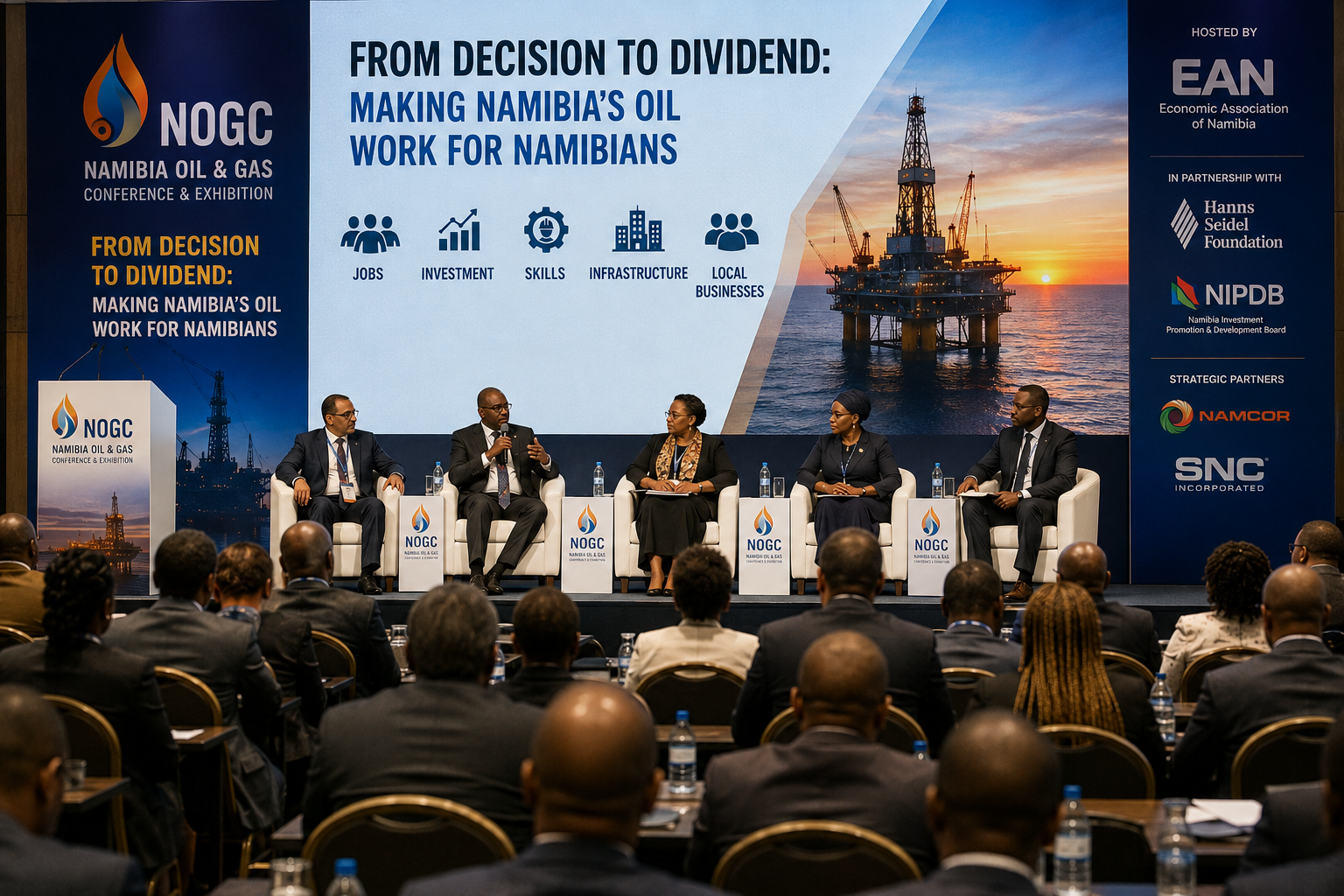
Namibia’s oil and gas industry must move beyond the excitement of exploration and translate its petroleum resources into jobs, local businesses, skills and long-term national value, participants at the 4th Namibia Oil and Gas Conference and Exhibition (NOGC) 2026 have said.
Held under the theme “From Decision to Dividend: Making Namibia’s Oil Work for Namibians,” the three-day conference brought together more than 1,500 delegates, over 120 speakers and more than 70 exhibitors from Namibia and around the world.
The discussions reflected Namibia’s transition from exploration towards development, with local content, enterprise participation, skills, infrastructure, financing and investment emerging as central priorities.
Hosted by the Economic Association of Namibia (EAN) in partnership with the Hanns Seidel Foundation (HSF) and the Namibia Investment Promotion and Development Board (NIPDB), the conference was held with strategic partners including the National Petroleum Corporation of Namibia (NAMCOR) and SNC Incorporated. It was officially endorsed by the Ministry of Industries, Mines and Energy.
From resources to national value
Speaking on behalf of President Netumbo Nandi-Ndaitwah, Vice President Lucia Witbooi said the country’s petroleum resources would only become a national success if they delivered tangible benefits to its people.
“Discovery is not the destination,” she said. “A resource beneath our waters becomes a national success only when it is responsibly developed and translated into tangible improvements in the lives of our people.”
She identified employment, enterprise opportunities, skills development, technology, infrastructure, national revenues and savings for future generations as important measures of success.
The emphasis reflects a wider challenge facing resource-producing economies: converting underground or offshore resources into lasting economic value requires more than investment in extraction. It also requires the institutions, infrastructure and local capabilities needed to participate in the industry.
Preparing for production
Minister of Industries, Mines and Energy Modestus Amutse said Namibia’s strategic plan for 2026 to 2030 is intended to move the country from exploration towards readiness for offshore production.
“Our strategic plan for 2026 to 2030 carries one organising idea, which is to move this country from exploration to readiness, so that Namibia is ready onshore when production begins offshore,” he said.
The minister said the government expects Namibian employment to be maximised, local suppliers prioritised, and skills and technology transferred across the value chain.
He also emphasised the importance of meaningful Namibian participation, ownership and financing, alongside a stable and transparent framework for petroleum revenues.
“Local content, properly done, is not a tax on your investment,” Amutse said. “An industry surrounded by capable Namibian suppliers, skilled Namibian workers and invested Namibian communities is an industry with social licence, political stability and a future measured in generations.”
The minister also said local banks had indicated their readiness to consider bankable proposals from the oil and gas sector.
Building the supporting ecosystem
The conference’s focus on local content extended beyond policy statements into practical engagement between businesses, policymakers and industry participants.
The Local Content Masterclass provided strategies for increasing local participation, while the NIPDB Local Content Pitching Session gave Namibian entrepreneurs an opportunity to present their capabilities and partnership opportunities to industry leaders and investors.
Supplier workshops also focused on helping domestic businesses meet international industry standards.
These activities point to an important aspect of petroleum development: the ability of local companies to participate depends not only on the availability of contracts, but also on their technical capacity, financing, certification, quality systems and ability to meet the requirements of major operators and contractors.
For Namibia, developing that supplier base will be an important part of determining how much value remains in the domestic economy as the industry expands.
Oil as a means, not the end
Jason Kasuto, Chairperson of the Economic Association of Namibia and Managing Director of Monasa Advisory & Associates, summarised the conference’s central message:
“Oil is not the point; oil is actually the how. Our people are the why.”
The statement captures the distinction between resource development as an economic activity and resource development as a means of improving national welfare.
For Namibia, the challenge will be to ensure that the transition from exploration to production is accompanied by the development of skills, infrastructure, businesses and institutions capable of supporting a sustainable industry.
The infrastructure challenge
As Namibia prepares for the next phase of petroleum development, infrastructure will be a critical part of that transition.
The industry will require supporting systems for logistics, storage, transport, power, communications, industrial services and other activities associated with offshore and onshore operations.
The conference discussions placed these requirements alongside local content and financing, highlighting the need for coordinated planning between government, industry, investors and domestic businesses.
The scale and timing of infrastructure development will ultimately depend on the progress of petroleum projects, investment decisions and the country’s broader development priorities.
Turning opportunity into delivery
NOGC 2026 concluded with a renewed focus on ensuring that Namibia is not only recognised as an attractive energy destination, but is also prepared to translate its petroleum opportunity into sustainable prosperity.
The conference did not, by itself, establish that these outcomes have been achieved. Rather, it reinforced the priorities that will shape the next stage of Namibia’s petroleum development.
For the country, the central question is no longer only what resources may be available offshore, but how effectively the institutions, businesses and infrastructure needed to develop them can be built onshore.
-
Product on sale
 AWEBook Volume 2Original price was: KShs 3,500.00.KShs 3,000.00Current price is: KShs 3,000.00.