Last Updated 4 hours ago by Kenya Engineer
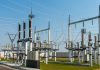
South Africa’s electricity transition is running into a problem familiar to power systems across Africa: generation can be built faster than the transmission network needed to connect it.
The country’s government is responding by preparing to bring private-sector capital into the development of national transmission infrastructure through the Independent Transmission Projects Programme.
The programme is significant because it represents the first major attempt to introduce private participation into the development of South Africa’s national transmission infrastructure.
But the programme has now been delayed.
The final request for proposals for Phase I is expected in the second quarter of 2027, after government and potential investors agreed that an additional round of engagement was necessary before competitive procurement begins.
The delay does not remove the underlying problem. South Africa needs more transmission.
The generation-transmission mismatch
The country’s renewable-energy resources are concentrated in areas that are not necessarily close to its largest centres of electricity consumption.
Large wind projects are being developed in the Cape provinces, while significant solar resources are located in the Northern Cape and other parts of the country.
The electricity still has to reach industrial centres and cities. That requires long-distance transmission infrastructure.
The government has described transmission as a critical enabler of the country’s future electricity system and says substantial additional capacity will be required to connect the generation envisaged under the Integrated Resource Plan 2025.
Eskom has plans to add about 14,000 kilometres of transmission lines over the coming decade, according to Bloomberg reporting. Yet progress has been slower than required, with the utility having built less than two-thirds of its annual target in the year to March 2026.
The consequences are already being felt by renewable-energy developers.
Projects can have financing, land, equipment and permits yet remain unable to proceed because there is insufficient grid capacity where they want to connect.
A new financing model
The Independent Transmission Projects Programme attempts to address this by using private capital and long-term infrastructure investment structures to accelerate grid construction.
The government says the programme is designed to mobilise the scale of public and private investment needed to expand the national transmission network.
The approach is notable because transmission has traditionally been treated as a public utility function.
Moving parts of that infrastructure into privately financed project structures introduces new questions around regulation, revenue certainty, risk allocation and long-term network planning.
Investors need predictable revenue. The electricity system needs transmission capacity where it is technically required.
Government must ensure that commercial incentives do not result in private investment being concentrated only in the most financially attractive corridors while less commercially attractive but strategically important infrastructure remains unfunded.
Those questions are central to the programme’s design.
The delay
The decision to delay the procurement process is not necessarily a sign that the model has been abandoned.
South Africa’s Department of Electricity and Energy says the additional engagement is intended to address the transaction structure, including regulatory cost recovery, risk allocation and ring-fencing arrangements.
A transmission project has a long economic life, high upfront capital requirements and revenues that ultimately depend on the operation of the wider electricity system.
If investors are expected to finance the infrastructure, they need clarity about how those investments will be recovered.
At the same time, the national grid cannot be treated simply as a collection of standalone commercial projects. Transmission planning must remain coordinated at system level.
Lessons for the rest of Africa
South Africa’s experience is relevant to other African countries considering how to expand their grids.
Kenya has been investing heavily in transmission infrastructure through KETRACO, with recent projects including the 132 kV Nanyuki–Isiolo line, Awendo–Masaba, Machakos–Konza–Isinya–Namanga and Sultan Hamud–Loitoktok corridors.
Kenya is also moving towards greater regional electricity trade.
That means transmission is no longer merely infrastructure for moving domestically generated electricity. It increasingly becomes the physical foundation of a regional electricity market.
The same applies elsewhere.
If Africa is to develop regional power pools, build renewable-energy corridors and allow industrial consumers to access electricity from distant generators, transmission investment will have to grow much faster. The financial model will be just as important as the engineering.
Transmission as an energy-transition asset
The energy transition is often discussed in terms of solar panels, wind turbines, geothermal wells and batteries. Transmission is less visible, but it may prove just as important.
A wind farm without a transmission connection cannot deliver electricity to consumers. A solar plant in a remote high-resource area cannot contribute fully to the grid if the evacuation corridor is constrained.
South Africa’s experience is therefore a reminder that the next bottleneck in power-system development may not be generation. It may be the wires.
The Independent Transmission Projects Programme is an experiment in how that bottleneck can be financed.
Its success or failure will be watched well beyond South Africa, particularly by countries that face the same challenge of expanding electricity supply while public balance sheets remain under pressure.
For Africa’s emerging electricity markets, the question is no longer who will generate the next megawatt. It is increasingly: who will build the line that carries it?
-
Product on sale
 AWEBook Volume 2Original price was: KShs 3,500.00.KShs 3,000.00Current price is: KShs 3,000.00.