
Last Updated 4 hours ago by Kenya Engineer
Egypt is moving beyond just adding renewable generation to its electricity system and is beginning to build the storage infrastructure needed to make that generation more flexible.
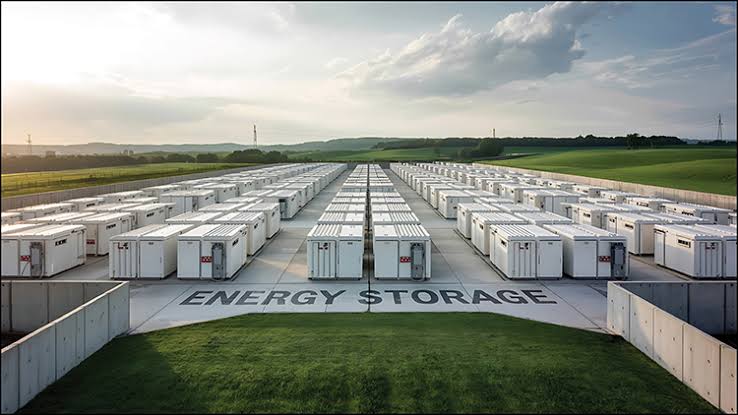
The country is developing two large standalone battery energy-storage projects at Benban, the solar-generation complex in Aswan Governorate. The Nefertiti and Horus projects together represent a major step towards utility-scale battery storage in Africa.
The European Bank for Reconstruction and Development describes Nefertiti as a 500 MW/1,000 MWh standalone battery energy-storage system. Together with the Horus project, it will form Egypt’s first standalone utility-scale energy-storage facilities.
The significance is not simply the size of the batteries. It is what they allow the electricity system to do.
From generation to flexibility
Solar power is abundant in Egypt, but solar generation does not follow electricity demand.
Production rises during daylight hours and falls rapidly in the evening. Without sufficient flexibility elsewhere in the system, large amounts of solar generation can eventually result in curtailment while the grid simultaneously needs additional power after sunset.
Battery storage changes that equation.
Electricity generated during periods of high solar production can be stored and discharged when demand rises. Batteries can also provide fast-response services that conventional generation cannot always provide as efficiently.
The result is a system capable of absorbing more variable renewable energy without requiring every fluctuation in generation to be matched immediately by thermal power plants.
The EBRD says the Nefertiti project is expected to improve grid stability, increase integration of intermittent renewable energy and reduce curtailment.
Why Benban
The location is equally significant.
Benban is already one of Egypt’s major solar-generation centres. Building large-scale storage close to a major renewable-energy cluster creates an opportunity to combine generation and flexibility within the same electricity ecosystem.
The engineering challenge shifts from building generation capacity to managing power flows across time.
A solar plant produces when the sun is available. A battery can move some of that energy to a different period. The grid can therefore extract more value from existing generation capacity.
This is becoming increasingly important as countries expand solar and wind faster than their traditional grid infrastructure was designed to accommodate.
Storage is becoming an African grid issue
The development has wider relevance for Africa.
Many African electricity systems are simultaneously dealing with three challenges: inadequate generation, weak transmission networks and increasing amounts of variable renewable energy.
Battery storage does not solve all three problems. It cannot substitute for a missing transmission line, nor can it provide unlimited energy over several days of low renewable output.
But it can address short-duration balancing and provide services such as frequency response, ramping and peak shifting. That makes storage particularly useful as renewable penetration increases.
The economics are also changing.
Battery costs have fallen dramatically over the past decade, while improvements in power electronics, thermal management and battery-management systems have made utility-scale systems increasingly sophisticated.
The engineering challenge is now moving towards system integration: how batteries are dispatched, how they interact with grid controls, how degradation is managed and how storage capacity is remunerated.
The importance of duration
The headline figure of 500 MW can be misleading if considered on its own.
A 500 MW battery with two hours of storage represents 1,000 MWh of stored energy. It can deliver its rated output for two hours before requiring recharge.
That distinction between power and energy is fundamental to understanding storage.
A battery can be extremely valuable for managing the evening ramp and short-term grid fluctuations while still being unsuitable for prolonged periods of low generation.
For Africa’s electricity planners, this means storage needs to be designed around specific system requirements rather than treated as a generic replacement for conventional generation.
What Kenya can learn
Kenya is not Egypt, and its generation mix is different.
Kenya has a substantial geothermal base, significant hydropower, wind and growing solar capacity. Geothermal provides a form of firm generation that is fundamentally different from Egypt’s dependence on large solar resources.
But Kenya is also seeing rising electricity demand and increasing regional electricity trade.
The country’s electricity imports accounted for 12.19 per cent of the energy mix in FY2025/26, while installed capacity reached nearly 4,000 MW when interconnected, captive and off-grid capacity are combined.
As demand grows, storage could become relevant not only for renewable integration but also for peak management and grid stability.
The question is where it makes economic and technical sense.
Storage could eventually be deployed near renewable generation, at strategic substations, behind the meter at large industrial users, or as part of hybrid generation projects.
But the business model needs to be clear.
A battery can provide several services to a power system. If the market pays for only the energy discharged, some of the value provided through frequency response, reserve capacity and congestion management may remain unrecognised.
Africa’s next storage question
Egypt’s projects therefore represent something bigger than another large battery installation. They mark the beginning of a shift in how African power systems think about renewable electricity.
The first phase of the energy transition was largely about building generation. The next phase is about making the electricity system flexible enough to use that generation effectively.
That requires transmission, storage, demand response, modern grid controls and better electricity-market structures.
Egypt is now building part of that infrastructure at utility scale.
For other African countries considering large amounts of solar and wind, the lesson is straightforward: renewable generation capacity and grid flexibility have to be planned together.

-
Product on sale
 AWEBook Volume 2Original price was: KShs 3,500.00.KShs 3,000.00Current price is: KShs 3,000.00.