
Last Updated 8 hours ago by Kenya Engineer
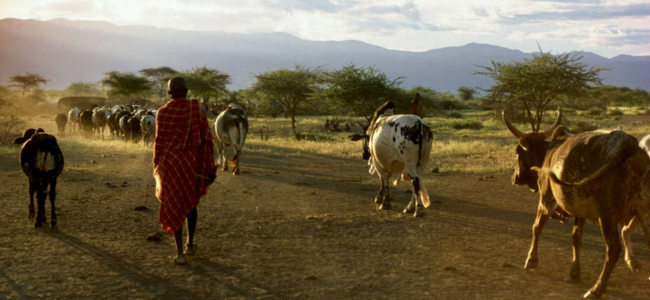
More than 30 members of Indigenous pastoralist communities from Biliqo Bulesa in Isiolo County have filed a new legal challenge against the Northern Kenya Rangelands Carbon Project (NKRCP), bringing questions over land rights, community consent and carbon-market governance back into focus.
The case, filed in Kenya’s Environment and Land Court, directly challenges the carbon project operated by the Northern Rangelands Trust (NRT). It is the latest development in a wider legal dispute surrounding NRT’s community conservancies and the use of northern Kenya’s rangelands for conservation and carbon projects.
The plaintiffs are seeking greater control over their land and information on revenues generated through the sale of carbon credits, according to Survival International, which announced the lawsuit on October 2.
The NKRCP is one of the world’s largest soil-carbon projects. It operates across a network of community conservancies in northern Kenya and generates carbon credits by seeking to improve rangeland management and increase soil-carbon storage. The credits have been sold on the voluntary carbon market to international companies, including Netflix, Meta, British Airways and Beiersdorf, according to Survival International.
The new case centres on Biliqo Bulesa Community Conservancy, one of the areas participating in the carbon project.
The plaintiffs allege that their land was incorporated into the conservancy and subsequently into the carbon project without their free, prior and informed consent. They are also seeking greater transparency over revenues generated from carbon-credit sales and the arrangements governing the project.
The lawsuit further raises allegations concerning restrictions on grazing and the conduct of armed rangers operating within the conservancy. These are allegations by the plaintiffs and have not been determined by the court.
A dispute that began before the carbon lawsuit
The new case follows a separate and significant legal battle involving Biliqo Bulesa and Cherab conservancies.
In January 2025, the Environment and Land Court found that the two conservancies had been established without the required legal and community processes on unregistered community land. The court also found shortcomings relating to public participation and the statutory framework governing community conservancies. The ruling has been appealed.
The Judiciary’s account of the case says the petitioners challenged the establishment of the conservancies on constitutional, land and environmental grounds, including questions surrounding community participation and the rights of residents to unregistered community land.
The earlier case was brought by 165 residents of Merti Sub-County, including people from the Chari and Cherab wards. Court records show that NRT subsequently appealed the judgment.
The carbon project itself was not the direct subject of the 2025 proceedings. However, Biliqo Bulesa’s participation in the NKRCP created an important link between the conservancy dispute and the carbon market.
In a 2025 filing, NRT argued that Biliqo Bulesa was among the conservancies participating in the Northern Kenya Rangelands Carbon Project and that the conservancy’s removal could have significant consequences for the project. NRT also pointed to community investments associated with the conservancy, including a health facility, education support and livelihood programmes.
Verra reinstated the project in June
The dispute has also attracted international attention because of the project’s carbon certification.
Verra, the carbon standard organisation that oversees the project’s certification, placed the project under a quality-control review following the 2025 court ruling. It subsequently reinstated the Northern Kenya Grassland Carbon Project in June 2026 after saying the Chari Dedha Community had affirmed its participation through a process conducted under Kenya’s Community Land Act.
Verra said the 2025 court decision had raised concerns about the legal establishment of Biliqo Bulesa and another conservancy and therefore about the project’s compliance with its requirements relating to ownership.
NRT and the affected community conservancies appealed the court ruling.
The reinstatement has itself generated further debate. Survival International has criticised the decision, arguing that the certification was restored while the underlying legal dispute remained unresolved. Verra and the project proponents have maintained that a community ratification process addressed the relevant requirements.
For Kenya’s carbon market
The new lawsuit comes at a time when Kenya is building a formal framework for carbon markets and attempting to attract climate finance into land, conservation and other environmental projects.
That makes the Biliqo Bulesa dispute larger than a disagreement over one conservancy.
At issue is the question of how carbon projects operating on community land should establish legitimate participation, define land-use rights, document consent and account for revenues generated from environmental assets.
These questions were also at the centre of Kenya Engineer’s recent examination of Kenya’s emerging conservation economy.
In our September 25 article, “Who owns the green transition? The technology, land and communities behind Kenya’s new conservation economy,” we examined how carbon markets are creating a new infrastructure around natural resources — involving satellite imagery, geographical information systems, remote sensing, monitoring systems, verification platforms and financial mechanisms — while raising questions about who owns the underlying land, data and environmental value.
The latest lawsuit provides a concrete example of those questions moving from policy discussion into the courtroom.
The carbon-market governance question
Carbon credits depend on more than measurements of carbon stored in soil or vegetation. A project must also be able to demonstrate that it has legitimate rights to operate on the land, that the people affected by the project have participated in relevant decisions, and that the resulting financial benefits are governed transparently.
The Biliqo Bulesa dispute illustrates the difficulty of separating those technical requirements from questions of land governance.
The NKRCP involves environmental monitoring and carbon accounting across a large rangeland landscape. But the validity of the resulting carbon claims can also depend on questions that cannot be resolved by satellites, sensors or verification methodologies alone.
Who has the legal authority over the land? Who gives consent? Who represents the community? Who owns the underlying data? How are carbon revenues distributed? And what happens when a community’s understanding of land rights differs from the arrangements under which an environmental project was established?
These questions are becoming increasingly important as Kenya seeks to expand its participation in voluntary and regulated carbon markets.
A continuing legal and policy test
For the communities involved, the latest lawsuit is about land rights, control and accountability.
For carbon-market participants, it raises questions about the legal and social foundations on which carbon credits are generated.
For Kenya’s emerging environmental-finance sector, the case could provide another test of how community land rights, conservation and carbon-market rules interact in practice.
The court will ultimately determine the claims made in the new case. At this stage, the allegations against NRT and the carbon project remain allegations by the plaintiffs.
The development nevertheless highlights a broader issue facing Kenya’s green transition: environmental projects increasingly depend on sophisticated systems for measuring and monetising natural resources, but the legitimacy of those systems ultimately depends on the rights, governance structures and consent mechanisms surrounding the land on which they operate.
As Kenya’s carbon market develops, the question may therefore be not simply how much carbon a project can measure and sell, but whether the people whose landscapes generate that environmental value have a clear and enforceable role in deciding how it is created, governed and shared.

-
Product on sale
 AWEBook Volume 2Original price was: KShs 3,500.00.KShs 3,000.00Current price is: KShs 3,000.00.