
Last Updated 3 hours ago by Kenya Engineer
Botswana is taking a different approach to the energy transition. Rather than treating renewable energy simply as a way of producing cleaner electricity, the country is attempting to use the transition as a platform for industrial development.
In September, the Government of Botswana launched two complementary policy instruments: the Botswana National Renewable Energy Power Sector Plan and the Botswana Clean Technology Manufacturing Policy and Investment Guide.
The documents are intended to accelerate renewable-energy development while creating opportunities for domestic manufacturing and investment around clean technologies.
The strategy is noteworthy because many African countries are rapidly increasing imports of solar panels, batteries, inverters and other clean-energy equipment while simultaneously seeking to create manufacturing jobs.
Botswana is attempting to address both sides of that equation.
From installing equipment to making it
The renewable-energy plan provides scenarios and investment priorities for increasing renewable generation and working towards Botswana’s 2030 renewable-energy ambitions.
The manufacturing policy goes further by identifying opportunities around solar photovoltaic manufacturing and related value chains. It also outlines policy incentives and investment measures intended to attract private capital.
The objective is not necessarily to manufacture every component domestically. Instead, Botswana can target areas where it has a realistic opportunity to build competitive capabilities.
Those could include assembly, mounting structures, electrical components, balance-of-system equipment, servicing, installation, testing and maintenance, alongside selected manufacturing activities.
The importance of scale
One of the biggest challenges facing African clean-technology manufacturing is market size. A factory making solar equipment needs a sufficiently large and predictable market to justify investment.
Botswana alone is relatively small. But its policy documents deliberately place the manufacturing opportunity within the wider regional markets represented by SADC, SACU and the African Continental Free Trade Area.
That changes the proposition. Instead of building a factory only to supply Botswana’s electricity market, manufacturers could potentially use the country as a regional production or assembly base.
Whether that becomes commercially viable will depend on logistics, energy prices, skills, access to finance, standards and the ability to compete with established Asian manufacturers.
Botswana already has a large solar project underway
The industrial strategy is also being developed alongside major renewable-energy investment.
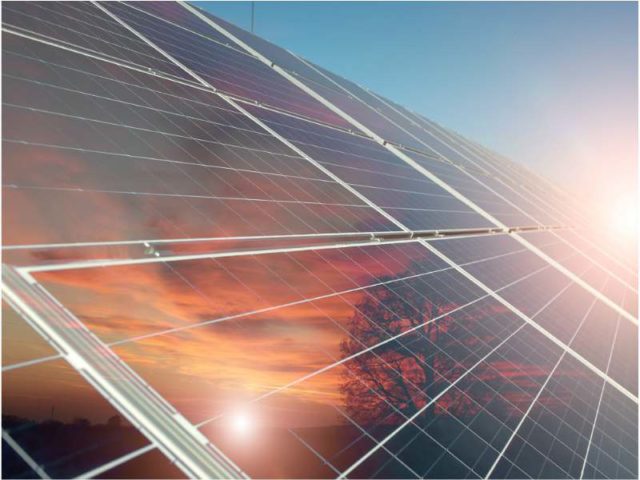
In April, Botswana broke ground on the 500 MW Maun Solar PV project, which includes a 500 MWh battery energy-storage system. The government describes it as one of the country’s largest renewable-energy initiatives.
The combination of solar generation and storage is important.
A 500 MW solar project can provide substantial daytime generation, while a 500 MWh battery provides a mechanism for shifting part of that energy into higher-value periods.
It also creates a domestic market in which engineers and technicians can gain experience with utility-scale solar, battery systems, power electronics and grid integration.
That technical capability can become an industrial asset in its own right.
Manufacturing requires more than a policy document
The difficult part begins after the policy launch. Clean-technology manufacturing is highly competitive.
Botswana will need to determine which segments of the value chain can be economically developed locally and which are better sourced internationally.
The country will also need reliable electricity, industrial land, logistics infrastructure, technical skills, quality-control laboratories and standards that allow locally manufactured equipment to enter regional markets.
The skills requirement is particularly important.
Solar and battery manufacturing involves electrical engineering, electronics, mechanical engineering, materials science, quality assurance and industrial automation.
At the same time, deployment creates demand for technicians capable of installing, commissioning and maintaining increasingly sophisticated power systems.
The transition can therefore create employment even where full manufacturing of the underlying equipment is not immediately competitive.
The regional opportunity
Botswana’s strategy is also a reminder that the African energy transition does not have to mean simply replacing imported fossil fuels with imported renewable-energy equipment.
There is a middle ground.
Countries can build local capabilities around installation, engineering, maintenance, assembly and selected manufacturing segments while participating in regional supply chains for more complex components.
That approach may be more realistic than attempting to reproduce the entire global solar or battery manufacturing industry inside one country.
The African Continental Free Trade Area adds another dimension by creating the possibility of serving a much larger market from a relatively small domestic base.
But that will require compatible standards and efficient movement of goods across borders.
A broader industrial question
Botswana’s policy is ultimately asking a question that many African countries will have to confront.
If the continent spends hundreds of billions of dollars on renewable-energy infrastructure over the coming decades, how much of the resulting economic activity will remain in Africa?
The answer will depend on local content, technical skills, manufacturing capacity, finance and regional integration.
Botswana is attempting to connect those issues through one policy framework. Its renewable-energy plan provides the demand. The clean-technology manufacturing policy seeks to create the supply-side opportunity.
The 500 MW Maun project provides a large practical test of the country’s ability to deploy modern renewable and storage technology.
Whether the strategy develops into a competitive manufacturing sector will depend on implementation, not policy ambition.
But the direction is significant. For African countries, the energy transition is not only an electricity story. It is also an industrial policy opportunity.
-
Product on sale
 AWEBook Volume 2Original price was: KShs 3,500.00.KShs 3,000.00Current price is: KShs 3,000.00.