
Last Updated 2 hours ago by Kenya Engineer
For more than two decades, Dongo Kundu has appeared in Kenya’s development plans as one of the country’s most ambitious industrial projects.
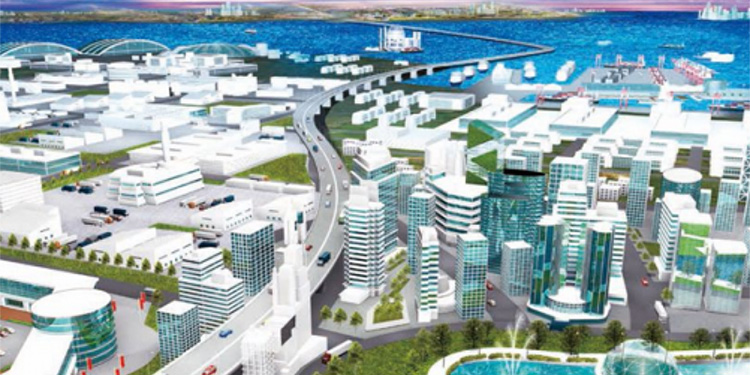
The concept was straightforward: place a large industrial and logistics zone next to the Port of Mombasa, connect it to the national road and railway networks, provide reliable utilities and create a location where manufacturers could produce goods for Kenya and export markets without having to move their cargo through congested urban areas.
Turning that concept into physical infrastructure, however, has taken considerably longer. The project is now entering a more consequential phase.
A new 300-metre port berth is under construction. The Dongo Kundu Southern Bypass is already open to traffic. Designs and procurement are progressing for a dedicated railway connection and extensive electricity infrastructure, while water and drainage systems are being developed and investors are beginning to establish facilities inside the zone.
The government has allocated KSh74.1 billion for key enabling infrastructure intended to accelerate the development of the Special Economic Zone. The 3,000-acre site is expected to combine a free port, industrial parks, free-trade areas, logistics and warehousing, energy-related developments, tourism and MICE facilities.
The significance of Dongo Kundu thus lies not in any single structure but in the attempt to make all these systems work together.
The location is the project
Dongo Kundu sits on the southern side of Mombasa, in Likoni Sub-County, immediately adjacent to the Indian Ocean and within the wider Mombasa port logistics system.
The site is strategically positioned near the Port of Mombasa, the Dongo Kundu Southern Bypass, the Standard Gauge Railway and Moi International Airport. The Special Economic Zones Authority identifies this connectivity as one of the zone’s principal advantages.
That combination is unusual. A manufacturer locating inside the zone will potentially have access to:
- a dedicated port facility;
- SGR connectivity;
- the national road network;
- an airport;
- electricity transmission infrastructure;
- water supply;
- warehousing and logistics facilities; and
- the regulatory and fiscal framework applicable to an SEZ.
The idea is to reduce the number of times goods have to be moved between unrelated logistics facilities. A container arriving by sea should be able to move towards a factory, warehouse or distribution facility with minimal additional handling. A finished product should be able to move in the opposite direction, from the factory to the port or onto the regional road and rail network.
That is the essence of the Dongo Kundu model.
From industrial estate to logistics platform
The Special Economic Zones Authority describes Dongo Kundu as a public SEZ of approximately 3,000 acres, with zones for manufacturing, processing, assembly, goods handling and value addition. The wider master plan provides for an industrial park, free port/free-trade zone, residential and commercial areas and tourism-related development.
This is important because the project is not intended to replicate an ordinary industrial park. A conventional industrial estate may provide serviced plots, roads, electricity and water. Dongo Kundu is being planned around a much deeper integration between production and international logistics.
The port is intended to become the maritime gateway. The industrial zone provides the production base. The railway and road systems provide inland connectivity. The utilities provide the basic infrastructure required for factories. And the SEZ regulatory framework provides the commercial environment within which the businesses operate.
The objective is effectively to compress the supply chain.
The first port berth
The physical centrepiece of this strategy is Dongo Kundu Berth 1, or DK1.
The berth is being constructed as a 300-metre-long multipurpose facility with a design depth of 15 metres. The government says the berth is intended to accommodate post-Panamax and other large vessels and will be connected to the SEZ by a 4.6-kilometre road and a 2.8-kilometre ramp.
Construction commenced in October 2025. As of September 2026, the Transport Ministry reported that the project was 16 per cent complete, with completion targeted for December 2028.
The berth is being developed as part of the port component of the wider SEZ infrastructure programme.
Kenya Ports Authority’s current project documentation indicates that the broader port component is worth approximately KSh41.1 billion and envisages seven berths and associated yards occupying about 1,300 acres of the wider 3,000-acre SEZ.
DK1 is thus not intended to be the entire port but the first major piece of what is ultimately envisaged as a substantially larger maritime logistics complex.
Japanese engineering in Dongo Kundu
The port infrastructure is being developed with substantial Japanese technical and financial involvement.
In February 2020, the Japan International Cooperation Agency signed a loan agreement providing up to ¥37.09 billion for the Mombasa Special Economic Zone Development Project.
The project covers the port, main access road and electrical facilities and is intended to strengthen logistics capacity and stabilise the power supply around Dongo Kundu.
The port construction package was subsequently awarded to Japan’s TOA Corporation. TOA says the contract for Package 1, covering civil and building works, is worth approximately ¥33.5 billion, with an expected construction period of 1,156 days, or about 38 months. The project uses the Japanese government’s Special Terms for Economic Partnership framework.
One of the technical features associated with the Japanese package is the use of a jacket-type pier construction method.
JICA’s original financing documentation also identified the use of long piles with heavy anti-corrosion coating as part of the technology expected to be deployed.
That is significant in a marine environment.
Unlike a conventional inland concrete structure, a port has to withstand continuous exposure to seawater, waves, tidal forces, marine corrosion and repeated loading from vessels and cargo-handling equipment.
The durability of the foundations and marine structures is therefore as important as their initial construction.
Building the berth is only the beginning
A port berth has little economic value if cargo cannot efficiently reach it. Dongo Kundu’s engineering programme thus extends inland. The berth requires access roads, cargo yards, drainage, utilities, security systems and eventually cargo-handling equipment.
KPA’s project performance framework breaks the DK1 works into a number of separate components, including the quay, access bridge, causeway, reclamation and ground improvement, pavement, rock protection, dredging, terminal buildings, utilities and port security.
That list reveals something important about the project. The visible quay is only one part of the engineering. A significant amount of the work happens below and behind the waterline.
Reclamation and ground improvement
The Dongo Kundu site is coastal land, meaning that the engineering challenge extends beyond constructing buildings on existing ground. KPA’s project targets specifically identify reclamation and ground improvement as major components of DK1, alongside rock protection and dredging.
Ground conditions are critical in a port environment because heavy cranes, cargo storage yards and warehouses impose substantial loads. The finished site must provide sufficiently stable ground not only for buildings but also for pavements and heavy port equipment.
The engineering sequence becomes particularly important. Dredging creates the required marine approach and berth depth. Marine structures provide the quay. Reclamation and ground improvement establish stable land behind the quay. Pavement then has to withstand repeated heavy axle loads and container-handling operations. Drainage has to remove rainfall from large paved surfaces without compromising the reclaimed ground.
Each component depends on the others.
A road designed around the port
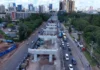
Dongo Kundu’s road infrastructure has a second major component: the Southern Bypass. The approximately 18-kilometre Dongo Kundu Bypass connects the Miritini area on the mainland to the south coast, providing an alternative to the Likoni Ferry route.
The road includes three major bridges and was opened to traffic in August 2024 after construction using Japanese financing. Its importance to Dongo Kundu cannot be overstated.
Before the bypass, traffic between the mainland and the south coast depended heavily on the ferry system. That created a physical bottleneck. For an industrial zone dependent on predictable logistics, such a bottleneck would undermine the very purpose of the development.
The bypass therefore functions as more than a transport project. It is part of Dongo Kundu’s logistics infrastructure.
The missing link: the port access road
The bypass, however, does not by itself complete the road network required by the SEZ. The dedicated access infrastructure between the industrial zone and the port remains a critical component.
As of August 2026, The Standard reported that Kenya National Highways Authority had awarded the contract for the port access road, although construction had not yet begun as contractual processes were being finalised. The same report noted that the absence of an all-weather access road was affecting investor plans within the zone.
This illustrates the central challenge of Dongo Kundu. An investor does not experience infrastructure as separate government projects.
A manufacturer needs the road, electricity, water and communications network simultaneously.
If one critical link is missing, the value of the other infrastructure is reduced.
Rail inside the industrial zone
The railway component could ultimately become one of Dongo Kundu’s most important competitive advantages.
The government says the SEZ’s SGR design incorporates a dedicated railway running through the zone, with sidings serving individual factories and connecting into the wider Mombasa–Nairobi–Naivasha–Kisumu–Malaba railway corridor.
This is potentially transformative for bulk manufacturing.
A factory does not necessarily need to transport every container or heavy industrial input by road. Raw materials can arrive by ship, move through the port, transfer to rail and then reach a factory siding inside the SEZ.
Finished products can follow the reverse route.
For industries dealing with heavy or high-volume cargo, that creates an entirely different logistics model from relying exclusively on trucks. The location of sidings, loading areas, warehouses and factory plots will determine how effectively the system works.
Powering an industrial city
Industrial infrastructure cannot operate without reliable electricity. For Dongo Kundu, the solution involves a dedicated high-voltage transmission system.
The government’s current programme provides for approximately 50 kilometres of 220 kV double-circuit transmission infrastructure from the Mariakani area to Dongo Kundu, supported by a dedicated substation and two 75 MVA transformers. The government has allocated about KSh6.5 billion for this electricity infrastructure.
The original KETRACO procurement documents reveal the engineering specification in considerably greater detail.
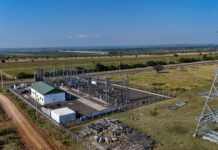
The Dongo Kundu substation is designed as a 220/33 kV facility with two 75 MVA transformers, 220 kV air-insulated switchgear, 36 kV SF6 switchgear, capacitor banks, protection and metering systems, telecommunications, substation automation and integration into the SCADA/EMS system.
The transmission line itself was specified as a 220 kV double-circuit line over approximately 51 kilometres, with optical ground wire containing 48 fibre cores. There is also a 33 kV underground cable system extending approximately 15.5 kilometres to serve the local network.
For an industrial zone, this is not merely a connection to the grid. It is effectively the electrical backbone of a new industrial district.
Why two 75 MVA transformers?
The planned transformer capacity illustrates the expected scale of future demand.
Two 75 MVA transformers provide a combined installed transformation capacity of 150 MVA, although the operational configuration, redundancy and actual available capacity should not simply be interpreted as 150 MW of continuous industrial load.
Industrial demand varies considerably according to the type of factories operating within the zone. Manufacturing plants, cold storage, logistics centres, warehouses and process industries have very different load profiles.
The substation design therefore has to accommodate not only the initial demand but also future industrial growth.
The integration of automation, protection, SCADA and telecommunications is equally important.
A modern industrial zone requires the grid operator to detect faults, isolate problems and restore supply rapidly.
For businesses operating production lines, a power interruption can have consequences far beyond the electricity bill.
Water for factories
Electricity is only one of the utilities required by Dongo Kundu. The project also needs a reliable water supply capable of supporting industrial processes, workers and domestic consumption.
JICA’s grant-funded infrastructure project covers water supply facilities, including three wells, a booster pumping station, transmission pipelines, a water service centre and distribution pipelines. It also includes drainage infrastructure and land development.
More recent government plans indicate that the wider SEZ is expected to receive additional water from Tiwi and the Mwache multipurpose dam.
This creates another layer of infrastructure dependency.
The SEZ’s ability to host water-intensive industries will depend not only on treatment and distribution inside the zone but on the reliability of the external water sources and transmission system feeding it.
Drainage is a major engineering issue
Drainage may be one of the least visible components of the project, but it is particularly important in a coastal industrial development.
Large industrial buildings and paved yards dramatically increase impermeable surfaces. Rainfall that would previously have infiltrated the ground instead becomes surface runoff.
Without adequate drainage, the consequences can include flooding, erosion, road deterioration and disruption of industrial operations.
JICA’s Dongo Kundu infrastructure grant specifically includes drainage for the area north of the Southern Bypass, alongside water supply and land development.
The drainage network has to be considered as part of the industrial infrastructure rather than as a secondary municipal service.
A logistics ecosystem more than a port
When complete, the Dongo Kundu system is intended to connect several different transport modes.
A container or bulk cargo could arrive by ship. It could move through DK1 into the port yard. From there it could be transported by road or rail to an industrial facility inside the SEZ. A finished product could then return to the port for export or travel inland through the SGR network. Alternatively, cargo could move by road through the Southern Bypass towards southern Kenya and Tanzania.
The proximity of Moi International Airport provides another option for time-sensitive or high-value cargo.
The result is a multimodal logistics platform. That is why the port alone should not be used as the measure of Dongo Kundu’s success. The efficiency of the system will depend on how well the interfaces between the modes work.
Investors are beginning to follow the infrastructure
Dongo Kundu’s industrial component is beginning to move from planning towards physical development.
Taifa Gas is developing an LPG facility inside the zone, with the government reporting in September 2026 that the project was about 85 per cent complete.
The facility is significant because it demonstrates the type of industrial investment the zone is intended to attract: large-scale infrastructure located directly within an integrated logistics environment.
The government says more than 90 investors have expressed interest in the zone. It has also identified manufacturing sectors including footwear, agro-processing, pharmaceuticals, petrochemicals, textiles, e-mobility and glass manufacturing as potential areas of development.
Interest, however, is not the same thing as investment. The more immediate test is whether investors can move from expressions of interest to construction.
The infrastructure chicken-and-egg problem
Dongo Kundu faces a familiar infrastructure-development dilemma. Investors want roads, electricity, water and logistics infrastructure before committing capital. The government wants evidence of investor demand before spending heavily on infrastructure.
The purpose of an SEZ is to break that cycle by providing the enabling infrastructure first. But the longer the infrastructure takes to arrive, the longer investors may wait.
That tension is visible at Dongo Kundu.
In August 2026, The Standard reported that Milly Glass SEZ Ltd was preparing to establish a pharmaceutical glass-bottle manufacturing facility but had raised concerns about the lack of an all-weather access road to its site. The same report said the electricity transmission procurement and water and sewerage infrastructure were still progressing.
This is why the current phase of construction is so important. The project is moving from a master plan to an interconnected physical network.
Environmental engineering on the coast
Dongo Kundu is also being developed in a particularly sensitive coastal environment. Marine construction inevitably interacts with coastal ecosystems, including mangroves and other habitats.
KPA’s environmental programme includes mangrove restoration associated with its port expansion activities. In 2026, KPA and partners began a restoration drive involving 20,000 mangrove seedlings at Mchenjani, with the programme linked to environmental obligations associated with port construction.
For Dongo Kundu, environmental management cannot be separated from engineering. Dredging, reclamation, marine structures, drainage and industrial development all have potential impacts on coastal systems.
The engineering challenge is to build infrastructure that can withstand the marine environment without creating unacceptable long-term impacts on the environment in which it is being built.
A project that has taken a generation to reach construction
The history of Dongo Kundu explains why the current construction phase matters. The concept emerged from Kenya’s long-term industrialisation plans more than two decades ago.
JICA became deeply involved in the master planning process in 2015, followed by the establishment of the institutional framework for SEZ development and eventually the 2020 Japanese loan for port, road and electricity infrastructure.
A separate Japanese grant was signed in 2022 for water supply, drainage, land development and associated infrastructure.
The project has therefore evolved through several stages: master planning → land and institutional preparation → infrastructure financing → investor attraction → construction of enabling infrastructure → industrial development.
The difficulty has been moving all of these stages forward at the same time.
Dongo Kundu is now entering the stage where delays in one component can directly affect the performance of another.
The KSh74.1 billion enabling-infrastructure push
The latest government commitment is an attempt to close that gap. The KSh74.1 billion allocation is intended to support critical infrastructure including the port, roads, railway, electricity, water and sewerage systems.
The figure should not be interpreted as the construction cost of the entire 3,000-acre city-like development. It represents the government’s enabling infrastructure commitment.
Private investors are expected to develop factories, warehouses, commercial facilities and other businesses on top of that infrastructure.
What the port changes for Mombasa
Dongo Kundu also has implications for the existing Port of Mombasa. One objective is to provide additional cargo-handling capacity and reduce pressure on the existing port facilities.
But the more significant potential benefit could be the separation of different logistics activities.
Cargo associated with industrial production could potentially move directly between the port and the SEZ rather than being transported through congested sections of Mombasa.
That could reduce unnecessary truck movements through the city and shorten the distance between ships, factories and distribution facilities.
The SEZ could therefore become an extension of the port rather than simply another industrial estate located near it.
The regional dimension
The intended market for Dongo Kundu extends beyond Mombasa.
Mombasa is the maritime gateway for Kenya and an important entry point for the Northern Corridor serving Uganda, Rwanda and other landlocked markets.
The JICA project description explicitly identifies Mombasa’s role as a logistics hub for Kenya and landlocked countries along the Northern East Africa Corridor.
This gives Dongo Kundu a regional function.
A factory located in the zone could import raw materials through the port, process or assemble them locally, and distribute finished products into Kenya and neighbouring markets.
The combination of the port, SGR and road network is therefore intended to make the SEZ part of a wider regional supply chain.
The real engineering test
Dongo Kundu has now reached a point where the question is whether the individual infrastructure systems can be completed and connected quickly enough to make the zone commercially functional.
The port must connect to the road.
The road must connect to the bypass and national highway network.
The railway must connect factories to the SGR.
The substation must connect industries to the transmission grid.
Water must reach industrial plots.
Drainage must protect roads and buildings.
And all of these systems must be available when factories are ready to begin production. This is what makes Dongo Kundu different from a conventional construction project. It is a systems-engineering project at urban scale.
A 300-metre berth can be completed successfully and still fail to deliver its full economic value if the road to the industrial area is incomplete.
A 220 kV substation can be energised and still have limited impact if factories are not ready to connect.
An industrial plot can be allocated to an investor and remain undeveloped if water, drainage and access roads are unavailable.
The individual components thus have to be delivered as a network and that is the real project being built at Dongo Kundu.
-
Product on sale
 AWEBook Volume 2Original price was: KShs 3,500.00.KShs 3,000.00Current price is: KShs 3,000.00.