
Last Updated 2 hours ago by Kenya Engineer
A new leadership programme bringing together experienced professionals from across Africa will begin its inaugural cohort in Nairobi in February 2027, with applications now reopened for participants from across the continent.
The Transformative African Leadership (TAL) programme will run for 10 months and bring together between 25 and 30 participants for a programme combining online learning with two in-person residencies. The first residency will take place in Nairobi from 1 to 5 February 2027, while the second will be held in Rabat, Morocco, from 4 to 8 October 2027.
The programme is aimed at experienced professionals who are already influencing decisions within their organisations, institutions or sectors and want to strengthen their ability to lead amid Africa’s rapidly changing economic, political and technological environment.
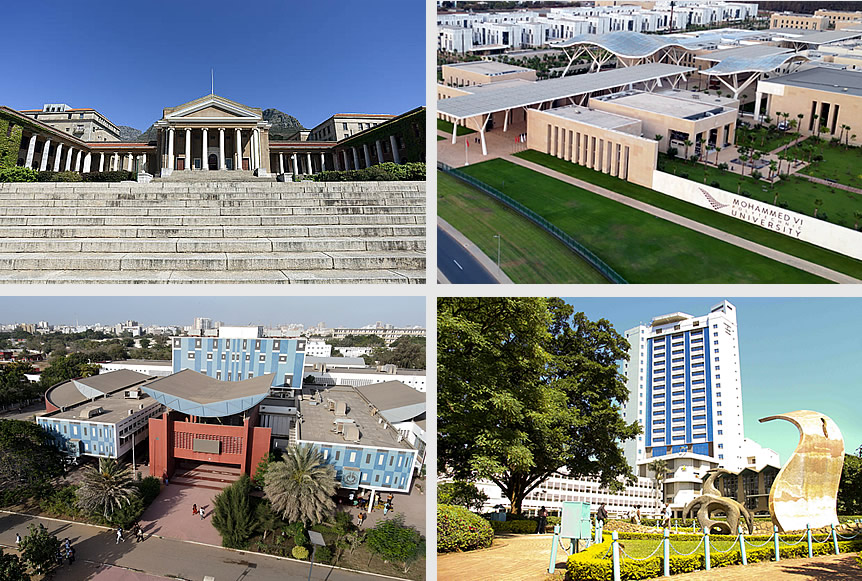
TAL is being jointly designed and delivered by the Nelson Mandela School of Public Governance at the University of Cape Town in South Africa, the Public Policy School at Mohammed VI Polytechnic University in Morocco, Université Cheikh Anta Diop in Senegal, and the Institute for Development Studies at the University of Nairobi.
The programme’s organisers say applications for the inaugural cohort have already demonstrated interest from across West, East, Central, Southern and North Africa.
From leadership to systems change
Rather than focusing solely on conventional leadership development, TAL will examine how major forces shaping Africa’s future interact with one another.
The curriculum will cover democratic governance, geopolitics, artificial intelligence, climate change, security, industrialisation, regional integration and the African Continental Free Trade Area (AfCFTA).
These subjects will be examined from national, regional and global perspectives, with participants expected to explore both the challenges facing African countries and the opportunities emerging from economic and technological change.
Dr Penny Parenzee, Senior Programme Manager at the Nelson Mandela School of Public Governance, said the programme would encourage participants to consider Africa’s development challenges within a broader context.
The programme places Agenda 2063, the African Union’s long-term development framework, among the key reference points for discussions on the continent’s transformation.
AfCFTA will also feature prominently, reflecting the growing importance of regional markets, cross-border value chains and economic integration to Africa’s industrialisation ambitions.
According to the programme organisers, participants will develop a deeper understanding of AfCFTA and its potential while examining how leadership and institutions can help translate continental ambitions into practical outcomes.
Industrialisation and regional value chains
An applied component of TAL will see participants work collaboratively on a capstone project focused on developing a regional value chain.
The approach is significant for African economies seeking to move beyond fragmented national markets and increase the amount of value generated from production, processing, manufacturing and services within the continent.
Regional value chains are increasingly important as African countries seek to strengthen manufacturing capacity, expand intra-African trade and create more resilient supply chains.
The programme therefore links leadership development with broader questions about how African institutions and businesses can respond to industrialisation, regional integration and technological disruption.
Dr Nouzha Chekrouni, Academic Director of Leadership Programmes at Mohammed VI Polytechnic University’s Public Policy School, described TAL as a programme intended for African leaders seeking to contribute to the continent’s transformation.
She said the programme would range from self-mastery to systemic change, giving participants tools to navigate disruption, challenge existing systems and increase their impact.
Nairobi as a continental meeting point
The decision to hold the first residential session in Nairobi gives Kenya a prominent role in the inaugural programme.
Nairobi has become an important regional centre for international organisations, technology companies, development institutions and businesses operating across East Africa. It also hosts a growing ecosystem around climate technology, financial technology, digital services, infrastructure and regional trade.
The Nairobi residency will bring participants from different African countries together at the beginning of the programme before the cohort continues with online learning and other activities leading to the second residential session in Rabat.
The involvement of the University of Nairobi’s Institute for Development Studies also gives Kenya an institutional role in the programme alongside the three other participating universities.
Experience valued alongside academic qualifications
TAL is open to African citizens, including Africans living and working outside the continent.
Unlike many executive and postgraduate programmes, a university degree is not a mandatory requirement. The selection process places significant emphasis on relevant professional experience and evidence of leadership.
Participants will work alongside academics, policymakers, practitioners and other professionals from different parts of Africa, creating a cross-sector and cross-regional learning environment.
This is intended to expose participants to perspectives beyond their own national or professional settings and to encourage collaboration around common continental challenges.
The programme comes at a time when African economies are facing simultaneous pressures and opportunities linked to artificial intelligence, climate change, energy security, geopolitical shifts, industrialisation and the expansion of intra-African trade.
For engineers, technology professionals, policymakers and other technical and business leaders, these trends increasingly overlap rather than operate as separate areas of policy.
The programme’s organisers say the intention is therefore not simply to develop individual leadership skills, but to equip participants to understand and influence the systems within which African development takes place.
Applications for the 2027 cohort are now open. The 10-month programme begins on 1 February 2027, with the Nairobi residency scheduled for 1–5 February and the Rabat residency for 4–8 October 2027.
More information about the programme, including the application process and programme brochure, is available from TAL.

-
Product on sale
 AWEBook Volume 2Original price was: KShs 3,500.00.KShs 3,000.00Current price is: KShs 3,000.00.