Last Updated 2 months ago by Kenya Engineer
For much of the past decade, Africa’s digital transformation has been described in terms of what happens on screens: more smartphones, more apps, more cloud services, more digital payments and, increasingly, artificial intelligence.
At ITW Africa and Datacloud Africa in Nairobi this week, the conversation was noticeably more physical.
Behind every AI model, cloud service and digital transaction, speakers repeatedly returned to the same foundations: electricity, fibre, data centres, transmission networks, regulation, capital and the engineers and technicians needed to keep all of it running.
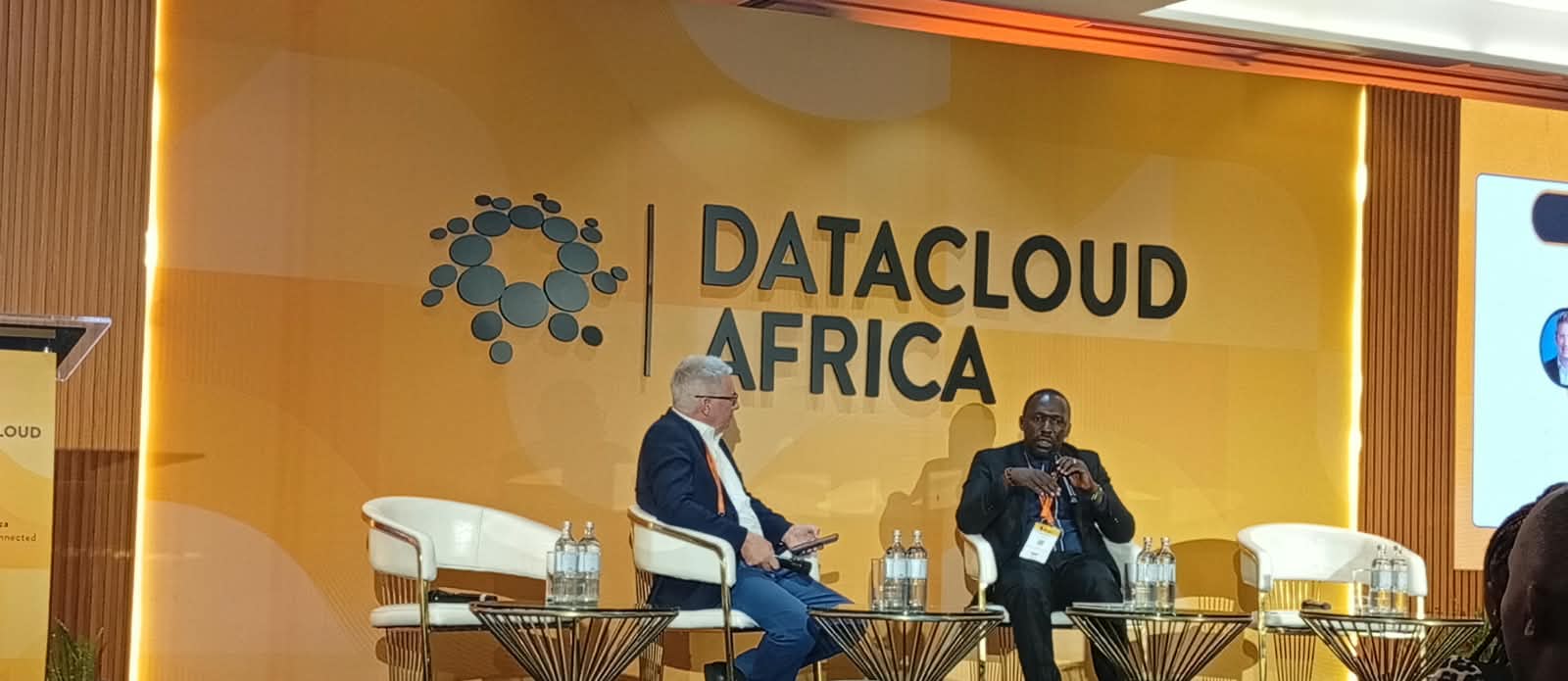
The four-day gathering at the Radisson Blu in Upper Hill, which brought together the connectivity and data-centre industries under one roof for the first time at this scale, ended Thursday with a question that was more demanding than the familiar promise of Africa’s digital potential: can the continent actually build the infrastructure required to turn that potential into economic power?
Kenya’s government arrived at the event determined to make the case that it can.
Stephen Isaboke, Principal Secretary for Broadcasting and Telecommunications, told delegates at the opening that digital infrastructure should now be regarded alongside roads, water and electricity as critical national infrastructure. He put the growth of Kenya’s ICT sector at roughly 10 per cent a year and the digital economy at about 9 per cent, contributing approximately 9 per cent of GDP in 2025.
The government, he said, is rolling out a Digital Superhighway targeting 100,000 kilometres of fibre and 1,450 digital hubs, while public Wi-Fi is being expanded in marketplaces, schools and hospitals. More than KSh16 billion has been allocated to the programme over the past four years, according to the government.
But the more consequential message from Nairobi was that fibre alone is no longer enough.
“AI is actually physical infrastructure,” Isaboke told the conference, describing a system that depends on fibre networks, cloud platforms, data centres, electricity and trusted data.
That formulation became one of the defining ideas of the event.
The AI question became an engineering question
The rise of AI has changed the conversation around African digital infrastructure because it changes the scale of the physical infrastructure required.
The industry has moved from discussing connectivity largely in terms of towers, fibre routes and international bandwidth to discussing increasingly dense computing environments, data-centre power requirements, advanced cooling systems and the availability of large, reliable blocks of electricity.
Vertiv’s Wojtek Piorko, Managing Director for Africa, was among the executives discussing how AI is changing data-centre design, with the company showcasing infrastructure aimed at high-density AI environments. The company’s programme centred on the growing need to integrate power, cooling and IT infrastructure rather than treating them as separate engineering problems.
That theme ran through the wider conference.
The question was no longer whether Africa would need more data centres. It was whether the continent could provide the power, cooling, connectivity and capital required to operate them competitively.
In one of the investment discussions, Adil El Youssefi of Africa Data Centres argued that genuine demand already exists from enterprises, governments, hyperscalers, content-delivery networks and increasingly AI workloads. But he also acknowledged an uncomfortable reality: local demand alone may not be sufficient to justify the hundreds of millions of dollars required for major infrastructure projects. Africa therefore has to attract international workloads as well.
That makes the competition between African markets less about who can announce the biggest data centre and more about who can offer the most convincing combination of power, connectivity, regulation, land, skills, financing and demand.
Power emerged as the bottleneck behind the bottleneck
If there was one issue that cut across almost every discussion, it was electricity.
Datacloud’s Digital Infrastructure Energy Summit put the issue explicitly on the programme, examining power reliability, cost, grid constraints, renewable energy, hybrid models and the role of utilities in supporting digital infrastructure.
The discussion became particularly revealing when electricity-sector representatives were placed in the same room as data-centre and infrastructure investors.
George Aluru, chief executive of the Electricity Sector Association of Kenya, described Kenya as one of the more advanced African markets in electricity-sector liberalisation, tracing the country’s reforms back to the late 1990s and the subsequent development of independent power producers.
But the discussion exposed a gap between having electricity and being able to deliver it in the form, quantity and timeframe required by a modern data centre.
One speaker described the experience of approaching a utility and asking for 100 megawatts for a planned data centre. The request can sound almost absurd from the utility’s perspective when the physical site initially appears too small to consume such an amount of electricity.
The problem, as the discussion made clear, is not simply generation. It is coordination.
A data-centre developer may plan to start with 10 MW and eventually require 100 MW. The utility has to understand the development timetable. Renewable-energy developers need to know when the load will materialise. Transmission infrastructure may have to be planned years in advance.
The conclusion was straightforward: power planning and digital-infrastructure planning can no longer happen in separate rooms.
That may be one of the most important practical lessons from the conference.
For a 100 MW data centre, the question is not merely whether Kenya can generate another 100 MW. It is whether generation, transmission, substation capacity, connection agreements, renewable PPAs, storage, backup systems and the data-centre construction schedule can be synchronised.
And that is a very different engineering problem.
Kenya’s green-power advantage came into focus
The power discussion was not entirely pessimistic.
Kenya’s electricity mix was repeatedly presented as one of the country’s competitive advantages.
During the electricity-sector discussion, participants pointed to geothermal, hydro, wind and solar as the backbone of the country’s generation mix. One speaker estimated that renewable sources account for about 80 per cent of installed capacity and can account for 90–95 per cent of dispatched generation under some conditions, although thermal generation remains important during peak periods.
That matters because data-centre operators increasingly have to answer two questions simultaneously: Is the power reliable? And where does it come from?
A data centre running on a relatively low-carbon electricity system can have an advantage when customers, investors and multinational technology companies increasingly scrutinise the carbon intensity of their computing infrastructure.
But Kenya’s advantage is not automatic.
The discussions also highlighted the difficulty of moving renewable electricity from where it is generated to where digital loads are concentrated. The ability to generate renewable energy in one part of the country does not necessarily mean that a data centre in Nairobi can contract and receive that electricity under a commercially viable structure.
That brings regulation, wheeling, transmission investment and private power transactions back into the discussion.
The investment problem may be bankability, not money
Another striking theme was the distinction between a shortage of capital and a shortage of projects that investors can confidently finance.
One investment discussion described the African market as having substantial demand and significant pools of capital, but argued that what is often missing is a sufficiently bankable structure.
The distinction matters.
Investors do not simply need evidence that Africans will eventually consume more data. They need predictable demand, credible customers, stable regulation, reliable power, workable land and permitting arrangements, and a project structure that allows them to understand how and when their money will generate a return.
A representative of the U.S. Development Finance Corporation put the problem bluntly: there is not necessarily a shortage of capital; there is a shortage of bankable or properly structured investment opportunities.
The conference therefore moved beyond the familiar call for “more investment” toward a more useful question: what must governments and developers do to make investment possible?
The answers included predictable regulation, faster permitting, clearer power arrangements, government-backed demand, blended finance, guarantees and stronger regional markets.
The organisers’ programme itself framed the issue in similar terms. A financing session built around the Smart Africa and Team Europe Digital Infrastructure Guidelines was designed to address an estimated $100 billion digital-infrastructure investment gap by 2030, with the stated objective of moving projects from guidelines towards actual capital.
Africa cannot build 54 separate digital economies
Perhaps the most important strategic question raised in Nairobi was the tension between national digital sovereignty and regional integration.
Governments understandably want sensitive information — health records, civil registries, financial information and other strategic datasets — to remain under national control.
But data centres and networks do not necessarily make economic sense when every country is treated as an isolated market.
A ministerial discussion during the conference argued for stronger cross-border frameworks and more integrated digital infrastructure. Magalie Anderson of the African Union called for Africa to be viewed as an integrated regional market rather than a collection of isolated small markets, while urging governments to accelerate implementation of regional digital protocols.
The same discussion highlighted implementation of the Malabo Convention as one potential foundation for building trust around cross-border data flows. The argument was not that sovereignty should disappear, but that sovereignty and regional interoperability have to coexist.
This is particularly important for East Africa.
Kenya already sits at a strategic intersection of submarine cables, terrestrial fibre and regional connectivity. Paratus, for example, arrived at the conference highlighting its live 2,000-kilometre Goma-to-Mombasa terrestrial fibre route, running through Kigali, Kampala and Nairobi and providing another route between the interior of East Africa and international connectivity through Mombasa.
The point is larger than one company’s network.
If East African countries can make cross-border connectivity, data exchange, licensing and investment easier, the region begins to look like a market large enough to attract infrastructure that individual countries might struggle to justify alone.
A new cable underscored the physical nature of the digital economy
The conference also produced at least one significant infrastructure announcement.
The LuLu Coastal Cable System was unveiled in Nairobi as a proposed 500-kilometre protected coastal cable connecting five landing points between Mombasa and Lamu, including Vipingo Special Economic Zone, Kilifi and Malindi.
The system combines a submarine route with a parallel protected terrestrial pathway, with its developers positioning it as a resilience and redundancy project for Kenya’s Indian Ocean coast.
For Kenya, the significance goes beyond another fibre cable.
The proposed route links connectivity to industrial development, special economic zones and the wider LAPSSET corridor. It is another example of the way digital infrastructure is increasingly being planned as part of broader economic infrastructure rather than as an isolated telecommunications project.
The digital divide has become a demand problem
The conference was also careful not to allow the AI conversation to obscure the more basic problem of access.
One panel asked a deceptively simple question: if network coverage has expanded so dramatically, why are billions of people still offline?
The discussion concluded that coverage is not the same thing as connectivity in a meaningful economic sense. Affordability, devices, digital literacy, local services and relevant content all determine whether infrastructure is actually used.
The problem is therefore not simply building the network.
It is creating an economic reason for people to use it.
That point has consequences for data centres too. Local government services, financial systems, healthcare, education, agriculture and locally relevant AI applications can all generate demand for local computing capacity.
In other words, Africa does not necessarily have to wait for Silicon Valley to generate all the workloads.
It can create some of them itself.
The skills question is becoming an infrastructure question
The final thread running through the conference was people.
As data centres become more sophisticated, the distinction between an electrical engineer, mechanical engineer, network engineer, software specialist and data scientist is becoming less rigid.
A modern AI-ready facility may require expertise in high-voltage power systems, power quality, cooling, controls, automation, networking, cybersecurity, data analytics and machine learning.
That is one reason the conference placed unusual emphasis on its Startup and Skills Hub and young-talent programme. The organisers explicitly framed the skills problem as a potential constraint on infrastructure growth.
The implication for African engineering schools and professional bodies is significant.
The next generation of infrastructure projects will not be designed by one discipline working in isolation.
They will increasingly require people who can understand the interaction between physical infrastructure and digital systems.
That is perhaps where the AI conversation becomes most relevant to engineering.
What, then, was actually resolved?
There was no single declaration at the end of ITW Africa and Datacloud Africa. No binding regional agreement emerged from the conference.
But after four days of discussions, a fairly clear working agenda had emerged.
First, power planning must become part of digital-infrastructure planning. Data-centre developers, utilities, renewable-energy companies, transmission operators and regulators need to engage before projects reach the construction stage.
Second, Africa needs to make projects bankable rather than simply calling for more capital. Predictable regulation, clear permitting, credible demand, appropriate financing instruments and de-risking mechanisms are as important as the availability of money.
Third, regional integration needs to catch up with infrastructure ambitions. Cross-border fibre, data flows, power transactions and common regulatory frameworks can help turn fragmented national markets into commercially meaningful regional ones.
Fourth, AI readiness has to be treated as a physical-infrastructure challenge. Fibre, compute, electricity, cooling, storage and secure data are all part of the AI stack.
Fifth, local demand matters. Governments can stimulate the market by moving services and data onto appropriate local infrastructure, while African developers need to build applications that address local problems rather than simply importing global workloads.
And finally, Africa needs to develop the people capable of building and operating what it is planning. The infrastructure opportunity will be limited if the continent has to import the skills required to design, commission, operate and maintain it.
These were not resolutions in the formal sense. They were closer to a shared engineering and investment agenda.
And perhaps that was the most useful outcome of the gathering.
From digital ambition to physical execution
For years, Africa’s digital story has been told through its possibilities: a young population, rising smartphone penetration, mobile money, expanding fibre networks and a rapidly growing technology sector.
The Nairobi discussions suggested that the next chapter will be judged differently.
The question will be whether countries can turn those advantages into infrastructure that works at scale.
Kenya is already trying to make that case. Its government says it is building 100,000 kilometres of fibre, 1,450 digital hubs and a broader ecosystem around data centres, cloud and AI. The country has more than 20 data centres, according to ICT Principal Secretary John Tanui, and the government is actively seeking further investment.
The private sector, meanwhile, is laying fibre across borders, developing data centres, proposing new coastal cable systems and exploring renewable-energy arrangements for increasingly power-hungry facilities.
The missing piece is not ambition.
It is execution.
That means getting a transmission line built when the data centre needs it. Getting a permit before the financing window closes. Making a cross-border fibre route commercially viable. Making electricity affordable enough for a hyperscale facility to operate competitively. Training the engineer who will commission the cooling system five years from now. Building the regulatory trust that allows capital to cross borders.
In that sense, the most important question to emerge from ITW Africa was not whether Africa is ready for AI. It was whether Africa is ready to build the infrastructure that AI will require.
The answer from Nairobi was cautiously optimistic.
But the next test will not take place on a conference stage. It will take place in substations, fibre trenches, server halls, transmission corridors, regulatory offices, classrooms and construction sites across the continent.
The organisers have already announced that the next ITW Africa will return to Nairobi from 6–9 September 2027, continuing the event’s expanded focus on connectivity, data centres, cloud, AI, energy and investment.

-
Product on sale
 AWEBook Volume 2Original price was: KShs 3,500.00.KShs 3,000.00Current price is: KShs 3,000.00.