Last Updated 2 months ago by Kenya Engineer
The next big question in Africa’s digital economy may not be how many people can get online. It may be whether the infrastructure behind that connection can keep up with what people, businesses and governments now expect from it.
That is the conversation taking place in Nairobi this week as ITW Africa 2026 brings together companies and decision-makers from across the connectivity industry.
The event, running from 7 to 10 September, brings together carriers, internet service providers, data-centre operators, cloud companies, satellite providers, investors and technology vendors. Its programme covers the infrastructure that sits behind much of Africa’s digital economy, including fibre, mobile networks, data centres, cloud services, satellite connectivity and the investment needed to build them.
For Kenya, the timing is significant. The country has spent years building its position as a regional connectivity centre. But connectivity is only one part of the infrastructure equation. The next phase will depend on what happens after the network is built: where computing capacity is located, how reliably facilities can access electricity, how traffic moves across borders and whether the economics of these projects make sense.
Those are not questions that can be answered by the telecommunications industry alone.
The infrastructure behind the digital economy
Africa’s digital infrastructure story has often been told through the expansion of mobile networks and fibre.
That remains important, but the industry is now dealing with a wider set of demands. Businesses want more reliable connectivity. Cloud services require local and regional computing capacity. Data centres need suitable power and cooling arrangements. Investors want projects that can support long-term returns.
The result is a more connected infrastructure market, where decisions in one part of the system increasingly affect the others.
A new fibre route, for example, is not simply a telecommunications project. Its value depends on the customers who will use it, the networks it connects to and the services that can be delivered over it. A data centre is not simply a building full of servers. Its competitiveness depends on connectivity, electricity, land, cooling and the market it is intended to serve.
That is why the broader focus of ITW Africa matters. The event brings these issues into the same conversation, rather than treating them as separate industries.
It also provides an opportunity to ask a more practical question: what does Africa need to do differently to make its digital infrastructure work better as a system?
Investment is only the beginning
One of the main themes of the event is investment.
Africa needs more digital infrastructure, but attracting capital is not simply a matter of announcing projects or identifying a funding gap. Investors also need to understand how a project will operate, who will use it, how revenue will be generated and what risks could affect its long-term performance.
That makes the investment discussion particularly relevant to infrastructure professionals. A project may be technically sound and still struggle to reach financial close. Equally, a project may attract funding but face difficulties during construction, commissioning or operation.
The challenge is to bring those considerations together early enough.
For Kenya, this is a useful lens through which to view the country’s digital infrastructure ambitions. The question is not only whether the country can attract more investment. It is whether that investment can support infrastructure that is commercially viable, technically reliable and useful to the wider economy.
The distinction matters because infrastructure can be expensive to build and even more expensive to operate poorly.
East Africa’s next opportunity
The regional dimension will be particularly important during the event’s discussions on East Africa’s digital infrastructure.
The region has a growing network of fibre routes, mobile infrastructure and data-centre facilities. It also has a large and increasingly connected market of businesses and consumers.
But regional growth will depend on more than the number of projects being announced.
Cross-border connectivity needs to work in practice. Infrastructure providers need to be able to expand. Power availability and reliability remain important considerations. And the cost of delivering services will continue to influence how widely they are used.
For Kenya, the regional question is especially relevant because its position as a connectivity hub is tied to what happens beyond its borders.
A network that connects Kenya to other markets creates more value when those connections are reliable, commercially useful and supported by infrastructure on both sides.
That is why the East Africa discussions deserve attention. They may offer a clearer picture of where the next opportunities lie—and what could hold them back.
Power is becoming part of the digital infrastructure debate
The event’s energy discussions are another important part of the programme.
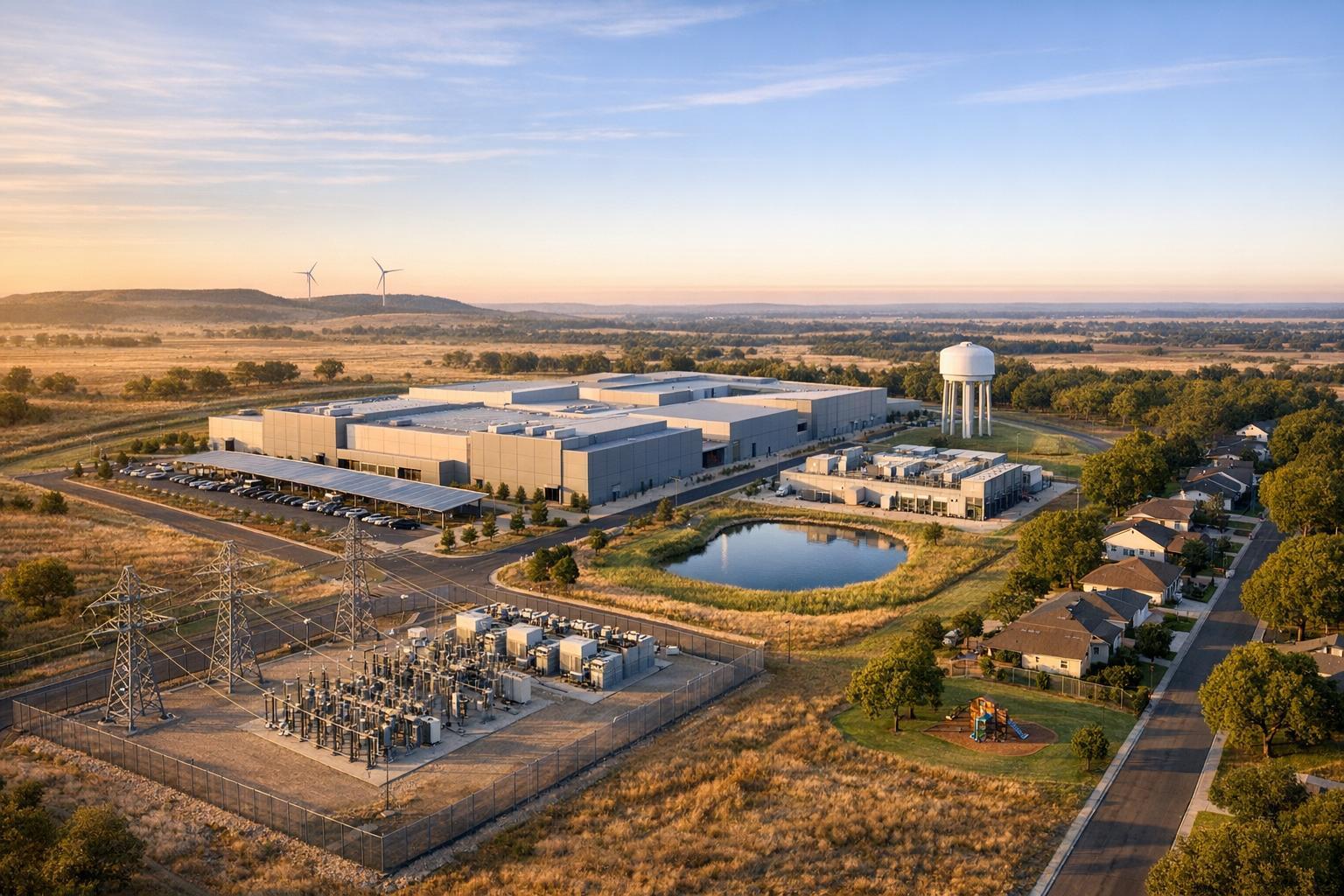
As digital facilities become more demanding, electricity is becoming a more visible part of the infrastructure conversation. Data centres, in particular, require dependable power, and the cost and availability of that power can influence where facilities are built and how competitively they can operate.
This is not just a question for electricity companies.
It is also a question for developers, investors, regulators and the engineers responsible for designing and operating digital facilities.
The practical issues are familiar to anyone involved in infrastructure: capacity, reliability, connection arrangements, operating costs and the ability to expand when demand grows.
What is changing is the scale of the digital infrastructure market and the importance of getting those decisions right.
For Kenya, the discussion is relevant as the country seeks to attract more digital investment while continuing to develop its electricity infrastructure.
Fibre, satellite and the question of resilience
Another area worth watching is the relationship between different connectivity technologies.
Fibre remains central to high-capacity connectivity, but satellite and mobile networks also have important roles to play. In some locations, they can extend coverage where fibre is difficult or expensive to deploy. In others, they can provide additional routes or help maintain connectivity when terrestrial networks are disrupted.
The issue is not necessarily which technology wins.
It is how the different systems can work together.
That is particularly important in a region where infrastructure needs vary widely. A dense urban market, a remote community and a cross-border enterprise customer may require different solutions.
The engineering challenge is to build a network that is not only capable, but also resilient and practical to operate.
What happens after the infrastructure is built?
There is another question running through the event’s programme: what does all this investment actually enable?
More infrastructure can improve connectivity and create opportunities for businesses. But the benefits are not automatic.
A network may be available without being affordable. A data centre may be operational without necessarily creating the wider economic value expected of it. A digital service may exist without reaching the people who need it most.
That is why discussions on access, affordability and local services are important.
They bring the conversation back to the purpose of infrastructure. The objective is not simply to build more assets. It is to make those assets useful.
For Kenya and the wider region, that means looking at the relationship between infrastructure investment and the services that depend on it.
The questions worth following in Nairobi
As ITW Africa gets underway, the most useful stories may come from the practical details behind the broader industry discussion.
What is making digital infrastructure projects easier—or harder—to finance?
Which parts of East Africa’s infrastructure market are attracting the most interest?
How are power availability and operating costs influencing investment decisions?
What is being done to improve connectivity resilience?
And how are infrastructure providers thinking about the gap between network expansion and the affordability of the services delivered over those networks?
These are questions that matter beyond the conference itself.
They are also questions that Kenya Engineer will be following as the event unfolds.
A conversation about what comes next
ITW Africa 2026 comes at a time when Africa’s digital infrastructure market is moving into a more demanding phase.
The continent still needs more connectivity. But it also needs infrastructure that can support the growing demands of cloud services, enterprise computing, digital public services and an increasingly connected economy.
That will require investment, but also better coordination between the different parts of the infrastructure system.
For Kenya, the event offers an opportunity to examine where the country stands in that process and what the next stage of growth could look like.
The most important discussions may not be about how much infrastructure Africa needs. They may be about how to build it well, how to make it work together and how to ensure that the investment delivers something beyond the infrastructure itself.
Those are questions worth asking before the next project is announced—and worth following long after the conference ends.
-
Product on sale
 AWEBook Volume 2Original price was: KShs 3,500.00.KShs 3,000.00Current price is: KShs 3,000.00.