
Last Updated 2 months ago by Kenya Engineer
For communities in Makueni and Kitui, water scarcity is not an abstract policy problem. It is a daily constraint on farming, livestock keeping, household life and the growth of local businesses.
That is what makes the Thwake Multipurpose Water Development Programme more than another large infrastructure project. At its heart is an attempt to change how water is stored, managed and used in one of Kenya’s water-stressed regions.
The latest announcement that construction has resumed, following additional financing from the African Development Bank, brings that ambition back into focus. But it also highlights an important reality: a dam nearing completion is not the same thing as a multipurpose water system delivering its promised benefits.
The Ministry of Water, Sanitation and Irrigation says the first phase is approximately 94 per cent complete. The remaining works include the upstream concrete face, the bridge linking Makueni and Kitui counties, and the dam gates.
These are not simply finishing touches. They are part of the infrastructure required to complete the storage facility and prepare it for operation.
A reservoir with a much larger purpose
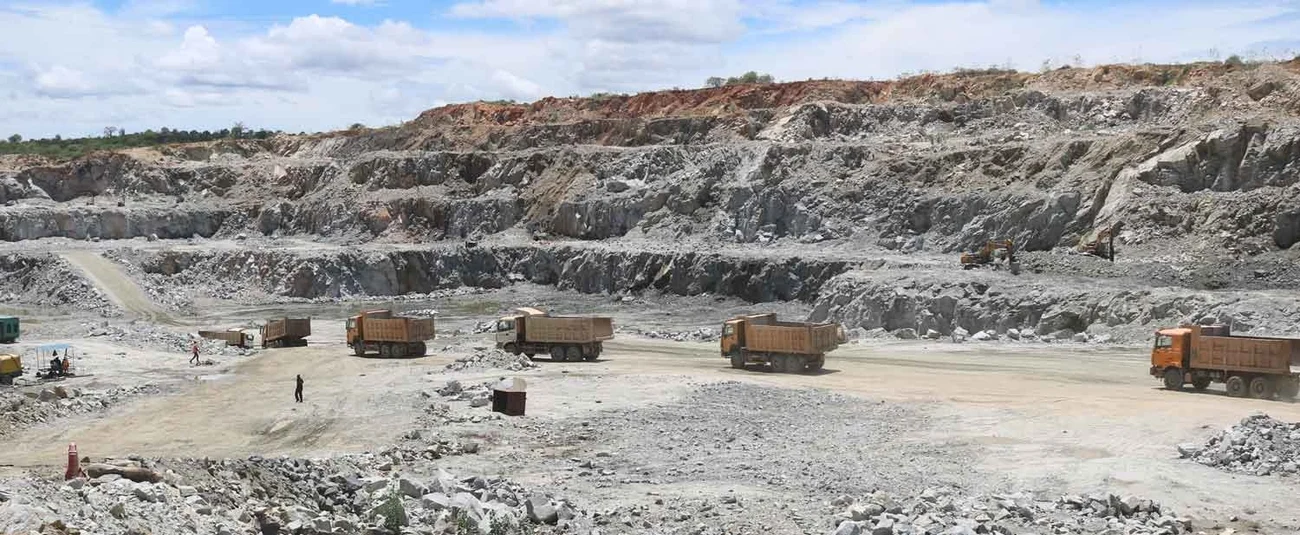
Thwake is being built at the confluence of the Athi and Thwake rivers, on the border of Makueni and Kitui counties.
The first phase comprises an 80.5-metre-high concrete-faced rockfill dam, with a planned storage capacity of 688 million cubic metres. The reservoir is expected to cover approximately 2,900 hectares, while the wider catchment area is estimated at 10,276 square kilometres.
The scale of the storage is significant. But the more important question is what that stored water will make possible.
The programme is intended to support domestic water supply, irrigation, hydropower generation and industrial development. It is also designed to regulate downstream flows, helping to reduce the effects of floods and droughts.
For Makueni and Kitui, that could mean a more reliable foundation for agriculture and livestock production. For Machakos, the planned water supply infrastructure is expected to support Konza Technopolis and surrounding areas.
The wider programme is expected to supply up to 150,000 cubic metres of treated water per day to approximately 1.3 million people in rural and urban areas of Kitui and Makueni, as well as Konza Technopolis and surrounding areas.
Those figures describe the intended output of the wider water development programme, not the dam alone.
That distinction matters because the dam is the storage asset. The treatment plants, distribution networks, irrigation systems and power-generation facilities are what will turn that stored water into services and economic activity.
The engineering behind the structure
The dam is being constructed as a concrete-faced rockfill dam (CFRD).
In this type of structure, compacted rockfill provides the main body of the dam, while a concrete face on the upstream side acts as the principal water barrier. The arrangement allows the dam to use locally available rock materials while providing a watertight surface.
The remaining upstream concrete face is therefore a critical part of the dam’s completion.
The contractor’s scope also includes the main and emergency spillways, low-level outlet, water intake tower, access roads, hydromechanical and electrical works, and the road over the dam connecting Makueni and Kitui counties.
The bridge is particularly important in understanding the project’s wider role. It is not only a crossing over the reservoir; it is also intended to improve connectivity between the two counties and support access to the dam and surrounding areas.
The dam gates, meanwhile, are part of the infrastructure required to control and manage water flows through the structure.
In a project of this scale, the final stages of construction can be technically demanding. The works must be completed to the required design and safety standards, and the associated systems must be ready for operation.
Who is building Thwake?
The programme is being implemented by the Ministry of Water, Sanitation and Irrigation, through the Thwake Multipurpose Water Development Programme.
The main contractor is China Gezhouba Group Company Limited (CGGC), while SMEC International Pty Ltd, working with SMEC Kenya, is the supervising consultant.
The project also involves other public institutions, including the National Land Commission in relation to land acquisition and resettlement matters.
This institutional arrangement reflects the nature of the project. Thwake is not simply a construction contract. It is a public water infrastructure programme involving engineering, environmental management, land acquisition, resettlement and the development of future water-use systems.
The cost—and why the figures need careful reading
The original Phase I construction contract was awarded in November 2017 at a contract sum of KSh36.971 billion. Construction works commenced in March 2018.
That figure is important, but it should not be presented as the total cost of the entire Thwake programme.
The programme is being developed in phases, and the dam is only the first major component. Water treatment and distribution infrastructure, hydropower generation, irrigation development and associated infrastructure will require additional investment.
The original Phase I financing was supported by the African Development Fund and the Government of Kenya. The African Development Bank’s project records show an initial Phase I project cost of approximately UA179.29 million, with the Government of Kenya contributing the larger share of the original financing.
As construction progressed, additional financing became necessary.
In June 2026, the African Development Bank announced approval of €68.39 million in additional financing to support completion of the project. The package comprises a €64.20 million AfDB loan, €4.2 million from the African Development Fund, and €15 million in counterpart funding from the Government of Kenya.
The additional financing is intended to support the remaining works and engineering refinements required to complete the first phase, including raising the dam height, strengthening foundations and constructing two supplementary saddle dams.
The AfDB’s announcement gives a revised expected completion date of September 2028.
The financial history is a reminder that large infrastructure projects must be assessed in stages. The original contract value, the original financing, the additional financing and the eventual cost of the full multipurpose programme are not interchangeable figures.
Why the additional financing matters
The need for additional financing is linked to the evolution of the project and the works required to complete it to the intended design specifications.
The AfDB’s announcement identifies engineering refinements and safety enhancements, including raising the dam height, strengthening foundations and constructing two supplementary saddle dams.
The project’s environmental and social assessment documentation also identifies design changes, including the increase in dam height to 80.5 metres, additional saddle dams and modifications to the spillway.
For a large dam, such changes can have implications for the volume of stored water, the hydraulic behaviour of the structure, the extent of works around the reservoir and the cost of associated infrastructure.
The remaining works highlighted by the Ministry—particularly the upstream concrete face, bridge and dam gates—must therefore be understood within the broader task of completing a safe and operational water-storage facility.
The environmental and social cost of water infrastructure
The benefits of Thwake must be considered alongside the people and environment affected by its construction.
The original AfDB appraisal classified the project as Category 1, reflecting the significant environmental and social impacts associated with a large dam. The appraisal identified 1,067 affected households, including 187 families requiring relocation, alongside land acquisition and disruption of existing economic activities.
The project’s environmental and social documentation identifies potential impacts including changes in water quality, reservoir siltation, biodiversity impacts, hydrological changes and the displacement of social and economic activities. Downstream communities may also be affected by changes in river flows.
These are not arguments against the project. They are reminders that the engineering solution must be accompanied by proper environmental management, compensation, resettlement and long-term monitoring.
The Ministry’s 2025 Resettlement Action Plan Completion Audit Report notes that the Ministry took over responsibility for implementing the resettlement action plan, with coordination involving the National Land Commission, the Thwake Programme Implementation Team and other stakeholders.
For a project intended to improve water security, the treatment of affected communities is part of the project’s long-term credibility.
What could Thwake mean for the economy?
The economic case for Thwake is based on a simple reality: water scarcity limits production.
It limits the reliability of farming. It constrains livestock keeping. It increases the cost of supplying households and businesses. It can also discourage investment in areas where water is not reliably available.
The programme’s planned irrigation component is particularly significant. The long-term target is approximately 40,000 hectares, or about 100,000 acres, of irrigated land. If delivered, this would represent a major expansion of reliable agricultural water supply in a region where farming is heavily affected by rainfall variability.
The expected economic benefits include increased agricultural production, improved livestock productivity, reduced time spent searching for water, improved public health and the development of new commercial activity.
The AfDB’s original economic appraisal estimated an economic internal rate of return of 20.56 per cent, with an economic net present value of approximately KSh27.06 billion. The appraisal considered benefits from water consumption, improved health, increased agricultural production and additional power supply.
Those are appraisal projections, not guarantees. Their realisation will depend on the completion of the later phases, the development of water distribution infrastructure, the availability of irrigation systems, the operation of the hydropower component and the ability of institutions to manage the resource effectively.
The part that comes after the dam
The completion of the dam will be an important milestone. But it will not, by itself, deliver all the benefits associated with Thwake.
A dam can store water. Water must still be treated, conveyed and distributed.
Irrigation water must reach farms through appropriate infrastructure. Hydropower requires generation equipment, electrical systems and a reliable connection to the power system.
This is why the programme’s phased structure is important. The dam is the foundation of the wider system, but the economic value of the investment will depend on the development of the systems that use the water.
The same applies to the bridge and access road. The road connection between Makueni and Kitui is not simply a transport improvement. It is part of the infrastructure that will support access to the dam, movement of people and goods, and future development around the reservoir.
A national asset with regional consequences
Thwake is one of Kenya’s major water infrastructure investments. Its significance extends beyond the counties where it is being built.
For Makueni and Kitui, it offers the possibility of a more reliable water supply and a stronger foundation for agricultural and industrial development. For Machakos, it offers a potential water source for Konza Technopolis. For the wider Athi River basin, it offers a mechanism for regulating flows and improving resilience to drought and floods.
But the project’s success will ultimately be measured by what happens after construction: how much water is actually delivered, how effectively it is managed, how much agricultural production is enabled, how much power is generated and whether the benefits reach the communities that have lived with water scarcity for decades.
The resumption of construction is therefore an important development.
The more consequential question is whether the remaining works can be completed safely, within the revised financing framework, and followed by the investment required to turn the dam into the multipurpose water system it was designed to become.
Thwake is not merely about completing a structure. It is about building the infrastructure needed to make water a more reliable foundation for economic development.
-
Product on sale
 AWEBook Volume 2Original price was: KShs 3,500.00.KShs 3,000.00Current price is: KShs 3,000.00.