Last Updated 10 years ago by Kenya Engineer
Tanzania has announced that it has completed expansion works on its Dodoma Airport. The runway will allow more flights to land at the semi-arid region and country’s designated capital reducing charges on passengers. The will now have the ability to accommodate up to 90 seaters’ aircrafts.
Expansion of the airport was a government initiative in order to move the runaway to the country’s designated capital city. The government announced in 1973 to move the capital which is more centrally located in the country so as to serve better the needs of the people. Dodoma was selected for this purpose as it qualifies in every aspect including location, conducive climate, and impressive landscapes and had adequate room for development.
The expanded airport was last renovated in 1976 and the feasibility study was carried out in 2005 to expand the runway but the expansion wasn’t undertaken due to limited financial resources. The new expansion work involved 2.5 kilometre runway and a 500m lighting area for airplane safety during takeoff and landing.
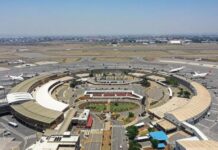
Meanwhile, the Kenyan government had intentions of constructing a new KES56bn terminal at the Jomo Kenyatta International Airport, which flopped after the ministry in charge argued that the project had no value for money. The Greenfield terminal project aimed to handle increasing number of passengers passing through Kenya’s main airport and was to be built by a Chinese firm over a period of 36 months.
The Chinese firm, China National Aero-Technology International Engineering Corporation (Catic) won the contract to design and build the facility that was to be financed by a loan from the African Development Bank (AfDB).
According to Kenya Airport Authority (KAA), the managers of Kenya’s airports, thirty per cent of detailed designs had been submitted and reviewed while 60 per cent was on-going at the time the decision was made to discontinue the project. Excavations for foundations were also ongoing.
Financial documents show that the project was to be financed 85 per cent by a consortium of local and foreign banks, including the AfDB, with a 15 per cent counterpart financing from the Kenya government.

-
Product on sale AWEBook Volume 2Original price was: KShs 3,500.00.KShs 3,000.00Current price is: KShs 3,000.00.