Last Updated 14 years ago by Kenya Engineer
The Government of Kenya on 06/12/2012 signed two loan agreements with the African Development Bank (AfDB) amounting to millions of dollars to finance a major regional hydroelectric power project.
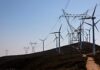
The first loan totaling US $115 million will finance the construction of the multinational electricity highway between Ethiopia and Kenya, consisting of about 1,068 km of high voltage direct current (HVDC) 500 kV transmission line and associated AC/DC converter stations at Wolayta-Sodo (Ethiopia) and Suswa (Kenya) substations, with a power transfer capacity of up to 2,000 MW. The project will be commissioned in November 2017.
The second loan of US $43 million will go towards improving the quality and relevance in engineering faculties in line with Kenya’s Vision 2030 priorities for science, technology and innovation (STI) and human resource aspirations of the East African Community (EAC) integration.
The project aims to contribute to an increase in qualified and skilled engineers from 6,350 in 2012 to almost 12,000 by 2017 to drive the key sectors of Vision 2030. The project will target six university constituent colleges and two universities whose core mandate is STI in line with the Kenya Engineering Registration Board (KERB) recommendations.
The loan agreements were signed by Gabriel Negatu, AfDB’s East Africa Regional Director, and Kenya’s Finance Minister Robinson Githae.
Speaking shortly after the signing ceremony, Negatu said, “Following the successful completion of the Thika Super Highway last month, the AfDB is today embarking on another highway – an Energy Super Highway that will facilitate energy trading within the East Africa region. It is also the first step to enabling affordable energy from the region to be traded through the East Africa Power Pool, as far North as Egypt and as far South as SADC [Southern African Development Community] countries, by connecting with the Southern Africa Power Pool.”
He reiterated the Bank’s commitment to working with the Kenyan government to enable it to deliver and make an impact on its development activities for the well-being of the Kenyan people.
ADF Loan of Us $115 Million to Finance Ethiopia-Kenya Electricity Highway Project
The hydroelectric power project will ultimately promote power trade and regional integration, contribute to the Eastern Africa Power Pool (EAPP) countries’ social and economic development, and reduce poverty in those countries.
“This project will facilitate export of surplus power from Ethiopia to Kenya and therefore increase power supply in the country,” Githae said.
The demand for electricity in East Africa has steadily risen relative to supply, leading to occasional severe power shortages. To alleviate this situation, East African countries must resort to exorbitantly expensive power from emergency generators. However, the region is blessed with a great variety of natural resources, in particular hydropower, mainly concentrated in Ethiopia.
The integration of the power systems of the EAPP will enable the development of Ethiopia’s large hydropower resources to enable export and address power shortages throughout the region. The project will position Ethiopia as the main powerhouse and Kenya as the main hub for power trade in the East African region. It will promote power and economic trading as well as regional integration, and will complement some ongoing Bank-financed projects, such as the regional Interconnection of Electric Grids of the Nile Equatorial Lakes Countries, which aims to connect five East African countries: Kenya, Uganda, Rwanda, Burundi and the Democratic Republic of Congo.
-
Product on sale AWEBook Volume 2Original price was: KShs 3,500.00.KShs 3,000.00Current price is: KShs 3,000.00.