
Last Updated 1 hour ago by Kenya Engineer
Kenya’s electricity grid is entering a different phase of its development. The network now has to accommodate a much larger transmission system, growing renewable generation, cross-border electricity exchanges and increasingly complex patterns of demand. Operating such a system requires more than additional transmission lines and substations. It requires the ability to see the network in real time, analyse changing conditions and act on the information quickly.
At the centre of that transition is the new National System Control Centre (NSCC) being developed by the Kenya Electricity Transmission Company (KETRACO) at Embakasi in Nairobi.
The facility isn’t just a new building to replace an existing control room. It is being developed as the operating centre for Kenya’s high-voltage transmission system, combining grid monitoring and control, energy-management software, substation automation, telecommunications and asset-management systems.
The project has a budget of €82.7 million, equivalent to about KSh12 billion, financed through a €48.6 million concessional loan from the Agence Française de Développement and a €34.1 million concessional loan from the French Treasury. The GE Vernova Grid Solutions SAS and Larsen & Toubro consortium is responsible for implementation, with GE Vernova providing the grid technology and L&T handling the civil works.
The commercial contract entered into force on 7 February 2025 and the project is scheduled for completion within 36 months, by February 2028.
The control room is becoming part of the grid
The fundamental task of a system control centre has not changed. Operators need to know how the network is performing, maintain the balance between generation and demand, manage transmission constraints and respond to faults.
What has changed is the scale and speed of the information involved.
Modern transmission networks generate large volumes of measurements from substations and other field equipment. Voltage, current, frequency, power flows, breaker positions and equipment alarms can be collected continuously and presented to operators without requiring physical inspection of each site.
The NSCC is designed around that operating model.
KETRACO says the facility will use high-performance Supervisory Control and Data Acquisition (SCADA) and Energy Management System (EMS) platforms. The project also includes Enterprise Asset Management, integration of substation outstations and an upgrade of the communications network linking the transmission system to the control centre.
The result is intended to give the transmission system operator a single operational view of a much larger and more interconnected grid.
SCADA provides the eyes and hands
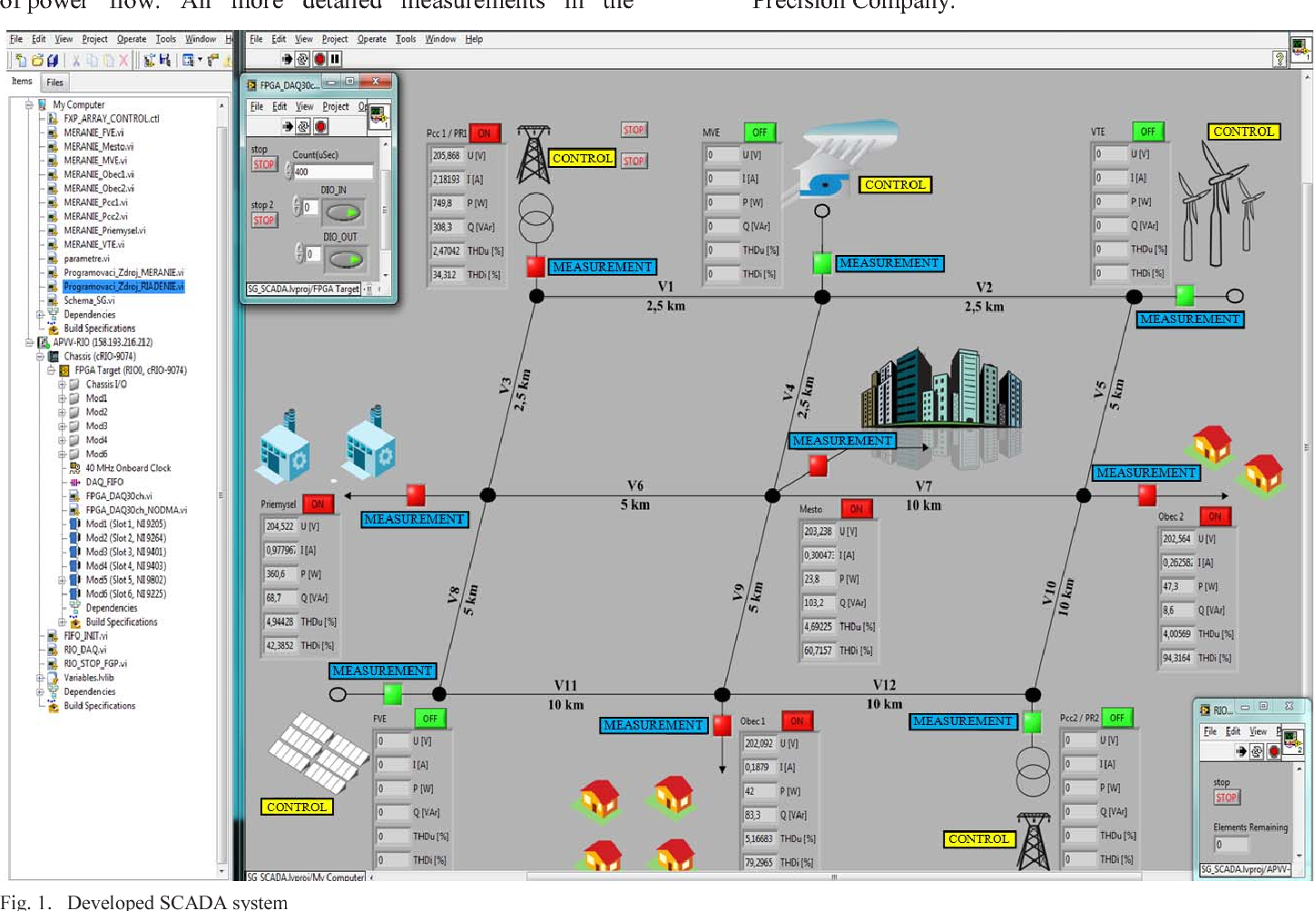
SCADA is the basic layer through which the control centre interacts with the physical network.
Information collected from substations is transmitted to the control centre, where operators can monitor system conditions and, where appropriate, issue commands back to remote equipment.
This can include the status of circuit breakers and other switching equipment, electrical measurements and alarms indicating abnormal conditions.
The concept is already familiar within KETRACO’s transmission operations. The company has been integrating substation automation and SCADA systems so that substations can be monitored and controlled locally and from central control facilities.
The new NSCC takes that architecture further by establishing a modern national platform around which the transmission system can be operated.
EMS turns measurements into system decisions
SCADA tells operators what is happening. The Energy Management System provides the analytical tools for determining what those measurements mean for the wider network.
An EMS can maintain a mathematical model of the transmission system and use measurements from across the grid to estimate its electrical state. It can then assess how the network would respond to the loss of a transmission line, transformer or other major component.
This is important because electricity does not remain confined to one transmission path when a network element is lost. Power flows redistribute through the remaining network.
Contingency analysis allows operators to examine those changes before or during an actual disturbance. It can identify potential overloads and other violations of operating limits and support decisions on corrective action.
The NSCC’s EMS therefore moves grid operation towards continuous system-level analysis rather than relying primarily on individual equipment alarms.
GE Vernova says the project includes an Advanced Energy Management System and Wide Area Management System as part of its GridOS software portfolio.
Renewable energy changes the operating problem
Kenya’s generation mix makes this analytical capability increasingly important.
The country has significant geothermal and hydropower generation and has added substantial wind capacity. Solar generation is also growing. Some of these resources vary according to weather and other conditions, meaning the system operator must manage changing generation alongside changing demand.
The engineering challenge isn’t just connecting additional renewable megawatts to the grid. The operator must also understand where that generation is located, how much power is flowing through the transmission network and what happens when output changes.
The NSCC is intended to provide the visibility and control needed for this environment.
KETRACO specifically identifies improved renewable-energy integration as one of the expected benefits of the project. The company also expects the system to support automated dispatch and improved coordination of the national transmission network.
Digital control does not remove variability from renewable generation. It gives the system operator better tools for managing its effects.
The communications network is critical infrastructure
The control centre can only be as effective as the information reaching it. For that reason, the communications component of the project is as important as the software inside the control room.
KETRACO’s project includes a comprehensive communications upgrade and full integration of substation outstations. The objective is to provide secure data exchange between the control centre and transmission assets across the country.
This creates a distributed system.
At the field level are transformers, circuit breakers, protection equipment, instrument transformers and intelligent electronic devices. At the centre is the NSCC. Between them is the communications infrastructure carrying measurements, alarms, status information and control commands.
A failure in that information chain can reduce the operator’s visibility even when the underlying electrical equipment remains available.
The communications network thus becomes part of the reliability architecture of the transmission system rather than simply an IT service.
Substations become intelligent nodes
The NSCC also changes the role of the transmission substation.
Modern substations increasingly use digital protection and automation equipment to collect measurements, process information and communicate with supervisory systems. Remote terminal units and intelligent electronic devices provide the interface between physical electrical equipment and the control system.
KETRACO’s existing work on substation automation includes data engineering and integration of substation systems into central SCADA platforms.
The new NSCC will extend this principle across the national transmission network.
That makes the quality and standardisation of field data important. The control centre cannot produce a reliable picture of the network if measurements are missing, incorrectly configured or poorly synchronised.
Commissioning the project will thus involve considerably more than installing servers and control-room displays. Substation equipment, communications links, databases, software and control functions must be tested together.
Wide-area monitoring sees beyond individual substations
A national transmission network can experience disturbances that extend far beyond the location where they begin.
A fault on a major transmission corridor can change power flows elsewhere in the network within seconds. This makes wide-area monitoring particularly useful as the system becomes larger and more interconnected.
GE Vernova’s scope includes a Wide Area Management System alongside the Advanced Energy Management System. The project also includes substation automation, telecommunications and condition-monitoring technologies.
The significance is that the operator can increasingly examine the behaviour of the transmission system as an interconnected whole rather than treating each substation as a largely separate operating point.
Asset management moves beyond fixed maintenance
The NSCC project also includes an Enterprise Asset Management system, while GE Vernova’s technology package includes asset-performance management and condition-monitoring systems.
This creates a connection between system operation and maintenance.
Transmission equipment does not fail only because it reaches a particular age. Its condition is affected by loading, temperature, operating cycles, environmental conditions and other factors.
Condition-monitoring data can help maintenance teams identify deterioration and prioritise intervention before equipment failure develops into a larger network problem.
The value of asset-management software is therefore not simply the creation of another database. It is the ability to connect information about equipment condition with maintenance planning and operational risk.
Two control centres provide operational resilience
The project is deliberately being built around two locations.
The Main Control Centre will be at the Embakasi substation in Nairobi, while a mirrored Emergency Control Centre will be established at the Suswa substation complex. Both facilities will have the principal SCADA/EMS and asset-management capabilities required for system operation.
The geographic separation is important.
A national control centre is itself critical infrastructure. If the primary facility becomes unavailable because of a major technical failure, disaster or other event, the transmission operator needs another location from which essential grid functions can continue.
The Suswa facility therefore provides more than a backup building. It forms part of the resilience architecture of the national system-operation function.
Regional power trading adds another layer
Kenya’s transmission network is also becoming more regional.
Interconnections with neighbouring countries allow electricity to move across borders and form part of the wider Eastern Africa Power Pool. As those interconnections are used more extensively, the Kenyan operator has to account for both domestic and cross-border power flows.
KETRACO identifies strengthened coordination of regional interconnectors and readiness for future electricity-market operations among the expected benefits of the NSCC.
This means the control system has to understand the Kenyan network not as an isolated system but as part of a wider regional electricity system.
Cybersecurity becomes a power-system issue
Greater digital connectivity also creates a new engineering responsibility.
The NSCC will bring together operational technology, communications networks, software platforms and remote equipment. A problem within those systems can potentially affect physical electricity infrastructure.
Cybersecurity therefore becomes part of grid reliability.
The objective is not merely to protect office computers. Control commands, protection systems, communications channels and operational databases all have to be secured against unauthorised access, manipulation or loss of availability.
The same principle applies to communications resilience. If a transmission substation remains electrically healthy but loses its communications link, the system operator may lose visibility or remote control of that asset.
The digital layer consequently has to be designed with the same emphasis on reliability and resilience applied to the electrical network.
The project has been years in preparation
Although implementation is now under way, the NSCC is the result of several years of preparation.
The financing arrangement dates back to 2019, while KETRACO has undertaken preparatory work on SCADA, telecommunications and system-operation capabilities ahead of the new facility. The current commercial contract brought the project into its implementation phase in February 2025.
The three-year implementation period reflects the complexity of integrating a national control system.
The final commissioning process will require the control centre, emergency facility, communications network, substation outstations, software platforms and field equipment to operate together.
That is a system-integration exercise.
The real test will be grid operation
The value of the NSCC will ultimately be measured by what happens outside the control-room building.
When a transmission line trips, the system should provide operators with rapid information about the event and its consequences. When renewable generation changes, the operator needs an accurate picture of the resulting power flows. When a new transmission corridor is commissioned, its equipment needs to be integrated into the control architecture. When regional interconnectors operate at higher levels, their flows need to be incorporated into system analysis.
These functions depend on the entire chain working together.
A sophisticated EMS cannot compensate for poor field data. A modern control room cannot compensate for unreliable communications. A communications network cannot compensate for badly configured substation automation.
The engineering challenge is therefore integration.
Building the operating layer of the future grid
Kenya is continuing to expand its physical transmission infrastructure, but the complexity of that network increasingly requires a corresponding expansion of its digital operating capability.
The NSCC is designed to provide that layer.
SCADA will provide real-time visibility and remote control. EMS will analyse the state and security of the network. Wide-area monitoring will provide a broader picture of system behaviour. Substation automation and communications will connect field equipment to the control system. Asset-management and condition-monitoring tools will link operational data to maintenance.
The Embakasi control centre and Suswa emergency facility are consequently only the visible parts of a much larger system.
When the project is completed in February 2028, its importance will not be measured by the size of the building or the number of control-room screens.
It will be measured by whether Kenya’s transmission operator can see more of the network, understand its condition faster, anticipate the consequences of disturbances and coordinate an increasingly interconnected power system with greater precision.
That is the real shift behind Kenya’s digital grid: the transmission network is becoming not only larger, but increasingly observable, analysable and controllable as a single system.

-
Product on sale
 AWEBook Volume 2Original price was: KShs 3,500.00.KShs 3,000.00Current price is: KShs 3,000.00.