

Last Updated 2 weeks ago by Kenya Engineer
iClear Kenya is a Nairobi-based water purification company focused on point-of-use treatment systems for homes, offices, and institutions. Most people know the company for its reverse osmosis (RO) purification systems, but according to the team behind iClear, the bigger issue has never been the machines themselves — it has always been the water.
Across Kenya, water quality challenges vary significantly from one region to another. Some areas struggle with fluoride, others with salinity, aging pipeline infrastructure, borehole sediment, or inconsistent municipal treatment.
As more Kenyan families and offices begin paying closer attention to drinking water quality, companies operating in the sector are seeing a noticeable shift in consumer behavior.
We spoke with the iClear Kenya team about changing urban water habits, engineering challenges in the Kenyan context, and why clean drinking water is increasingly becoming part of the broader lifestyle and wellness conversation.
What originally led iClear into the Kenyan market?
Kenya presented a very interesting combination of rapid urban growth, rising health awareness, and increasingly complex water realities.
Many households technically have access to water, but not necessarily access to consistently safe or pleasant drinking water.
In areas like Syokimau, Kitengela, Athi River, and parts of Nairobi that rely heavily on borehole water, we repeatedly encountered concerns around salinity, scaling, unusual taste, and fluoride levels.
What stood out to us was that many families had already normalized these issues because they had lived with them for years.
At the same time, urban middle-class households were becoming much more quality-conscious. People were investing more in healthier homes, better kitchens, improved appliances, and wellness-oriented lifestyles. Water naturally became part of that conversation.
That combination made Kenya a very compelling market for long-term water solutions.
How has consumer behavior changed in recent years?
The shift has been significant.
Five years ago, many middle-class households relied mainly on boiling water, bottled dispenser services, or basic filtration systems.
Today, more families are moving toward under-sink purification systems as a long-term solution.
One reason is cost efficiency over time.
Another is awareness.
People are asking more questions now:
Why does my water taste salty?
Why are kettles scaling so quickly?
Why does tea taste different in certain estates?
Is boiling actually enough?
The conversation is becoming much more informed.
Water quality is increasingly becoming part of the broader wellness discussion, similar to how people now think more carefully about food quality, fitness, or air quality.
What has driven most of iClear’s growth so far?
Honestly, word of mouth.
A lot of our growth has happened building by building.
Someone installs a system in an apartment block, neighbors taste the water, ask questions, and a few weeks later another installation happens on the same floor.
That pattern repeats itself often in Nairobi apartments and office environments.
Across the markets our parent company operates in, the cumulative installation base has grown into the tens of thousands over time. In Kenya specifically, growth has largely been driven by urban residential adoption and office demand.
We’ve also noticed that customers increasingly value long-term service reliability rather than simply purchasing equipment.
What are some of the most common water problems you encounter in Kenya?
It depends heavily on the region and source. In some areas, fluoride is the primary concern. In others, it’s salinity or high TDS levels.
In Nairobi and surrounding estates, we frequently encounter:
borehole water with elevated mineral content,
chlorine-heavy municipal water,
sediment from older infrastructure,
and inconsistent pressure conditions.
One of the biggest misconceptions is that clear water automatically means safe water.
In reality, many dissolved contaminants are invisible.
A lot of customers only begin investigating their water quality after noticing things like:
metallic taste,
white scaling on kettles,
recurring appliance damage,
or children refusing to drink the water.
Why has reverse osmosis become increasingly relevant in Kenya?
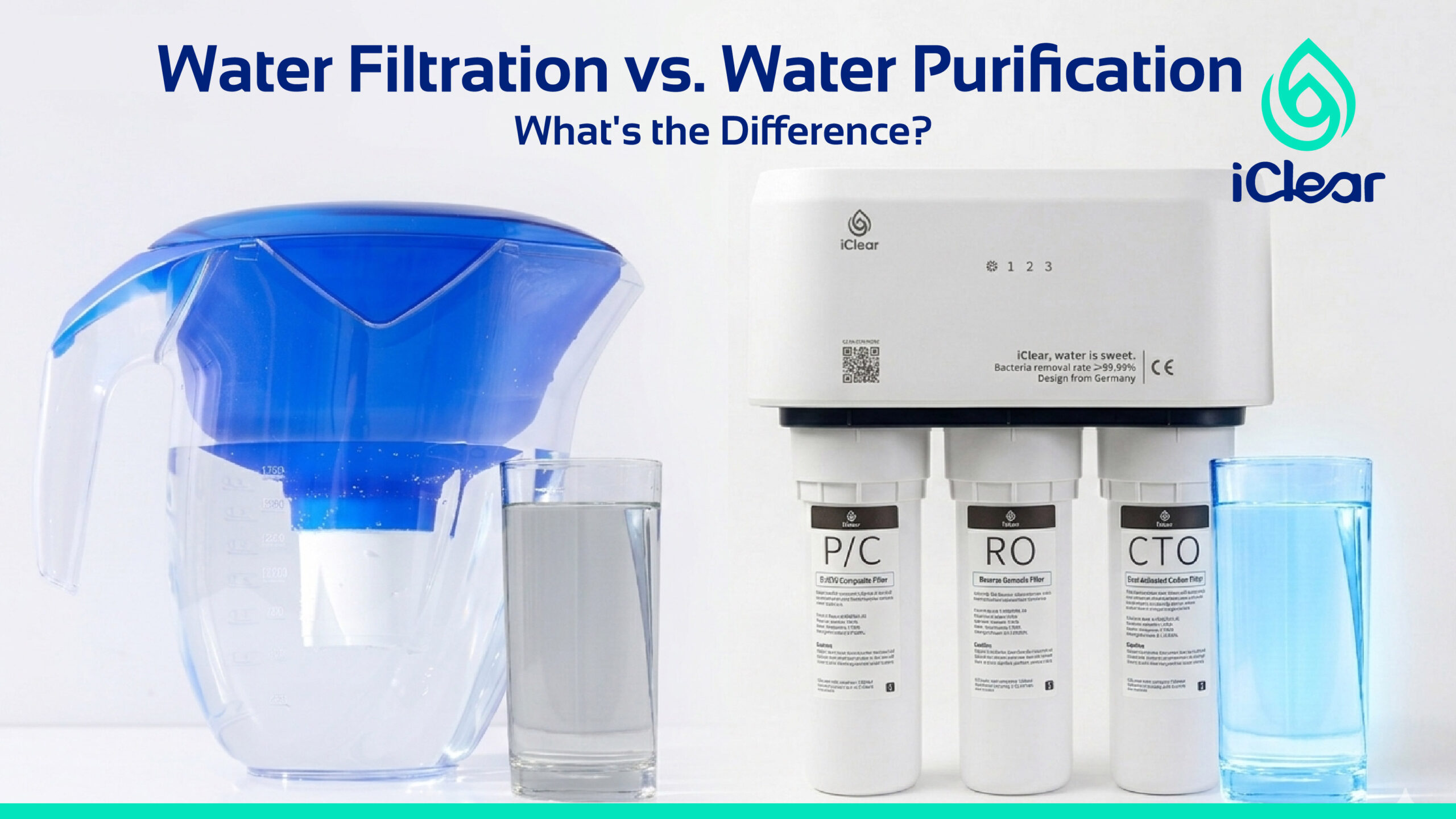
Traditional filtration systems can improve odor and remove larger particles. But in high-TDS environments, deeper purification is often necessary.
Reverse osmosis systems are designed to reduce dissolved salts, fluoride, heavy metals, and other microscopic contaminants that cannot simply be removed by boiling.
What’s interesting is that many customers first notice the difference through taste. People often normalize the taste of borehole or chemically treated water until they compare it side by side after purification.
Once that comparison happens, perception changes very quickly.
What are some engineering challenges unique to the Kenyan market?
The biggest challenge is not the purification theory itself. The challenge is making systems perform consistently in real Kenyan operating conditions.
For example:
water pressure may fluctuate significantly during the day,
voltage instability can affect equipment,
source water quality changes from estate to estate,
and installation environments vary dramatically.
A modern apartment in Kilimani behaves very differently from a standalone house using borehole water in Kitengela.
No two installations are exactly the same.
That means system design, installation planning, and maintenance strategy all need to adapt accordingly.
Have you noticed increased awareness around water quality?
Definitely. The level of consumer awareness today is much higher than even a few years ago.
Customers now ask about:
TDS levels,
fluoride,
filter lifespan,
maintenance schedules,
and long-term health considerations.
Some customers even contact us before moving into a new apartment because they want to understand the water quality in that specific area.
That would have been very uncommon several years ago.
What role does maintenance play in water purification systems?
Maintenance is extremely important. A purification system is not a one-time installation. Filters degrade over time depending on usage patterns and water quality. In areas with high mineral content, filters naturally wear faster.
This is one reason why the industry is increasingly moving toward maintenance-inclusive service models rather than simple equipment sales.
We’re also gradually moving toward predictive maintenance approaches. The goal is to identify performance decline before the customer experiences a noticeable drop in water quality.
Are office environments changing as well?
Yes, very noticeably. Many offices previously depended entirely on bottled dispenser systems. But over time, companies began evaluating:
long-term costs,
hygiene consistency,
logistics,
and sustainability concerns.
We now see growing adoption of centralized purification systems in offices, clinics, salons, schools, and commercial spaces.
In some cases, employers also increasingly view drinking water quality as part of workplace welfare.
What misconceptions still exist around RO systems?
One misconception is that all RO systems waste excessive amounts of water. Older systems were significantly less efficient than modern designs, which is where many of those perceptions originated.
Another misconception is that boiling alone solves every water issue. Boiling can help with certain biological contaminants, but it does not remove dissolved salts, fluoride, or many chemical contaminants.
That distinction is becoming more widely understood.
What trends do you expect to shape East Africa’s water purification sector in the coming years?
We believe water purification across East Africa will gradually become:
more decentralized,
more data-driven,
and more service-oriented.
As urbanization continues, more households will need point-of-use treatment systems tailored to their specific water conditions. We also expect:
smarter maintenance systems,
stronger energy efficiency,
solar compatibility,
and increased public awareness around long-term water quality.
In many ways, clean drinking water is becoming less of a luxury discussion and more of a quality-of-life standard.
Final Thoughts?
One thing we’ve learned over time is that every water source is different. Two neighboring estates may experience completely different water conditions. That’s why understanding the actual water problem is always the first step. At the end of the day, most customers are not looking for complicated technology.
They simply want:
water that tastes clean,
protects their appliances,
supports their family’s health,
and works consistently every day.
And increasingly across Kenya, people are beginning to realize that drinking water quality deserves the same level of attention as the food they eat or the air they breathe.
That mindset shift is probably the biggest change we’ve observed.

-
Product on sale
 AWEBook Volume 2Original price was: KShs 3,500.00.KShs 3,000.00Current price is: KShs 3,000.00.