
Last Updated 2 months ago by Kenya Engineer
African countries are accelerating efforts to manufacture more solar equipment locally as electricity demand, off-grid adoption and concerns about dependence on imported technology continue to grow.
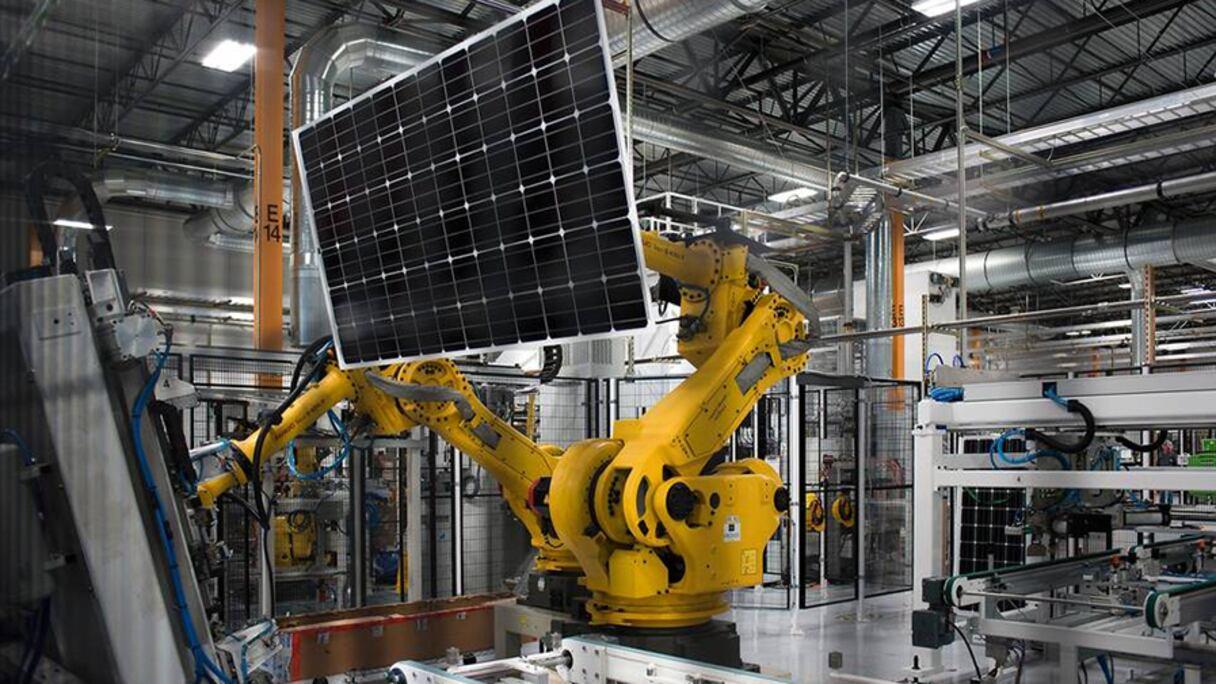
South Africa, Nigeria, Morocco, Ethiopia and Egypt are among the countries expanding solar-module assembly or pursuing more integrated photovoltaic manufacturing.
South African utility Eskom has initiated plans for an integrated solar photovoltaic manufacturing facility with a minimum annual output of one gigawatt and the potential for future expansion.
Morocco has expanded its module-production capacity to approximately one gigawatt annually, while Nigeria has recorded rapid growth in local assembly. Egypt is also developing gigawatt-scale solar manufacturing projects.
The investments reflect a significant shift in industrial policy. Solar power is increasingly being treated not only as a source of electricity but also as an opportunity to create manufacturing jobs, develop technical skills and retain more value within African economies.
Despite this momentum, the continent remains highly dependent on imported solar cells, wafers and other high-value components, particularly from China.
Most existing African factories assemble modules from imported components instead of undertaking the more technically demanding processes required to manufacture photovoltaic cells.
Demand is growing
More than 10 million solar kits were sold across Africa in 2025, according to industry estimates cited by the Associated Press. These systems served approximately 148 million people, with much of the growth occurring in East and West Africa.
Demand is being driven by unreliable electricity supply, limited grid access, falling equipment prices and increased uptake of rooftop and commercial solar systems.
Businesses are also installing solar and battery-storage systems to control energy costs and maintain operations during outages.
China remains central to this expansion. Chinese renewable-energy investment and related construction projects in Africa reached an estimated $66 billion between 2010 and 2024.
Chinese manufacturers also dominate global production of wafers, cells, modules and several critical inputs. Oversupply in China has contributed to falling equipment prices, making solar installations more affordable but creating intense competition for emerging African manufacturers.
The challenge for African countries is therefore to build domestic capacity without making locally produced systems too expensive for consumers.
Beyond module assembly
A competitive solar-manufacturing industry requires more than installing imported cells into locally assembled panels.
The wider supply chain includes specialised glass, aluminium frames, junction boxes, cables, connectors, mounting structures, inverters, batteries, monitoring equipment and electrical protection systems.
It also depends on testing laboratories, certification facilities, trained technicians, dependable logistics and clear standards governing equipment quality and performance.
Local production in these supporting segments may offer African manufacturers an achievable route into the solar value chain while countries gradually build the capital, technical expertise and market scale needed for cell production.
Quality control will be critical. Poorly manufactured modules, batteries or inverters can damage consumer confidence and increase lifecycle costs, even when their initial prices are lower.
Manufacturers will consequently need to compete on reliability, warranties, after-sales support and suitability for African operating conditions—including high temperatures, dust, humidity, voltage fluctuations and remote installations.
Kenya’s opportunity
Kenya has one of Africa’s most developed off-grid solar markets and a growing base of commercial and industrial installations. Its new carbon-market framework also prioritises distributed solar, mini-grids, standalone systems and utility-scale solar projects incorporating storage.
These developments could provide a stronger demand signal for domestic manufacturing and assembly.
Kenya could initially deepen production of mounting structures, control panels, distribution boards, enclosures, cables, smart meters and other balance-of-system equipment already within the capabilities of local engineering and metal-fabrication companies.
Battery assembly, recycling, repair and performance testing also offer potential as solar storage and electric mobility expand.
However, developing an internationally competitive industry will require consistent demand, affordable finance, recognised product standards, technical training and policies that reward genuine local value addition rather than the relabelling of imported finished products.
Public procurement and large energy projects could support local manufacturers, but local-content requirements must be carefully designed to avoid raising project costs or encouraging the use of substandard components.
Africa’s solar-manufacturing drive is therefore significant, but the depth of industrialisation will matter more than the number of factories announced.
The central test will be whether African countries progress from importing complete systems to assembling modules, manufacturing components and eventually producing higher-value technologies such as cells, power electronics and advanced batteries.
For Kenya and the wider continent, success would turn the solar transition into both an energy solution and an industrial-development programme.
-
Product on sale
 AWEBook Volume 2Original price was: KShs 3,500.00.KShs 3,000.00Current price is: KShs 3,000.00.