
Last Updated 2 months ago by Kenya Engineer
Southern Africa sits close to the beginning of the global clean-energy supply chain and far from its most profitable end.
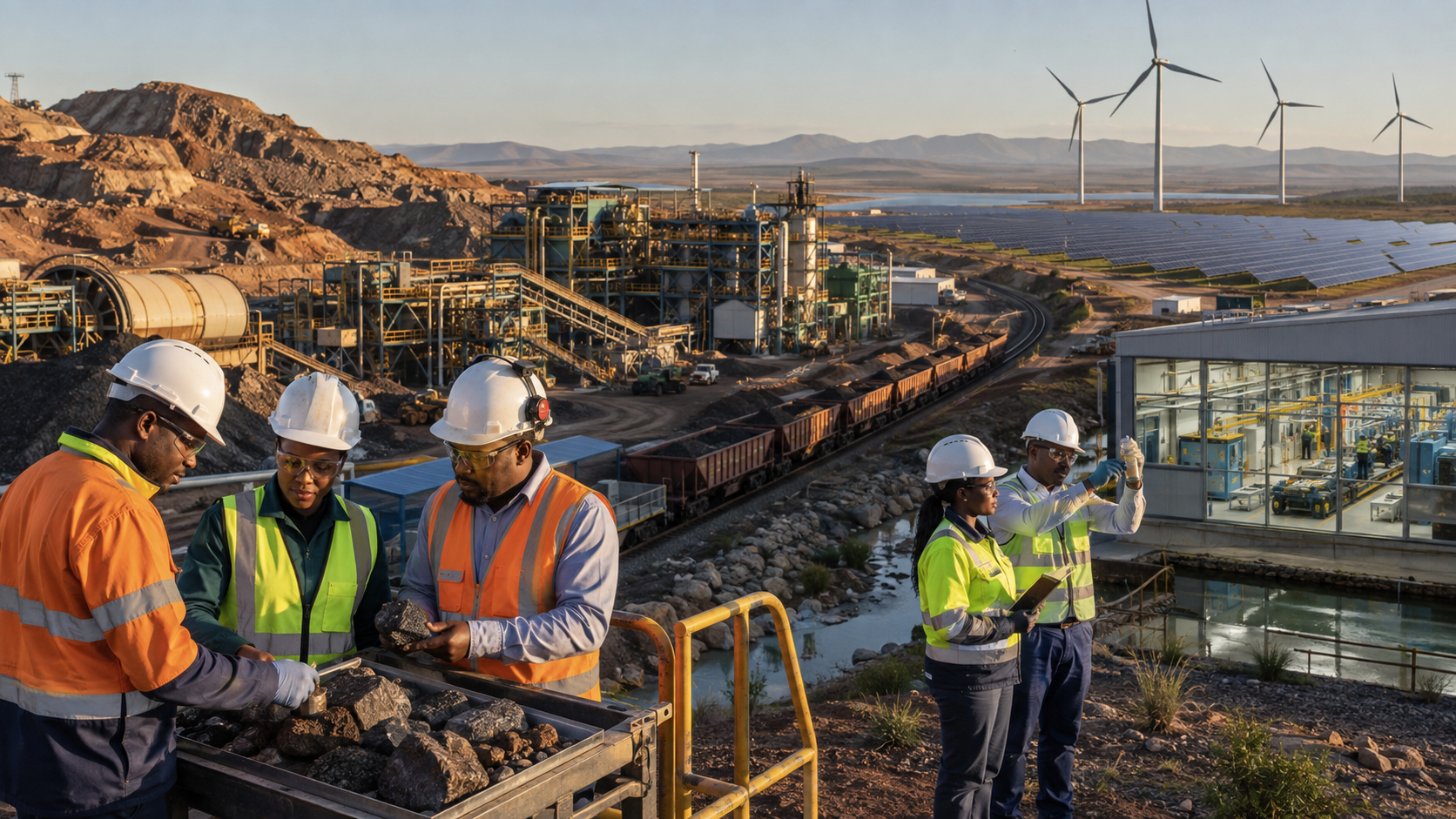
The region produces or holds major reserves of copper, cobalt, lithium, manganese, nickel, graphite and platinum-group metals. These materials are essential to batteries, electricity networks, wind turbines, solar technologies and electric vehicles. Much of the associated refining, component production and advanced manufacturing, however, takes place outside Africa.
A five-year regional initiative led by the United Nations Economic Commission for Africa is intended to help change that pattern. Running from March 2026 to February 2031, it covers the Democratic Republic of Congo, Mozambique, Namibia, South Africa, Zambia and Zimbabwe.
The programme is financially supported through Germany’s International Climate Initiative and brings together ECA, the African Minerals Development Centre, Wits Enterprise, WWF Germany, the German Federal Institute for Geosciences and Natural Resources and Projekt-Consult. Its stated objectives include local value addition, stronger environmental and social governance, community participation and new industries linked to mining. (UNECA, 2 June 2026)
This is a regional capacity and value-chain initiative. The published programme material should not be mistaken for a commitment to finance a specific refinery, battery factory or mineral-processing plant. Its success will depend on whether better policies and coordination eventually produce bankable industrial investments.
Beneficiation begins with infrastructure
The case for processing more minerals within Africa is compelling. Concentrates and partially processed ores capture less value than refined materials, chemical precursors, battery cells or complete energy systems. Downstream industries also support metallurgists, chemical engineers, fabricators, equipment suppliers, laboratories and maintenance businesses.
Yet beneficiation is not achieved simply by prohibiting raw-mineral exports.
Mineral processing can require large and continuous supplies of electricity and water. Plants must be connected to mines, railways, roads and ports. Laboratories must verify purity and chemical composition. Waste, tailings and emissions need controlled treatment. Investors need stable regulations and enough predictable demand to justify long-lived facilities.
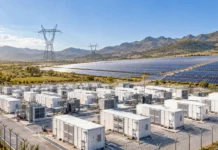
Power is a particularly difficult constraint. Kenya Engineer’s earlier examination of battery-energy-storage systems in African mining showed how unreliable electricity raises production costs and forces remote operations to retain expensive diesel backup. Storage and renewable generation can improve resilience, but they are only parts of the wider energy system required for industrial processing. (Kenya Engineer, 18 August 2025)
A refinery that loses power repeatedly cannot maintain efficient production or consistent product quality. A mine without dependable transport will struggle to supply it economically.
A concentrated global market
The urgency is sharpened by the concentration of global processing capacity.
The International Energy Agency reported in its 2026 critical-minerals outlook that refining concentration reached new highs in 2025. The largest supplier’s average share across key energy minerals rose to about 70 per cent, with China dominating most of the minerals assessed and Indonesia leading nickel processing. Export restrictions introduced by several producer countries have turned supply concentration into an immediate industrial-security concern. (IEA, Global Critical Minerals Outlook 2026)
For Southern Africa, that concentration creates opportunity but also competition. Other regions are investing heavily in refining, battery production, recycling and long-term supply agreements. Mineral endowment alone will not guarantee that new factories are built in Africa.
The African Union’s Green Minerals Strategy similarly seeks to move the continent beyond the role of raw-material supplier. Its emphasis on industrialisation, electrification and coordinated mineral diplomacy recognises that African countries gain bargaining power when they develop shared objectives rather than negotiating only as individual exporters. (African Union, 28 March 2025)
Regional coordination will be difficult in practice. Countries may compete for the same investments, impose different royalty structures or pursue separate export controls. A stronger model would identify complementary roles: mining in one country, refining in another, component production elsewhere and a regional market connecting them.
The environmental bargain cannot be postponed
The programme’s environmental and community provisions are not an optional addition.
The energy transition can reduce global carbon emissions while leaving serious local damage around mines and processing plants. Water contamination, unsafe tailings, land disturbance and poorly managed resettlement can transfer the cost of clean technologies to mining communities.
Responsible industrialisation therefore requires baseline environmental data, traceability, enforceable closure plans, transparent community agreements and credible monitoring. These obligations can raise initial project costs, but weak environmental governance creates larger liabilities and political risks later.
Why Kenya should pay attention
Kenya is not among the six participating countries and is not a mineral producer on the scale of the DRC, Zambia or South Africa. It still has a stake in the outcome.
Kenyan engineering firms can compete in power systems, environmental services, logistics, digital monitoring, laboratories and industrial construction. The country can also explore regional opportunities in battery assembly, electric mobility, recycling and equipment supply without pretending that every stage of the value chain must be located domestically.
Kenya Engineer’s 2024 coverage of Africa’s emerging lithium industry showed that production growth does not automatically translate into local value. The more durable question is where engineering knowledge, processing capability and ownership accumulate. (Kenya Engineer, 30 August 2024)
SADC’s initiative is therefore best understood as an industrial test. If it produces coordinated infrastructure, skilled people and investable projects, the region may capture a greater share of the clean-energy economy. If it remains primarily a series of meetings and policy declarations, the minerals will continue travelling farther than the value they generate.
-
Product on sale
 AWEBook Volume 2Original price was: KShs 3,500.00.KShs 3,000.00Current price is: KShs 3,000.00.