
Last Updated 2 months ago by Kenya Engineer
Kenya will formally begin a national conversation on its development future beyond Vision 2030 on 12 August 2026. It is a timely exercise, but also an uncomfortable one.
In the address announcing the process, President William Ruto acknowledged that Kenya is off track on Vision 2030’s ambition of attaining upper-middle-income status by the end of the decade. He said proposals prepared by Professors Hiroyuki Hino and Anyang’ Nyong’o envisage a prosperous, industrialised and globally competitive Kenya within one generation. (Presidential address, 30 July 2026)
The proposed national conversation is expected to involve county governments, universities, professional associations, businesses, workers, civil society, young people and political institutions. That breadth is necessary. It will only be useful, however, if participation changes the substance of the final framework rather than endorsing a document whose principal decisions have already been made.
Vision 2030 leaves a mixed engineering inheritance
Vision 2030 changed Kenya’s development vocabulary. It encouraged public institutions to plan beyond annual budgets and electoral terms. Major roads, port improvements, power projects, the Standard Gauge Railway and Konza Technopolis were presented as parts of a wider economic architecture rather than isolated investments.
Some of those projects materially changed the country. Others were delayed, reduced in scope, cancelled or left operating below their intended potential. That mixed record is useful evidence for the successor plan.
Kenya’s economy grew by 4.6 per cent in 2025, according to the 2026 Economic Survey. Construction rebounded by 6.8 per cent and information and communications grew by 4.8 per cent, but the overall rate remained far below the sustained 10 per cent growth once associated with the Vision 2030 trajectory. (Kenya National Bureau of Statistics, 2026 Economic Survey)
The lesson is not that long-term planning has failed. It is that a national vision must be tied to an honest delivery system.
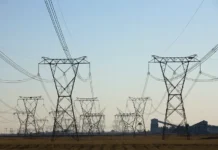
Too often, progress is communicated through money allocated, contracts signed or projects launched. Those are inputs. They do not reveal whether a road reduced travel time, a transmission line improved reliability, an irrigation system raised agricultural output or an industrial park attracted manufacturers.
Engineers belong at the planning table
A development blueprint dominated by political promises and macroeconomic targets can overlook the physical systems needed to deliver them.
Universal water access requires sources, treatment plants, pipelines, pumping energy, distribution networks, laboratories and financially viable utilities. Industrialisation requires reliable electricity, logistics, production technology, standards, technicians and maintenance capability. Digital growth relies on fibre networks, data centres, power quality, cooling and cybersecurity.
These are engineering systems with interdependencies, operating costs and finite design lives.
Kenya Engineer previously argued that the country’s next economic leap will depend heavily on its engineering capability across energy, transport, housing, water, manufacturing and ICT. The point is not to elevate one profession above the national conversation. It is to ensure that the ambitions selected by the country can be translated into technically credible programmes. (Kenya Engineer, 26 November 2025)
Professional engineering bodies, universities and technical institutions should therefore participate at more than ceremonial level. They should help define infrastructure standards, skills requirements, project-selection criteria and measurable service outcomes.
Finance must be connected to lifecycle performance
The government has presented the National Infrastructure Fund and Sovereign Wealth Fund as institutions that can support long-term transformation. Kenya Engineer’s earlier analysis of the National Infrastructure Fund noted the potential shift towards investment-led infrastructure financing, while also identifying questions of governance, project selection and equitable access to infrastructure. (Kenya Engineer, 25 June 2026)
New financing vehicles cannot compensate for weak project preparation.
Before a project enters the national vision, it should have a clearly established need, alternatives analysis, preliminary engineering, environmental and social assessment, land strategy, realistic funding route and whole-life operating plan. Projects should pass published stage gates before moving from concept to procurement.
Maintenance should be funded from the beginning. Kenya has accumulated valuable infrastructure assets, but new construction often receives greater political attention than preserving what already exists. A road, dam, substation or public building that deteriorates prematurely represents a loss of national capital even if its commissioning ceremony was successful.
A vision that can survive politics
The proposed successor has been described as a national development charter rather than another government programme. To deserve that name, it should contain a limited number of durable outcomes with transparent baselines and independent reporting.
Those outcomes might include hours of reliable water supply, travel times on strategic corridors, electricity interruptions, manufacturing value added, export complexity, affordable broadband, infrastructure condition and the proportion of technical work performed by qualified Kenyan professionals.
They should also be disaggregated by county and income level. National averages can conceal communities that remain far from basic services.
Vision 2030’s greatest contribution may be that it gave Kenya experience in long-term planning. Its unfinished projects and missed targets are not reasons to discard that approach. They are design information for the next iteration.
Kenya does not lack ambitious ideas. Its next national blueprint will be judged by whether it turns those ideas into functioning systems—and whether those systems continue working long after the political speeches have ended.
-
Product on sale
 AWEBook Volume 2Original price was: KShs 3,500.00.KShs 3,000.00Current price is: KShs 3,000.00.