Last Updated 2 months ago by Kenya Engineer
SKF South Africa has expanded the capabilities of its bearing remanufacturing services to include modification of bearing clearance, a development that has enabled a longstanding customer to recover inventory that would otherwise have faced rejection and potential scrapping.
The newly demonstrated capability allows SKF’s Remanufacturing Centre in Johannesburg to adjust a bearing’s radial internal clearance to a specified range, providing customers with an alternative to replacing bearings that do not initially meet an end-user’s clearance requirements.
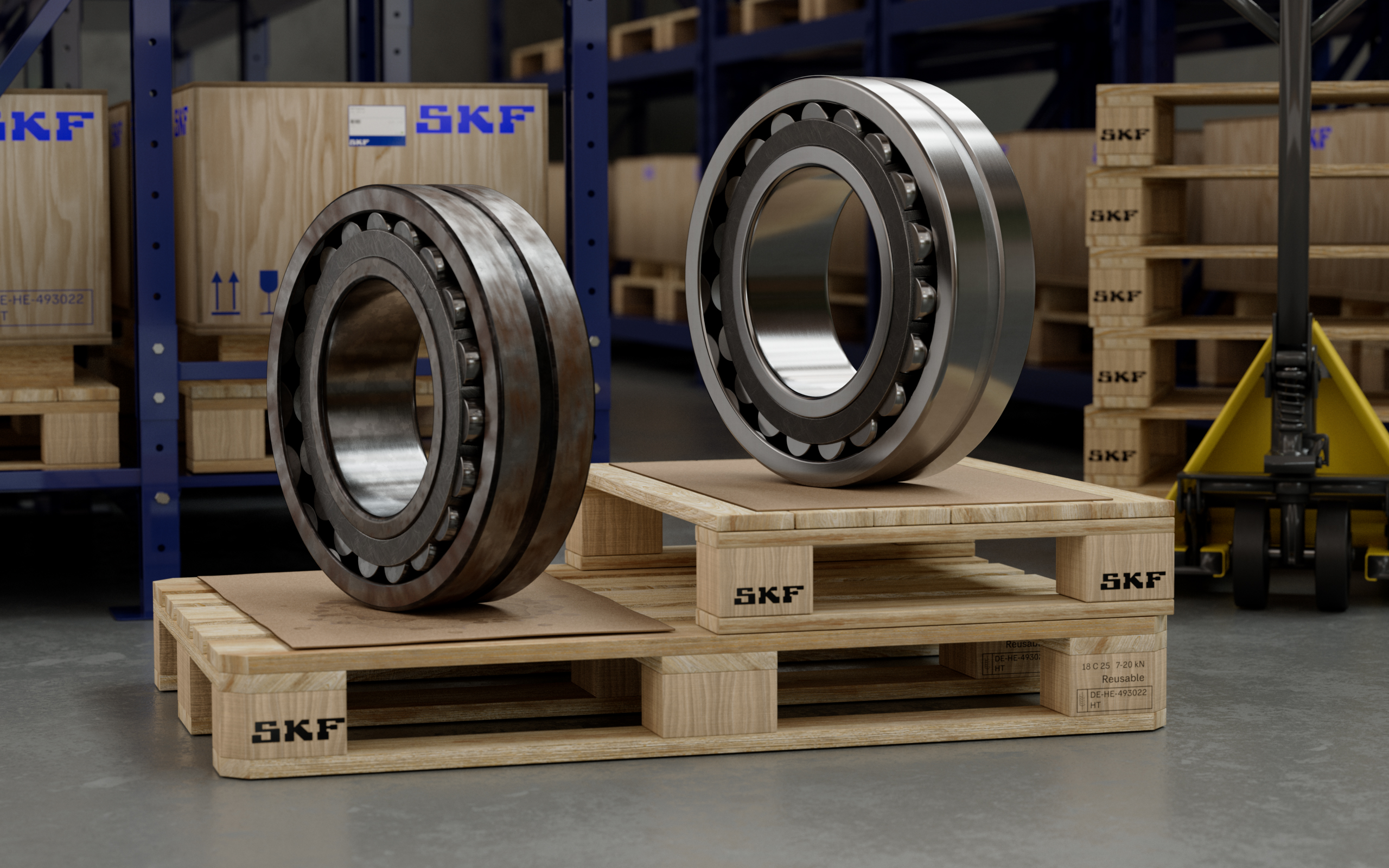
The project involved SKF 24160CCW33 spherical roller bearings originally supplied with standard clearance for use in mining applications, particularly crusher units. According to SKF, the customer’s end user subsequently specified C3 clearance, creating the possibility that the existing inventory would become unusable.
Rather than scrap the bearings and procure new units, the customer approached SKF to determine whether the clearance could be modified.
“Building on this successful foundation, we have now strengthened our customer partnership by expanding our offering into service solutions to remanufacturing,” said Shailin Govender, SKF Key Account Manager: Heavy Industries.
Precision clearance modification
Radial internal clearance is an important consideration in bearing performance, particularly in demanding industrial applications where operating temperatures, loads and other factors can influence the required clearance.
SKF explains that bearing clearances are specified in ranges. C3 represents clearance greater than normal, while C4 represents a still larger clearance range. The ranges can also be further defined according to the position within the specified band, such as C4L for the lower portion and C4H for the upper portion.
The precise measurement of clearance is therefore critical during the remanufacturing process. SKF notes that when a bearing is already close to the upper limit of its existing clearance class, material removal during remanufacturing can potentially move it into the next clearance class.
For the project, SKF’s Reman team first inspected the bearings before disassembling and extensively polishing the units. The process was intended to replicate factory production procedures.
The bearings were subsequently measured against the specified C3 clearance tolerances. SKF confirmed that the units met the required criteria and successfully increased their clearance to the specified C3 range while maintaining the company’s quality requirements.
Supporting circularity in heavy industry
The development also highlights the growing role of remanufacturing in industrial equipment maintenance and asset management.
SKF’s specialist Bearing Remanufacturing Centre in Johannesburg is designed to extend the service life of high-value bearings and housings through additional cycles of use. The company says its approach can allow components to undergo second, third and even fourth use, reducing dependence on the conventional “take-make-waste” model.
For industrial operators, such approaches can provide both economic and environmental benefits. In this case, SKF says the customer avoided unnecessary procurement and scrap costs, while the remanufacturing project also resulted in reduced emissions and lower direct energy consumption.
The company says clearance modification is now an additional capability within its Reman services, although the process had not previously been tested by the team.
“We are able to adjust tolerances for multiple bearing types, provided they meet the necessary criteria for remanufacture,” Govender said.
The development is particularly relevant to mining and heavy industry, where large bearings can represent significant investments and where unplanned component replacement can affect maintenance costs, equipment availability and production schedules.
SKF has supplied the customer, described as a leading OEM supplier of bulk materials handling equipment for mining and heavy industry, with industrial products and seals since 2022. The company says the latest project builds on that relationship by extending its offering from product supply into remanufacturing services.
The successful modification demonstrates how remanufacturing can move beyond simply restoring components to their original condition and, where technically appropriate, provide controlled modifications that allow existing industrial assets to meet revised operating requirements.
For SKF, the project represents an expansion of its remanufacturing portfolio, while for customers it offers another potential route to recover valuable inventory, reduce waste and avoid unnecessary replacement of industrial components.
-
Product on sale
 AWEBook Volume 2Original price was: KShs 3,500.00.KShs 3,000.00Current price is: KShs 3,000.00.