Last Updated 2 months ago by Kenya Engineer
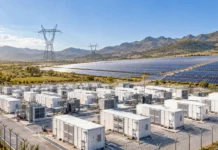
On 10 August, Kenya Engineer examined how South Africa’s renewable boom was becoming a test of the grid. The earlier feature focused on record private renewable investment and the danger that generation projects could run ahead of connection capacity.
The next part of that story is now clearer. South Africa’s transmission requirement is not simply a utility expansion programme. It is a national industrial, financial and project-delivery test.
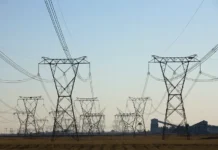
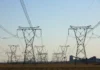
The country’s energy planning points to roughly 105 GW of additional generation by 2039. The National Transmission Company South Africa’s 2025–2034 Transmission Development Plan calls for about 14,500 kilometres of new lines and approximately 133,000 MVA of transformer capacity over a decade. The Development Bank of Southern Africa has placed the investment need at around R440 billion.
These numbers define a mismatch in scale. New solar and wind capacity can often be developed in a few years. High-voltage corridors may take much longer because of route selection, environmental assessment, servitudes, community engagement, detailed design, procurement, manufacturing and construction. A generation auction can therefore be successful on paper while the power has nowhere to flow.
The grid must move towards the resource
South Africa’s historic transmission system was designed around large coal stations concentrated in the north-east. The strongest new solar and wind resources are often located in other provinces, far from the existing backbone and demand centres. The energy transition is consequently a geographical rewiring of the power system.
That rewiring requires more than line length. Transformers, reactive-power support, protection and control, substations, telecommunications and system-stability services must develop together. Grid planning must account for variable generation profiles, curtailment, storage, inertia, fault levels and the retirement schedule of thermal stations.
The most useful output is not an aggregate statement that capacity will be added. Developers need time-bound connection capacity at specific nodes. Manufacturers need a credible schedule of transformer ratings, conductor quantities and tower types. Training institutions need a forecast of the protection, commissioning, line-design and construction skills that will be required.
A 14,500-kilometre plan is a supply-chain plan
At the required scale, transmission is a manufacturing programme. It consumes structural steel, conductors, insulators, cables, switchgear, protection equipment and high-voltage transformers. Some components have long global lead times, especially large transformers, and a small number of suppliers carry much of the specialised manufacturing capability.
South African officials have reportedly pointed to interest from six Chinese companies in establishing local facilities for transformers, pylons and related equipment. The industrial logic is strong, but the public evidence must catch up with the announcement. Factory locations, investment commitments, product standards, annual capacity, commissioning dates, local ownership and offtake arrangements have not been fully disclosed.
Local manufacturing should not become a slogan or a protected bottleneck. It works when a predictable order book justifies tooling and skills, technical standards preserve interoperability and competition, and local firms are connected to maintenance and export opportunities. It fails when plants are announced without bankable demand or when domestic-content rules delay urgent grid equipment.
The TDP should therefore be translated into an aggregated, multi-year procurement pipeline. That would allow suppliers to invest against visible demand while enabling the system operator to qualify more than one source for critical equipment.
The pace gap is managerial as well as financial
At 14,500 kilometres over ten years, the simple average is about 1,450 kilometres of new line a year. Delivery will not be uniform, and the programme also includes an enormous substation and transformer workload. Recent construction rates have been far below what that average implies.
Closing the gap requires multiple projects to pass through development stages simultaneously. Route corridors and environmental studies must be prepared before tenders stall. Land and servitude negotiations need fair, consistent processes. Standard designs can shorten engineering time, but must be adapted to local geotechnical, wind, fire and corrosion conditions. Contractors must have enough supervisors, linespeople, plant and working capital to deliver parallel packages safely.
The state also needs a realistic allocation of construction and interface risk. Transferring every unresolved route, permitting or geotechnical risk to a private bidder may increase prices or produce failed tenders. Retaining all risk inside a capital-constrained utility may delay delivery. Project preparation is what makes risk allocation credible.
Independent transmission can add capital, not abolish the state’s role
South Africa is developing models for independent transmission projects to bring private capital and delivery capacity into selected lines. The approach can help overcome balance-sheet limits and introduce competitive construction and financing. It does not remove the need for a strong public planner and system operator.
Transmission assets form one network. Their availability, protection settings, maintenance and expansion affect other users. Government and the independent transmission entity must decide which corridors are needed, secure coherent standards, coordinate outages and protect long-term optionality. Private finance can deliver a defined asset; it cannot independently optimise the whole system.
The financing contract must also make cost allocation visible. Availability payments, connection charges and tariffs ultimately recover capital. The public should know who carries demand risk, delay risk, refinancing risk and the cost of a stranded line if generation does not arrive.
Kenya is smaller, but the planning problem is the same
Kenya’s transmission requirement is not South Africa’s in absolute scale, yet the structural lesson is directly relevant. Kenya Engineer’s 2024 analysis of transmission public-private partnerships described plans to add thousands of circuit kilometres and substantial transformation capacity to 2042. Its 2025 analysis of the lifting of Kenya’s IPP moratorium highlighted transmission bottlenecks, ageing distribution infrastructure and renewable-integration challenges.
Kenya should not procure generation, transmission, storage and system-control capability as separate political announcements. A geothermal, wind or solar project requires a verified connection date and evacuation margin. Large data centres and industrial parks require firm load studies and user-funded connection where appropriate. Interconnectors need domestic reinforcements if imported or exported power is to move reliably.
There is also a local industrial opportunity. Kenya has previously debated domestic transformer manufacturing. A renewed effort should start with a quantified regional market, standards, testing capability and a credible procurement pipeline—not with a factory announcement alone. East African demand aggregation could support viable production of selected equipment while specialised high-voltage units continue to rely on global supply chains.
The dashboard that turns ambition into delivery
South Africa’s transmission programme—and Kenya’s future plans—should be reported through corridor-level milestones:
- Capacity need and the generation or load it unlocks;
- Route selection, environmental approval and servitude completion;
- Procurement, financial close and notice to proceed;
- Towers, transformers and other long-lead equipment ordered and delivered;
- Kilometres constructed and substations completed;
- Testing, energisation and available transfer capacity; and
- Project cost, schedule variance, curtailment avoided and local industrial output.
The electricity transition is often described through megawatts of renewable generation. The more revealing unit may now be the kilometre of commissioned line, the MVA of installed transformation and the month in which a congested node becomes available.
South Africa’s renewable boom has made the bottleneck visible. The next test is whether the transmission plan can become a repeatable delivery machine before queued generation, industrial demand and public confidence move elsewhere.
-
Product on sale
 AWEBook Volume 2Original price was: KShs 3,500.00.KShs 3,000.00Current price is: KShs 3,000.00.