Last Updated 13 years ago by Kenya Engineer
The overall objective of the energy policy is to ensure affordable, competitive, sustainable and reliable supply of energy to meet national and county development needs at least cost, while protecting and conserving the environment.
The energy sector is guided the policy set out in Sessional Paper No. 4 of 2004 and governed by a number of statutes, principally the Energy Act, No. 12 of 2006, the Geothermal Resources Act No. 12, of 1982 and the Petroleum (Exploration and Production) Act, Cap 308.
With adoption of the Kenya Vision 2030 and the promulgation of the Constitution of Kenya 2010, there is need to review both the policy and all these statutes so as to align them with the Vision and the Constitution; the statutes shall be reviewed and amalgamated into one.
Fossil Fuels
Kenya has had no known commercial reserves of petroleum until March 2012 when oil was discovered in Northern Kenya, leading to a lot of interest in the sector.
In order to fast track petroleum discovery in other exploration blocks in the country, the Government shall intensify primary data acquisition in the available blocks to make them more attractive to investors.
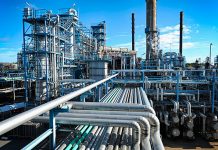
There is therefore need to develop adequate petroleum production capacity in the country, and also develop the petroleum supply infrastructure to meet market requirements to match the increasing demand for petroleum products locally and in the region. These developments will include setting up a new refinery at Lamu given its strategic location. This will make oil and gas products more competitive in the region, enable creation of wealth, ensure supply security and stability of their prices.
The Government will ensure that there are strategic petroleum reserves in the country. The increased use of LPG shall be encouraged so as to eliminate the use of kerosene in households and reduce over-reliance on bio-mass. The Government is also evaluating the possibility of using natural gas to support commercial and industrial activities including transportation.
The average consumption of petroleum products in Kenya has been increasing over the years. To ensure security of supply of petroleum products, the Government will facilitate construction of adequate import/off – loading, storage distribution and fuel dispensing facilities through public private partnerships as appropriate.
The quality of petroleum products will be constantly reviewed to conform to international
standards. To this end the institutional capacity will be enhanced to enforce fuel quality
specifications for both domestic and export market.
Coal is an affordable, competitive, reliable and easily accessible source of energy, especially for electricity generation. Extensive coal exploration has taken place in the Mui Basin of Kitui County wherea total of 76 wells have been drilled with 42 wells intercepting coal seams of various thicknesses at different depths. More wells are being drilled to appraise the coal reserves in the basin of which Block C has been appraised to have 400 million tonnes. More coal exploration is going on in other parts of the country. These resources are expected to provide about 1,900MW of electricity generation by 2016 and 4,500MW by 2030.
The Government shall promote an intensive coal exploration programme and efficient utilisation of coal resources while minimising the environmental impacts associated with its use. It will establish data and information on coal resources, intensify promotional campaigns in local and international conferences and exhibitions. A conducive investment environment for exploration and exploitation of coal will be created by providing fiscal incentives to attract investment in this sector.The National Government shall establish a coal development corporation as a special purpose vehicle to be the lead agency in the development of the coal industry.
Following the discovery of petroleum and coal deposits, the Government shall:
(a)Adopt and implement the Extractive Industries Transparency Initiative (EITI) Treaty as a demonstration of its commitment to good governance, increasing scrutiny over revenue collection from these resources, and improving the country’s investment climate;
(b)Reconstitute the National Fossil Fuels Advisory Committee (NAFFAC) and anchor it in law.
(c)Develop mechanisms for sharing of benefits between the National and County Governments as well the local communities in accordance with Article 69 of the Constitution.
(d)establish a one stop shop for licensing of fossil fuel operations and undertakings with a view to enhancing development of the requisite infrastructure for fossil fuels Kenya recently discovered natural gas at Mbawa in Lamu. The commercial viability is yet to be ascertained.
Renewable Energy
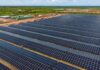
Renewable energy, derived from the naturally occurring resources including geothermal, hydro, solar, wind and ocean energy, biomass, biofuels, biogas and municipal waste can supply our needs and those of future generations in a sustainable way if effectively harnessed through careful planning and advanced technology. Renewable energy also has potential to enhance energy security, mitigate climate change, generate income, create employment and generate foreign exchange savings.
To enhance exploitation of the vast geothermal resources that Kenya is endowed with, the Government will continue to fund the Geothermal Development Company (GDC) so as to manage the geothermal exploration risk and attract investors. Further, the Government will encourage investment in the geothermal subsector so as to achieve at least 1,900MW of geothermal electric power generation by 2016 and 5,500MW by 2030, and enhance direct uses of the resource.
Kenya has an estimated hydropower potential of about 6,000MW comprising of large hydros (sites with capacity of more than 10MW) and small hydros. Of the large hydros, 807MW has been exploited and accounts for close to 50% of installed generation capacity as at 2014. Potential for small hydros is over 3,000MW, of which, less than 25MW has been developed.
In view of the fact that hydropower is vulnerable to variations in hydrology and climate, it will be necessary to put in place a mechanism to cushion generators, transmitters, distributors and consumers against the effects of adverse hydrology.
The Government shall establish an inter-ministerial Renewable Energy Resources Advisory Committee (RERAC) to, inter alia, advise the cabinet secretary on:
(a)Criteria for allocation to investors of energy resource areas.
(b)Licensing of Renewable Energy resource areas.
(c)Management of water towers and catchment areas.
(d)Development of multi-purpose projects such as dams and reservoirs for power generation, portable water, flood control and irrigation with a view to ensuring
proper coordination at policy, regulatory and operational levels on matters relating to the various uses of water resources.
(e)Management and development of other energy resources such agricultural and
municipal waste, forests, and areas with good wind regimes, tidal and wave energy.
The Government shall transform the Rural Electrification Authority into the National
Electrification and Renewable Energy Authority (NERA) to be the lead agency for development of renewable energy resources other than geothermal and large hydros.
Electricity Sub-Sector
Electricity is a secondary source of energy generated through the consumption of primary energy sources namely fossil fuels, renewable energy and nuclear energy.
By virtue of its versatility in application, electricity is crucial to the socio-economic development of the country and is the most sought after energy service, access to which is associated with rising or high quality of life.
Reform and restructuring of the Kenyan electricity supply industry (ESI) has been going on since the mid-90s with the aims of, inter alia:
(a)Creating appropriate legal, regulatory and institutional framework for the ESI.
(b)Ensuring provision of affordable, competitive, reliable, efficient and sustainable electric power supplies.
(c)Increasing the population’s access to electricity as a means of stimulating economic
growth.
(d)Improving the efficiency of power distribution and supply through reductions in technical losses and collection of revenues.
(e)Creating a more competitive market structure with clear definition of roles for public
and private sector players in generation, transmission, distribution and retail functions.
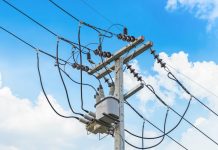
In order to provide affordable and competitive electrical energy to transform the Kenyan
economy, a roadmap to raise the generation capacity by at least 5000MW from the current 1,664MW to slightly over 6,700 MW by 2016 is proposed. Through this road map the generation cost is projected to reduce from US¢ 11.30 to 7.41, while the indicative end-user tariffs are projected to reduce from US¢ 14.14 to 9 for commercial/industrial customers and from US¢ 19.78 to 10.45 for domestic customers.
The National Government shall:-
(a)Re-establish the Kenya Nuclear Electricity Board to promote and implement a nuclear electricity generation programme.
(b)Develop and monitor implementation of electricity master plans for the country and the Eastern African Region.
(c)Support the development by KETRACO of new transmission lines, comprising of about 5,000 km in the short term and 16,000km by 2031to enhance security, reliability and affordability of electricity supply.
(d)Facilitate open access to the transmission and distribution networks, designate
a system operator and encourage regional interconnections to enhance regional
electricity trade.
(e)Provide incentives for development of robust distribution networks, including gradual
elimination of overhead distribution systems to ensure efficient and safe provision of distribution services by duly licensed network service providers, so as to reduce power
supply interruptions and improve the quality of supply and service.
(f)Put in place mechanisms to facilitate reduction in cost of new connections to supply.
(g)Continue funding the development of distribution networks through NERA.
Energy Efficiency and Conservation
The importance of energy efficiency and conservation measures in the Kenyan economy cannot be overemphasized. Challenges to implementation of energy efficiency and conservation initiatives include lack of awareness of the benefits and methods of conservation, apathy, limited technical capacity and inadequate data.
The Government shall establish the Energy Efficiency and Conservation Agency (EECA) to promote energy efficiency and conservation. EECA shall spearhead energy efficiency and conservation activities to improve the energy security and mitigate the effects of climate change by lowering Green House Gas emissions. Measures will also be introduced in the transport sector, to promote fuel efficiency by encouraging the use of mass transportation of passengers and cargo to capitalize on the economies of scale, as well as, the promotion of new and efficient technologies.
Land, Environment, Health and Safety
In carrying out its planning and development mandate pursuant to the Fourth Schedule, Part 2, regarding electricity and gas reticulation and energy regulation, every county government shall set aside suitable land for energy infrastructure development purposes, including but not limited to projects recommended in the indicative
national energy plans.
The Government shall facilitate:
(a)Development of a Resettlement Action Plan Framework for energy related projects;
including livelihood restoration in the event of physical displacement of communities.
(b)Access to land where exploration blocks fall on private land, community land and cultural heritage areas including game parks/reserves.
The Government shall:
(a)Put in place mechanisms to eliminate kerosene as a household energy source by 2022.
(b)Ensure the creation of disaster response units in each county and in relevant energy sector entities.
Devolution and Access to Energy Services
The National Government will be responsible for energy policy while the County Governments will be responsible for planning and development, including electricity and gas reticulation and energy regulation within their jurisdictions.
A framework on the functional devolution of roles between the two levels of government will be developed in consultation with all stakeholders to avoid the uncertainty/overlap of responsibilities. Amongst the roles to be addressed in the framework include:
(a)Electricity and gas reticulation as well as energy regulation.
(b)Establishment of energy disaster management centres in all the counties.
NERA shall formulate cooperation arrangements with County Governments for implementation of rural electrification and renewable energy programmes.Energy Financing, Pricing and Socio-Economic Issues
The Government shall:
(a)Explore and adopt all viable financing options from local and international sources for cost effective utilization of all its energy resources, and in so doing shall endeavor to maintain a competitive fiscal investment climate in the country.
(b)Support Public Private Partnerships in the development, operation and maintenance of energy infrastructure and delivery systems.
The Government shall set up a Consolidated Energy Fund to cater for funding of the proposed National Energy Institute, infrastructure development; acquisition of strategic petroleum reserves; energy sector environmental disaster mitigation, response and recovery; hydro risk mitigation; water towers conservation programmes; energy efficiency and conservation programmes as well as promotion of renewable energy initiatives.
Cross Cutting Issues
The Cabinet Secretary responsible for energy may establish directorates with responsibility for policy development as well integrated national planning in the areas of oil and gas, coal resources, renewable energy, electricity, nuclear energy for electricity generation as well as energy efficiency and conservation.
Research, Development and Dissemination as well as human resource development are key in achieving the objectives of this policy. It is therefore necessary to establish a National Energy Institute to undertake training, research, development, dissemination, nurture talent, innovation and to enhance capacity building in the sector.
The Government is committed to promoting a climate that would be conducive to sustained investments in the energy sector taking into account the needs and ability of the people of Kenya.

-
Product on sale AWEBook Volume 2Original price was: KShs 3,500.00.KShs 3,000.00Current price is: KShs 3,000.00.