
Last Updated 1 day ago by Kenya Engineer
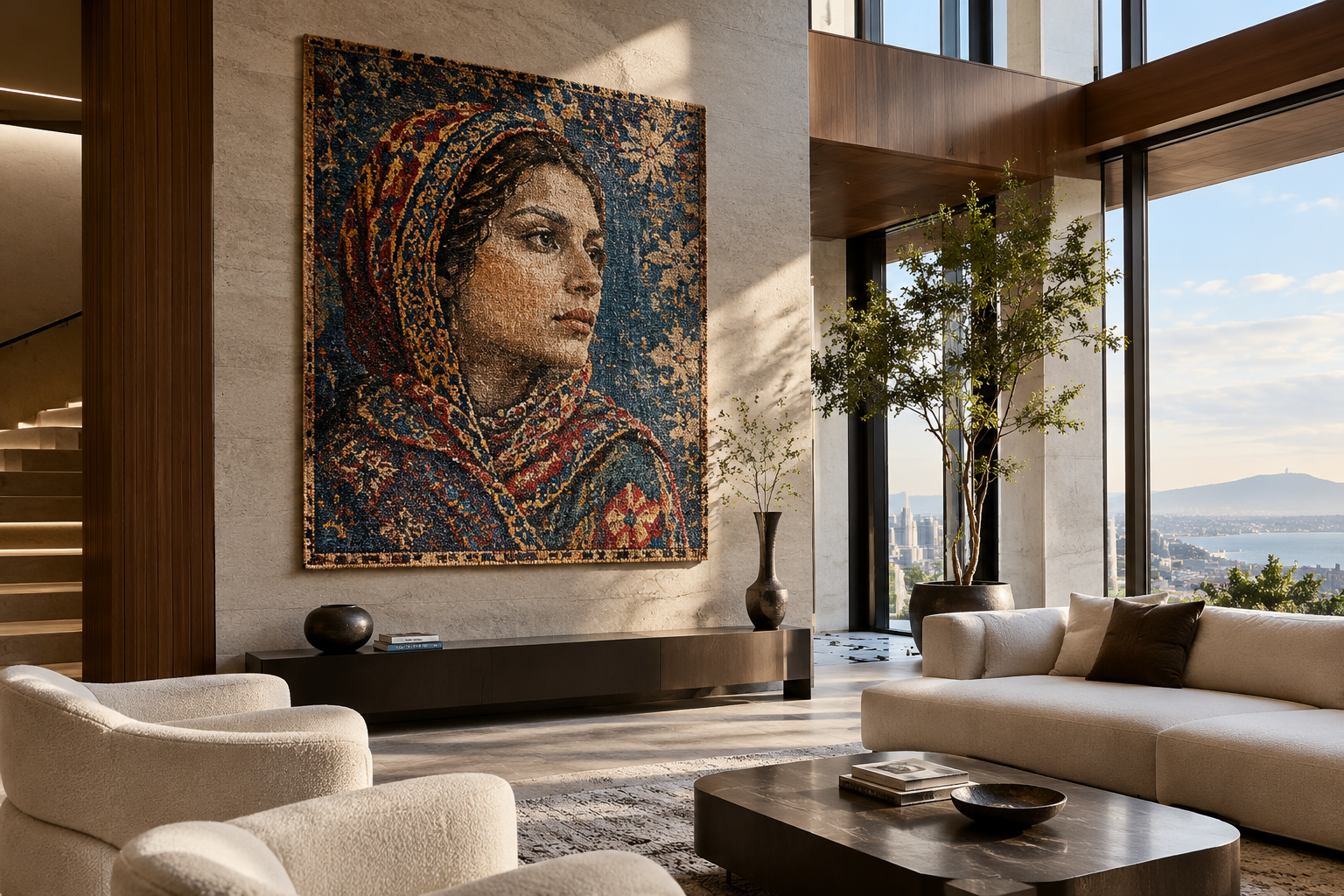
For centuries, rugs have occupied a distinctive place between art, craft and architecture. They have defined rooms, introduced colour and pattern, and carried the cultural memory of the societies that produced them. In contemporary interiors, the rug is increasingly being considered for another role: as a work of art displayed on the wall and conceived specifically for the space it occupies.
When personalised, a wall rug can become an expression of identity, heritage and memory. Rather than selecting a finished product to complement an existing interior, a client commissions an artwork whose imagery, colours, proportions and symbolism respond to the people and place for which it is created.
This changes the relationship between textile art and interior design. The rug becomes part of the conversation about what a space should communicate, rather than a furnishing selected at the end of the design process.
Beyond Decoration
Luxury interiors often draw on the same international furniture, finishes and decorative products. Personalised artworks offer another way for a residence or institution to establish its own identity.
A commissioned rug might portray a person whose work shaped a family or organisation, interpret a cultural tradition, commemorate an important event or express a particular philosophy. Its value lies not only in the materials and labour involved, but also in the story it carries.
This approach places the artwork closer to painting, sculpture and other forms of commissioned art. Its design begins with a particular subject and setting, allowing the work to develop in response to the identity of its owner and the character of the space.
The Wall as a Canvas
Displaying a rug on the wall changes how its texture, detail and composition are experienced. Away from foot traffic, the woven surface can be examined more closely, while changes in natural and artificial lighting influence how its colours and textures are perceived.
Unlike a printed image, a woven artwork has a physical surface shaped by its materials and construction. The arrangement of individual knots, variations in colour and the direction of the weave contribute to its visual character. In finely detailed works, translating a portrait or complex composition into woven form demands considerable control over colour, proportion and execution.
These qualities give wall rugs a place within contemporary interior design, where materials are used not only to establish a visual style but also to shape how people experience a space.
Integrating Textile Art into Architecture
The relationship between a personalised wall rug and architecture begins with the wall itself. Its dimensions, proportions, surrounding materials and position within a room influence how the artwork is perceived. A large textile piece may become the principal visual feature of a reception area, while a smaller work can provide a more intimate focal point within a private residence or executive office.
Colour and material selection also influence the relationship between the artwork and its surroundings. A rug may draw on tones found in timber, stone or other finishes, or introduce a deliberate contrast that distinguishes it from the surrounding surfaces. Its placement relative to windows, lighting and circulation routes can affect visibility and the way people encounter it as they move through a building.
For architects and interior designers, this creates an opportunity to consider commissioned art earlier in a project’s development. Instead of treating artwork as a final decorative addition, the design team can consider its intended location, scale and visual relationship with the interior from the outset.
The process also requires coordination. The artist brings knowledge of the artwork’s concept and production, while the architect and interior designer understand the spatial composition and the requirements of the building. Where a large or heavy textile is proposed, mounting arrangements, the condition and capacity of the supporting wall, and access for installation need to be assessed as part of the project. Lighting, maintenance and long-term conservation may also influence decisions about materials and placement.
This collaboration allows the artwork to respond to the architecture without losing its identity as an independent work of art.
From Private Homes to Commercial Spaces
Private residences offer a natural setting for personalised wall rugs because homes often contain objects associated with family history, personal achievements and cultural heritage. A woven portrait, for example, can commemorate an individual whose influence extends across generations. Another commission might interpret a family’s migration, profession or cultural background through symbolism rather than literal representation.
The same principle can be applied to commercial and institutional interiors.
A hotel might commission a work inspired by the history of its location. A restaurant could draw on the cultural traditions associated with its cuisine, while a corporate headquarters might use commissioned art to express its institutional history or founding philosophy. Cultural institutions and private clubs can similarly explore the relationship between their collections, identity and physical surroundings.
In these settings, the artwork becomes one element in a broader architectural narrative. The building establishes the spatial framework, interior design shapes its atmosphere, and art can introduce a particular cultural or personal perspective.
The result depends on more than the presence of an expensive or visually striking object. The artwork needs to relate meaningfully to its setting and to the people who use the space.
Craftsmanship and Cultural Heritage
Personalisation alone does not determine the quality of an artwork. Its execution remains fundamental.
Persian carpet weaving draws on a long tradition of textile craftsmanship, including intricate patterns, complex colour relationships and regionally distinctive artistic approaches. These traditions offer a medium through which contemporary subjects can be explored without requiring the reproduction of historical designs.
Portraiture is particularly demanding. Small changes in proportion, tone or expression can affect the likeness of the person represented. Translating such details into a woven surface requires artistic judgement and technical skill, as well as careful attention to materials and colour.
The same medium can accommodate conceptual work addressing cultural identity, historical memory, philosophy and other subjects. Traditional craftsmanship is not confined to reproducing established patterns; it can also support new forms of artistic expression.
A Different Understanding of Luxury
Luxury has long been associated with rarity, materials and craftsmanship. Personalised art introduces another consideration: the meaning attached to an object created for a particular person, family or institution.
A commissioned work may become part of a family’s visual heritage or an enduring feature of a building. Its significance develops through the relationship between its subject, its setting and the people who encounter it.
For architects and designers, personalised wall rugs offer one way to bring this relationship into the built environment. They create opportunities for collaboration between artistic practice and spatial design, allowing a textile artwork to contribute to the identity of an interior while retaining the qualities of the craft from which it emerges.
Ultimately, a personalised wall rug can do more than occupy an empty wall. It can preserve a memory, express a cultural identity or give a particular space a story of its own.
Not beneath our feet, but before our eyes: textile art becomes part of the way a building communicates who it is for and what it represents.
Daniel Bikas
Conceptual Persian Rug Artist
-
Product on sale
 AWEBook Volume 2Original price was: KShs 3,500.00.KShs 3,000.00Current price is: KShs 3,000.00.