
Last Updated 2 months ago by Kenya Engineer
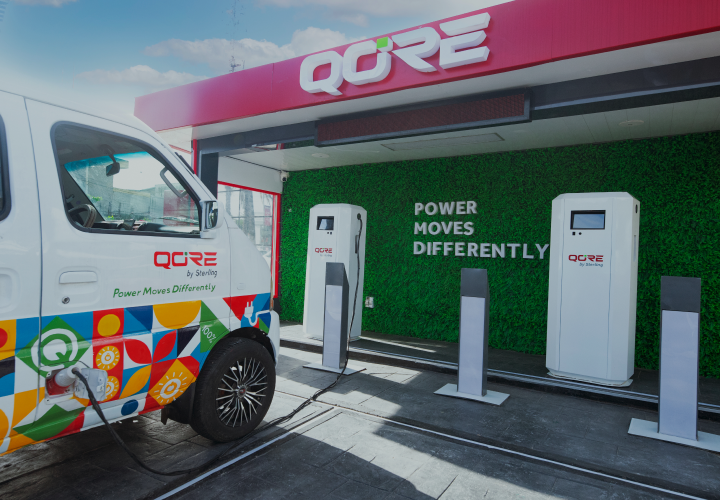
Few images capture Africa’s energy transition more sharply than an electric vehicle being charged from a fuel-powered generator.
That contradiction is already visible in Nigeria. Reuters reported on 12 August that the government approved tax waivers for nearly 4,000 electric vehicles in the first half of 2026 under a programme intended to encourage cleaner transport and local assembly. At the same time, unreliable electricity has forced some dealerships, charging stations and battery-swapping operators to use diesel or petrol backup generation.
Nigeria is not short of ambition. Its Energy Transition Plan anticipates electric vehicles taking a dominant share of the fleet over the coming decades, and tax measures have reduced the cost of importing or buying EVs. Higher petrol prices have also strengthened the operating-cost case for electric motorcycles, tricycles and buses.
The constraint is the electricity system that must support them. The Nigerian Electricity Regulatory Commission reported average available grid-connected generation capacity of 5,400 MW in the fourth quarter of 2025 and average hourly generation of 4,453 MW. That is more precise than the frequently quoted shorthand of a 4,000 MW grid, but it remains extremely limited for a country of more than 200 million people.
NERC also recorded a partial grid collapse in December 2025, frequency and voltage excursions outside normal operating limits, and aggregate technical, commercial and collection losses of 34.9 per cent among distribution companies during the quarter. These figures explain why adding an electric vehicle is not simply a matter of installing a socket.
The grid problem is local before it is national
National generation statistics can obscure what determines whether an EV charger actually works. Charging demand appears at a particular transformer, feeder and time of day. A city may have adequate generation overall and still experience overloaded distribution equipment in the neighbourhood where a bus depot, motorcycle swap station or fast-charging hub is connected.
Fast chargers draw high power for short periods. Fleet depots may connect dozens of vehicles after the evening shift. Battery-swapping operators charge many packs behind the scenes even though each customer spends only minutes at the station. Without controlled charging, those loads can reinforce the existing evening peak and accelerate transformer or cable failures.
This is why transport incentives cannot substitute for distribution planning. Utilities need forecasts by location and vehicle class, connection standards, protection requirements, metering rules and tariffs that reward charging when the system has spare capacity.
Nigeria’s response is already being shaped by its constraints. Public charging remains limited, and owners often charge at home. Range-extended and hybrid vehicles reduce dependence on public chargers. For motorcycles and three-wheelers, battery swapping is emerging as the more practical path because a rider exchanges a depleted battery instead of waiting for it to charge.
The swapping model does more than save time. It allows charging to be concentrated at managed sites, scheduled away from peak hours and combined with solar generation or storage. Operators can monitor battery condition and remove unsafe packs from circulation.
It also introduces new engineering and regulatory questions. Batteries from different manufacturers are not automatically interchangeable. Connectors, pack dimensions, communications protocols, fire protection, state-of-health measurement and ownership models must be standardised or carefully managed. A rapid expansion without enforceable safety rules could replace petrol risk with poorly controlled electrical and thermal risk.
Kenya starts from a stronger position
Kenya’s electricity mix gives it an important advantage. Kenya Power says more than 90 per cent of the energy it procures and dispatches comes from renewable sources. Charging an EV on that system generally offers a stronger decarbonisation case than charging from a fossil-heavy grid or a small diesel generator.
Demand is also becoming measurable. Kenya Power recorded 8.43 GWh of electricity consumption under the e-mobility customer category in 2025, a 188 per cent increase from 2024. By February 2026, 205 customers had joined the dedicated tariff, which charges KSh16 per kWh during peak hours and KSh8 during off-peak hours.
That tariff is more than a discount. It is a grid-management signal intended to move charging to periods when capacity is available. As fleets grow, smart chargers and automated depot-management systems should respond to the same signal rather than relying on drivers to plug in at convenient but electrically expensive times.
Kenya’s National Electric Mobility Policy, launched in February 2026, supports charging infrastructure, local assembly, fiscal incentives, standards and skills development. Technical working groups began implementation discussions in July. The Ministry has also acknowledged that charging infrastructure remains concentrated around Nairobi.
The policy foundation is therefore stronger than it was a year ago. The data foundation is less settled. Official public statements have given different totals for Kenya’s registered EV fleet at the end of 2025: the Ministry of Roads and Transport cited 39,324, Kenya Power referred to more than 35,000, while another government account attributed a figure of 24,754 to the Principal Secretary for Transport.
The difference may reflect dates, vehicle definitions or database coverage. Whatever the cause, planning transformers, tariffs, tax policy and charging networks requires a common dataset. Kenya should publish a regularly updated registry broken down by vehicle class, county, battery capacity, charging method and commercial use, while protecting personal information.
The next bottleneck will be the distribution network
At national scale, current EV charging remains a small electricity load. At local scale, it can already be significant. A bus or motorcycle operator does not connect to Kenya’s average grid; it connects to one transformer and one feeder. That is where the next phase of planning must focus.
Utilities and county planners should map proposed charging hubs against feeder capacity, planned road corridors, public-transport termini and commercial parking. New developments can reserve space and electrical capacity for chargers before construction, which is considerably cheaper than retrofitting switchboards, cables and transformers later.
Reliability standards also need to distinguish vehicle types. A private car can often postpone charging. A bus fleet, delivery operation or battery-swap network may lose an entire working day if power fails. Commercial operators will therefore continue installing backup systems, but the regulatory goal should be to favour storage and renewable solutions rather than normalising diesel generation as the foundation of clean transport.
Local manufacturing ambitions should be equally precise. Assembly numbers alone do not establish an industry. Kenya can build deeper capability in power electronics, chargers, battery enclosures, thermal management, fleet software, testing, repair and end-of-life processing. These are engineering and service markets that remain valuable even when cells or complete vehicle platforms are imported.
Nigeria’s experience does not argue for delaying electric mobility until the grid is perfect. Waiting would postpone fuel savings, cleaner urban transport and industrial learning. It argues for building vehicles, charging systems and electricity infrastructure as one programme.
Kenya has a window to do that while EV demand is still manageable. Its renewable generation, off-peak tariff and strong two-wheeler market provide a credible foundation. The warning from Nigeria is that national ambition can run ahead of local electrical capacity very quickly.
The transition will be judged not by how many EV policies are launched, but by whether a rider, bus operator or delivery fleet can obtain safe, affordable and dependable energy without turning on a generator.

-
Product on sale
 AWEBook Volume 2Original price was: KShs 3,500.00.KShs 3,000.00Current price is: KShs 3,000.00.